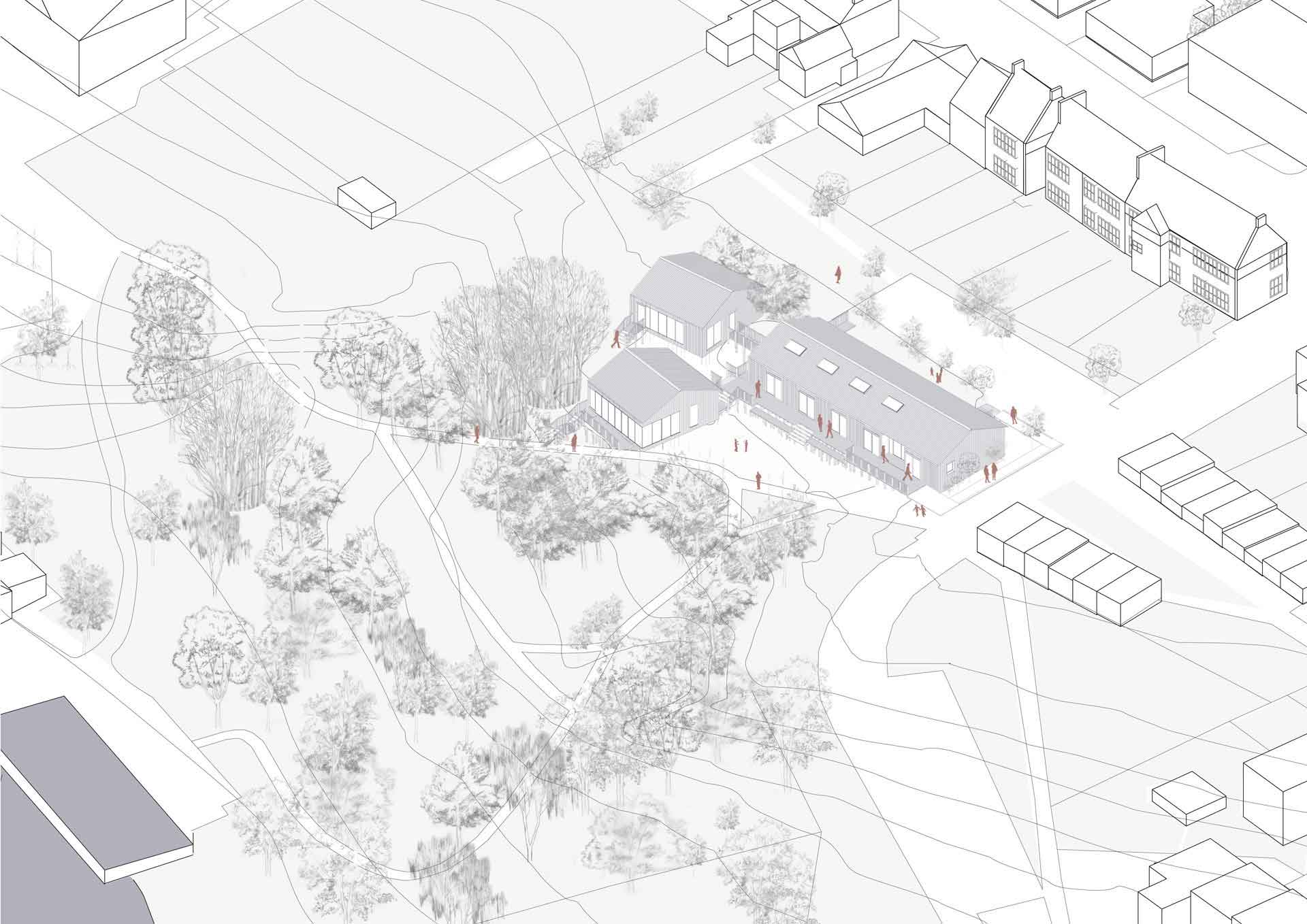
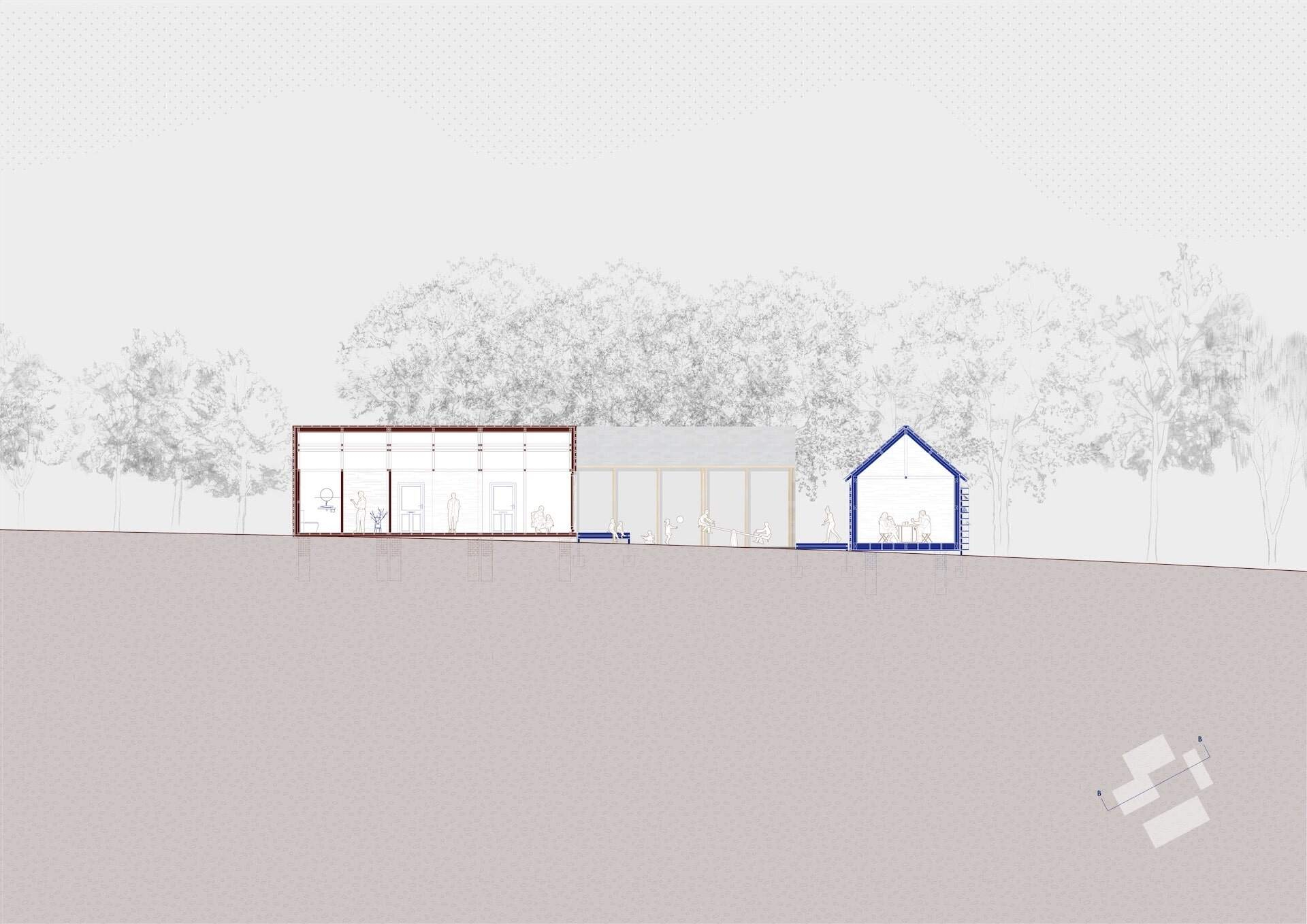
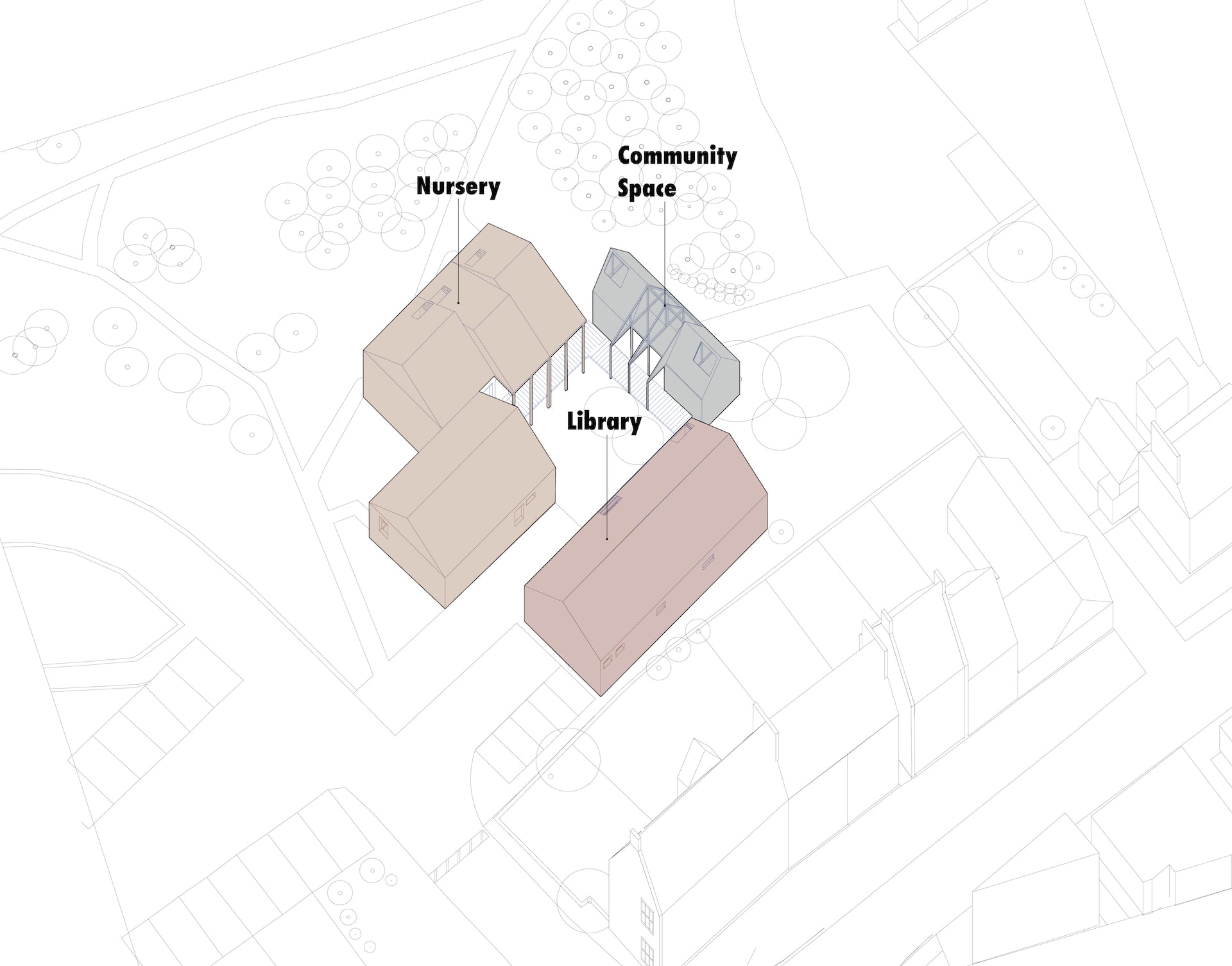
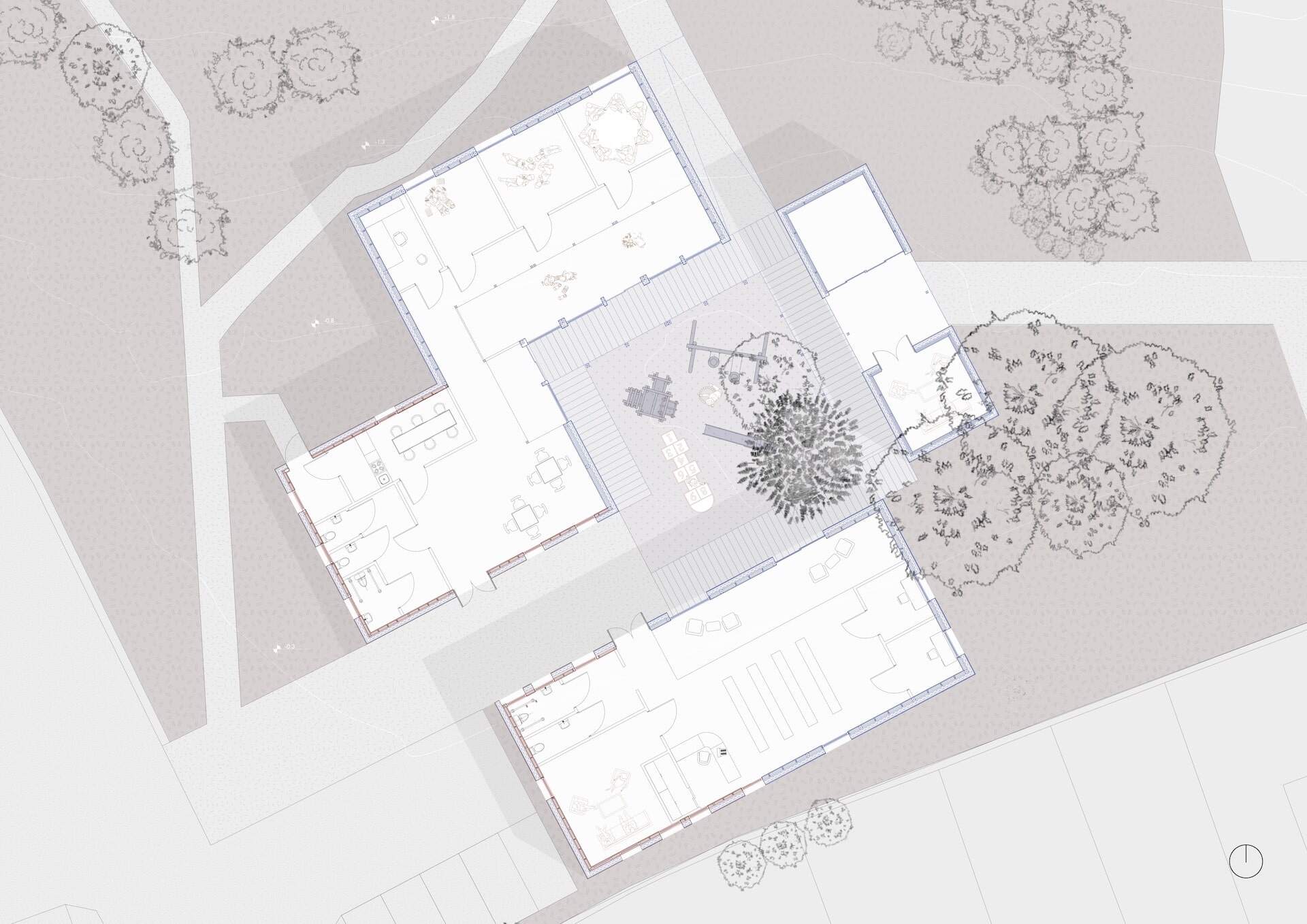
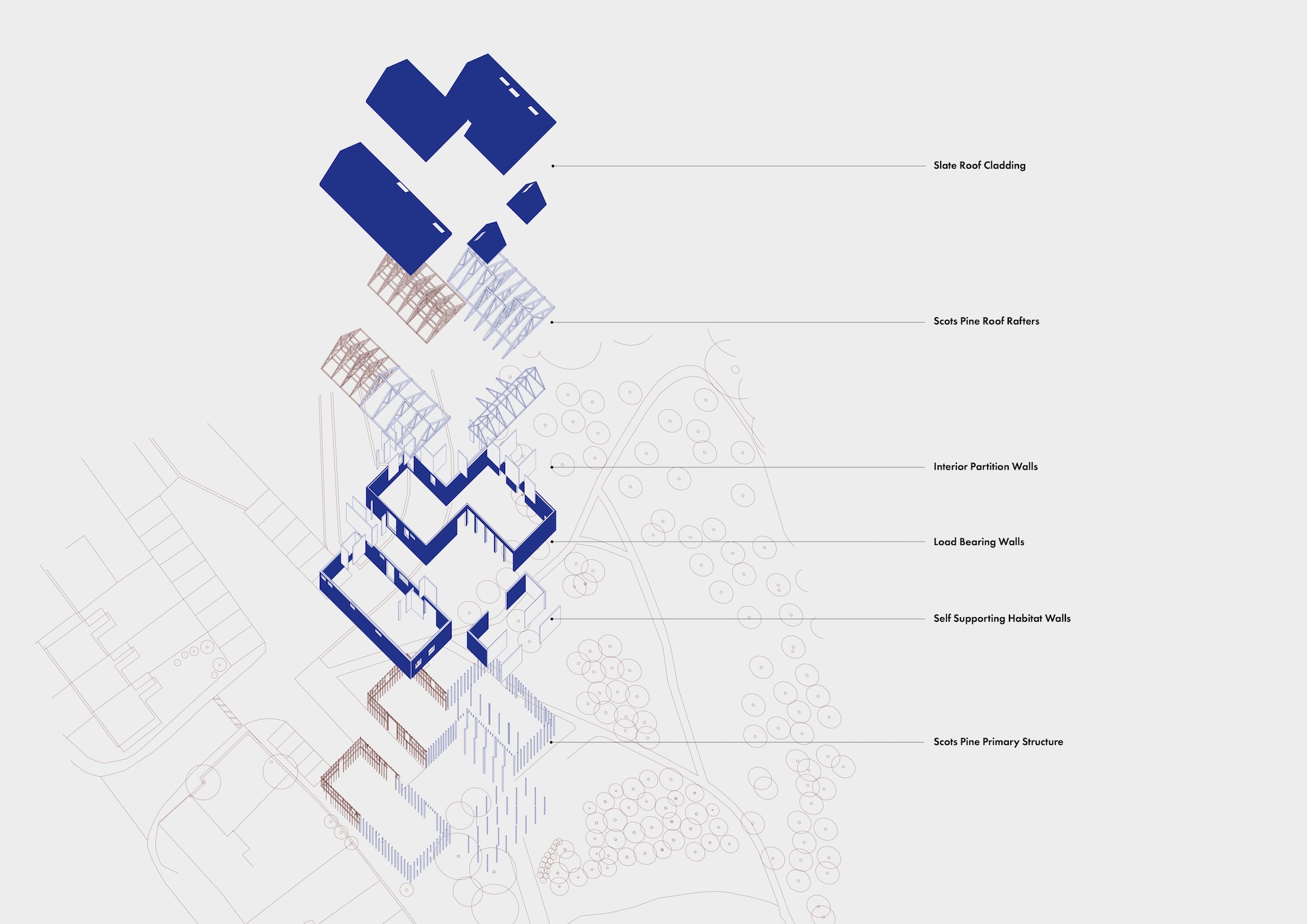
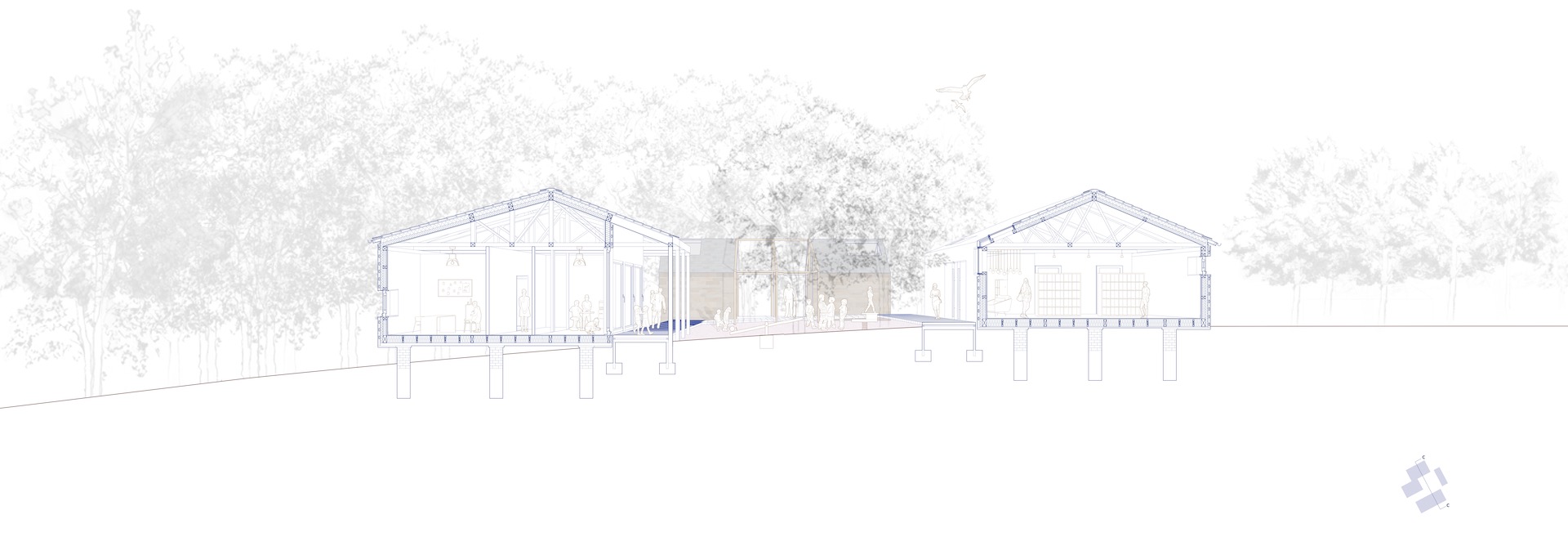
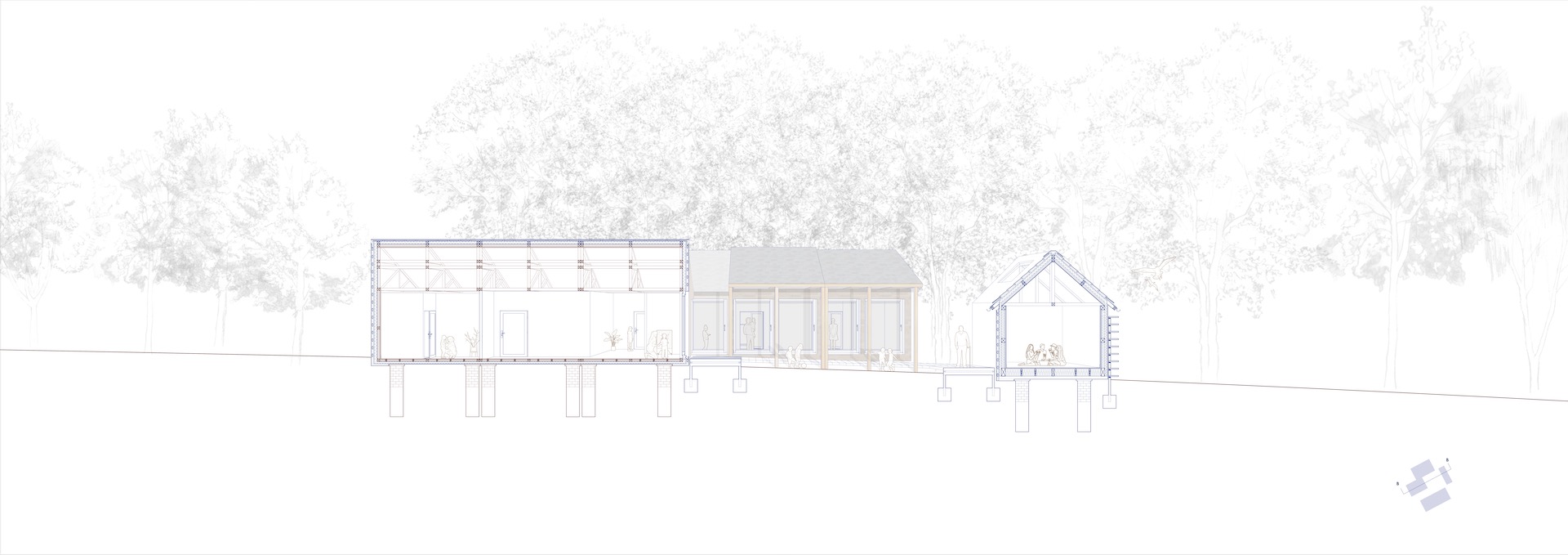
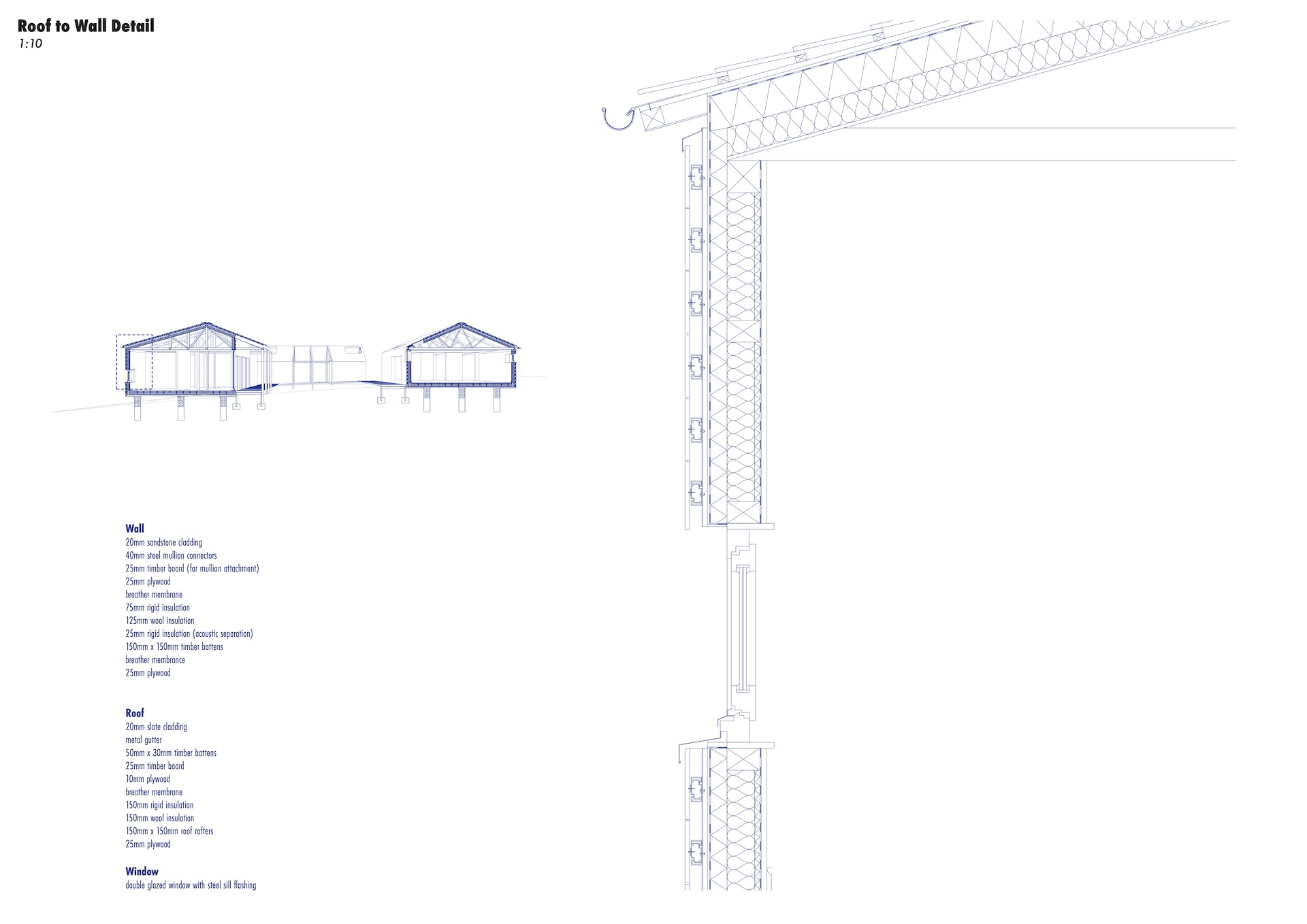
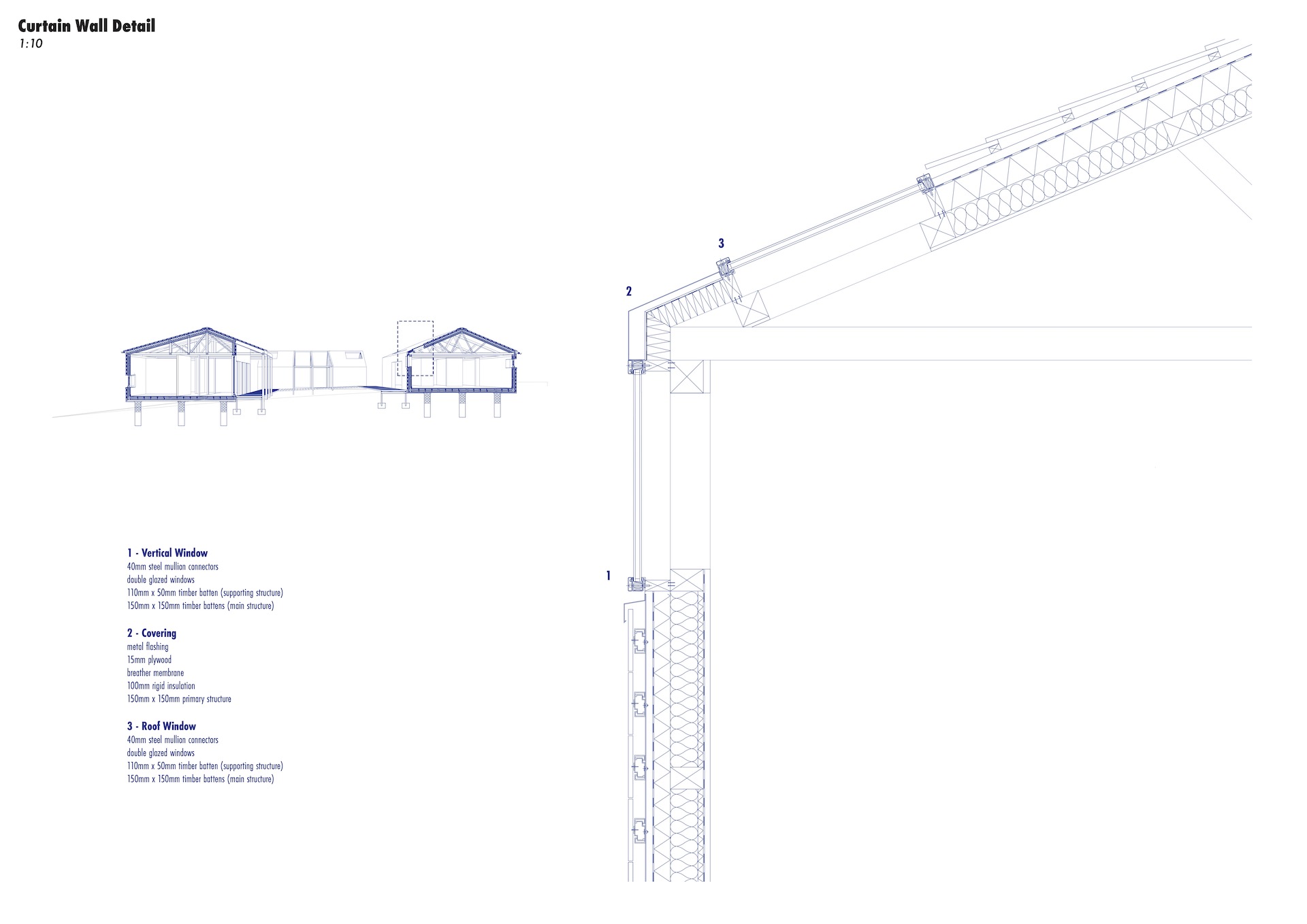
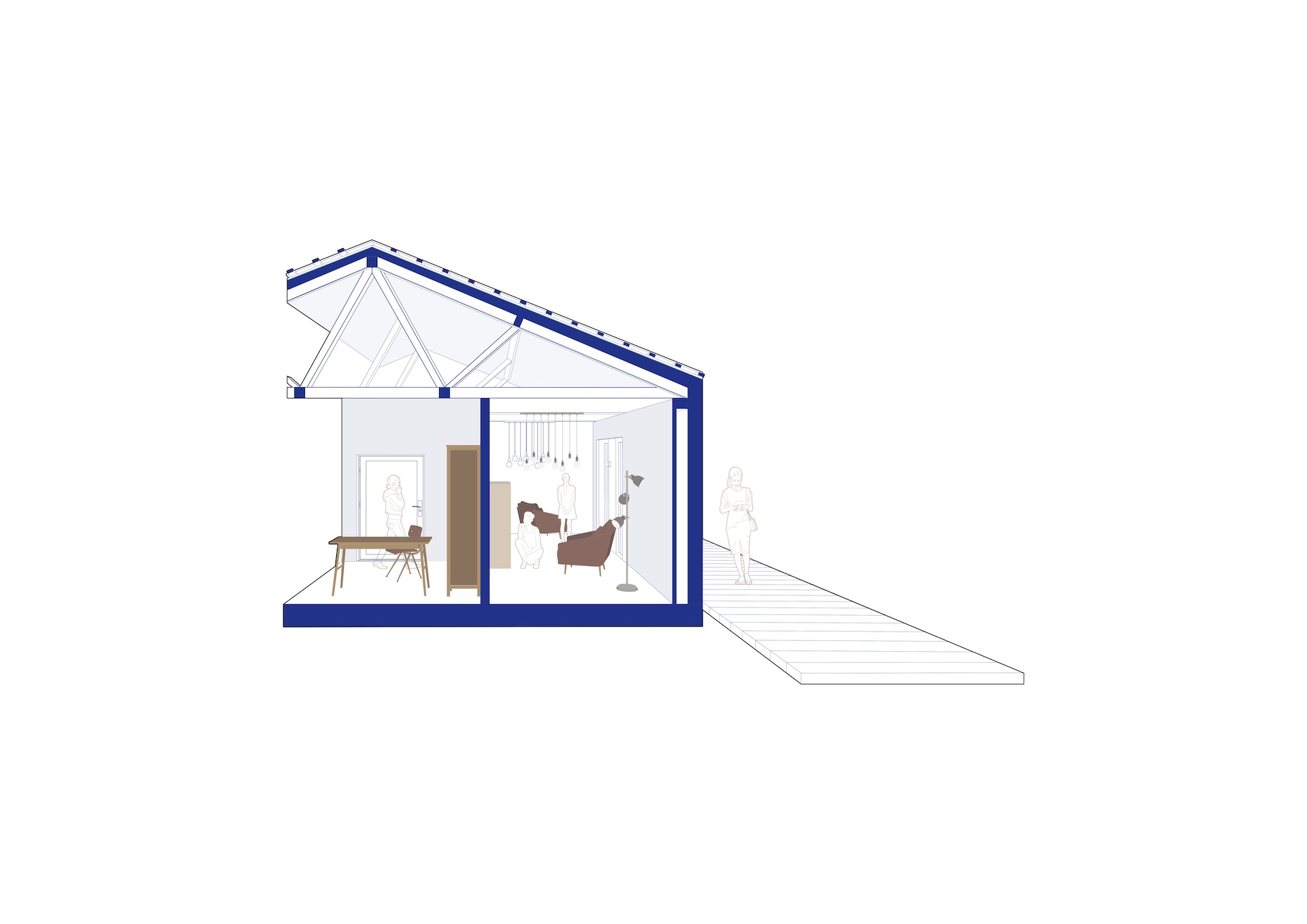
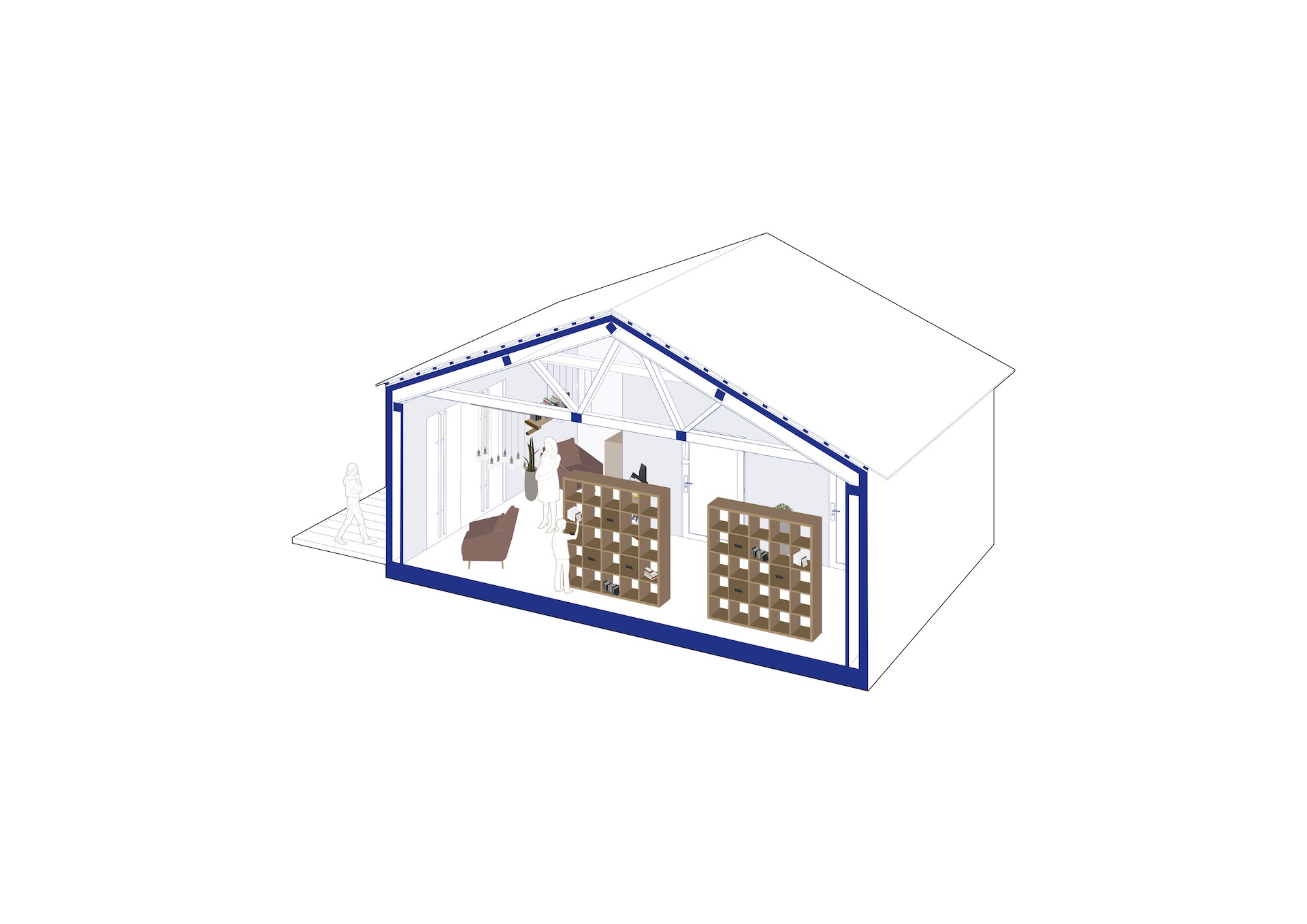
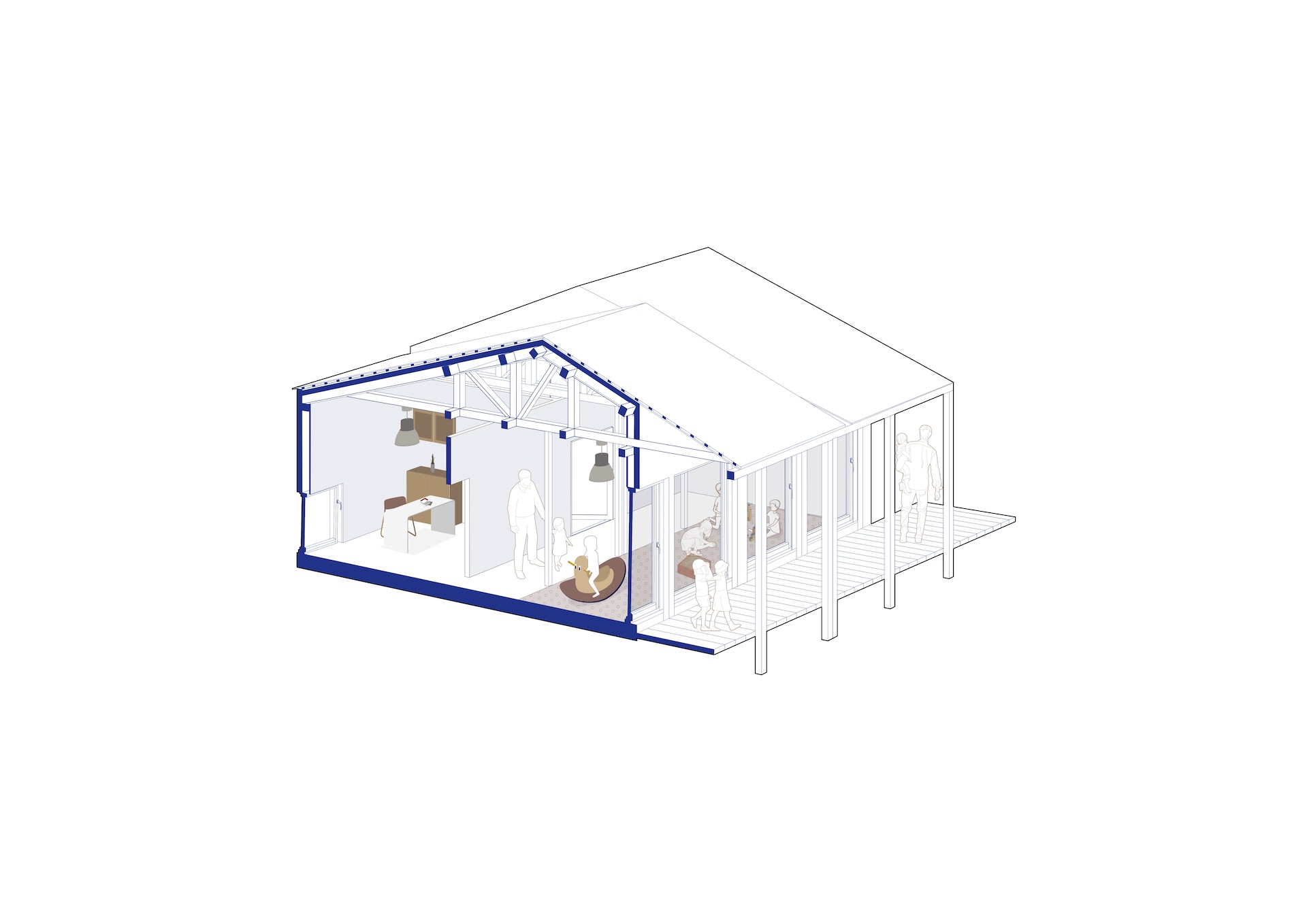
The architectural intent of the Yard is to re-value the ‘uglies’ (rejected materials on demolition sites) of the Ratho Library to create sociable, inviting, and flexible spaces for the Ratho community. The architecture aims to create a new and improved home in replacement of the Ratho library for the village. The Ratho community had established the library as a space for gathering and socializing; the demolition of the building had left them devastated, but hopeful for the new development in its place. The Yard proposal upcycles the modular architecture of the Ratho Library building, and re-values the existing structural materials to create a new architecture that respects the site conditions, conservation area, but most importantly fulfills the requirements and concerns of the highly active community. Newly introduced materials (Scots pine timber, sandstone, and slate) are chosen to be sustainable on the site and are carefully selected to fit within the material palette of the Ratho Conservation Area. The construction of the design follows the ideals of ‘design for disassembly’ where materials are assigned values not solely for their current occupants, but also for their re(re) use in the future. The program solely focuses on the activities, events, and functions previously held on the site to create appropriate and comfortable spaces for the users intended. A new nursery is introduced on the site to fulfill the needs of the Ratho Primary School, and create a safe space for the children in the community to learn and interact with the wildlife and plant species that exist on the site. The old library is upgraded, and the new community spaces allow the community to carry on their weekly and annual activities. The Yard takes its name from the fact that the development scheme revolves around a central courtyard and walkway, connecting different programs and users to one another. The Yard intends to be an intimate, domestic, and sociable space for everyone at any age in the Ratho community to utilize.
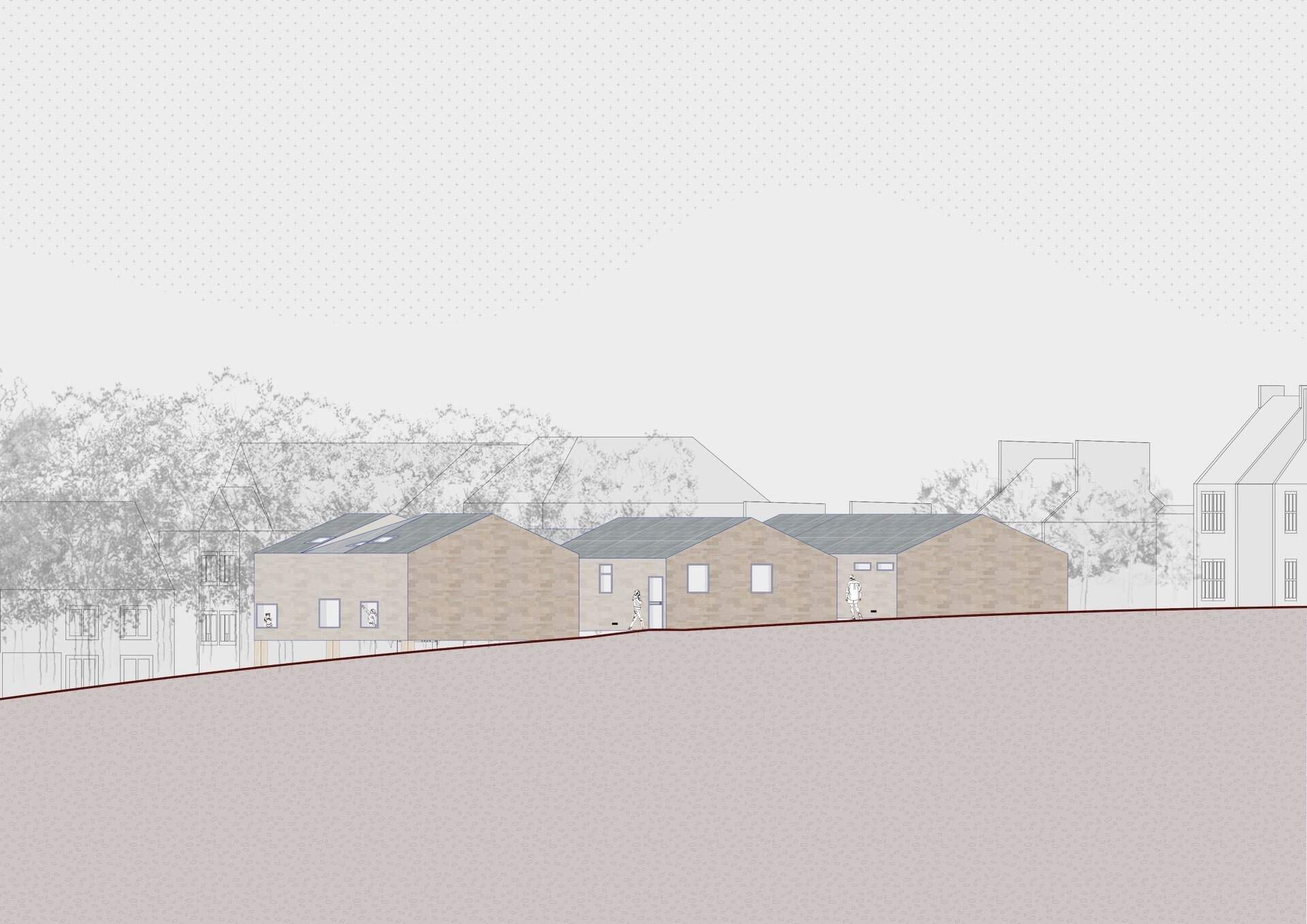


Ratho was designated as a Conservation Area on the 13th of July 1971 by the Midlothian County Council. The historic village lies on the south of the Union Canal. There are two distinct historical settlement patterns within the village: compact historic core and semi-rural organic residences. The main structures of the conservation area are the Union canal, stone bridges through the canal, and its sloping cottages. The vernacular cottages follow the natural slope of the site, creating a landscape that steps up and down. The essential architectural characters are the linear forms, domestic and intimate scale, picturesque cottages, pitched form roofs, and building materials (whinstone, sandstone, and slate roofs). It is important for further developments in the area to follow the architectural characteristics of the village to upkeep the requirements and the guidelines of the Conservation Area.

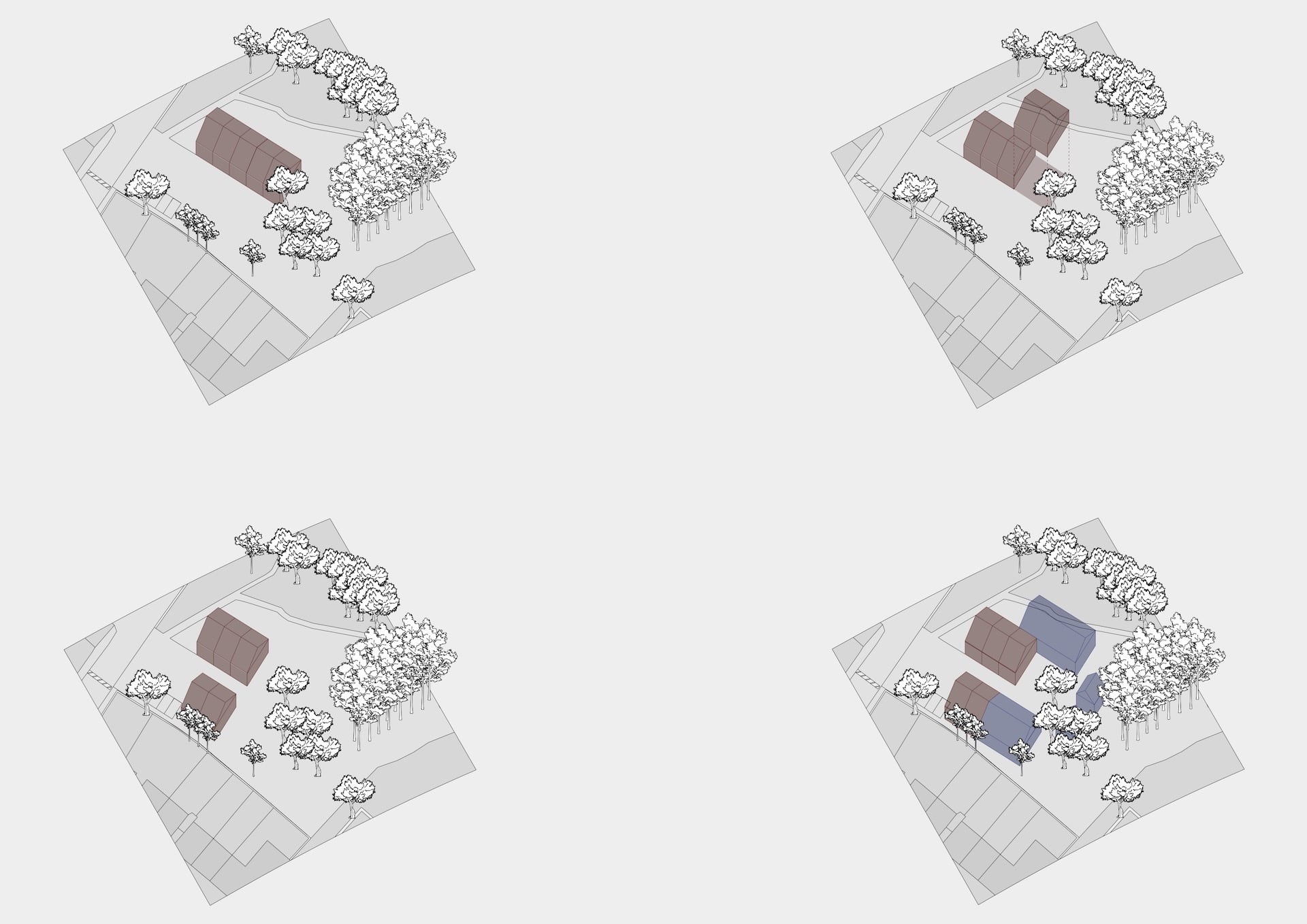
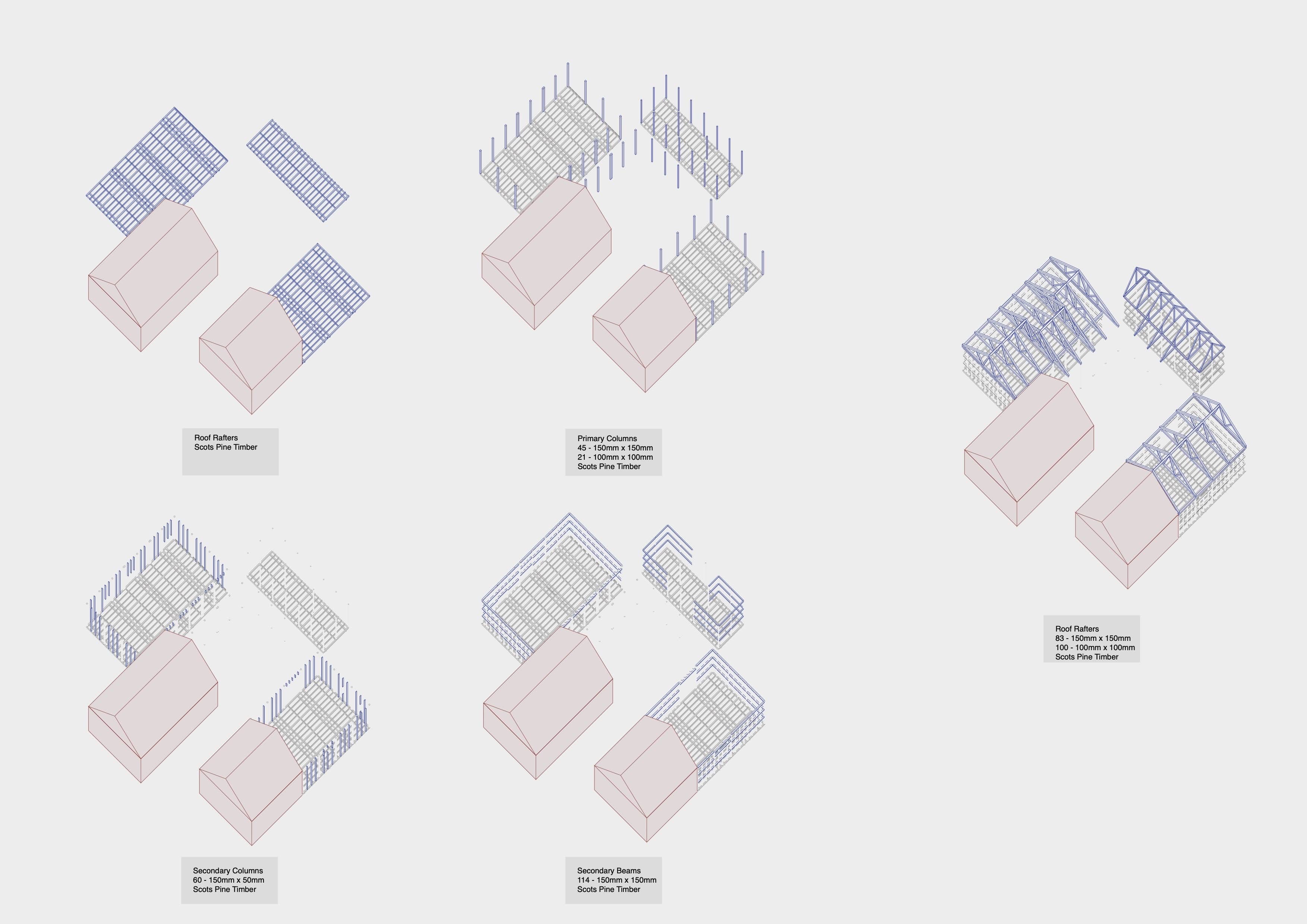
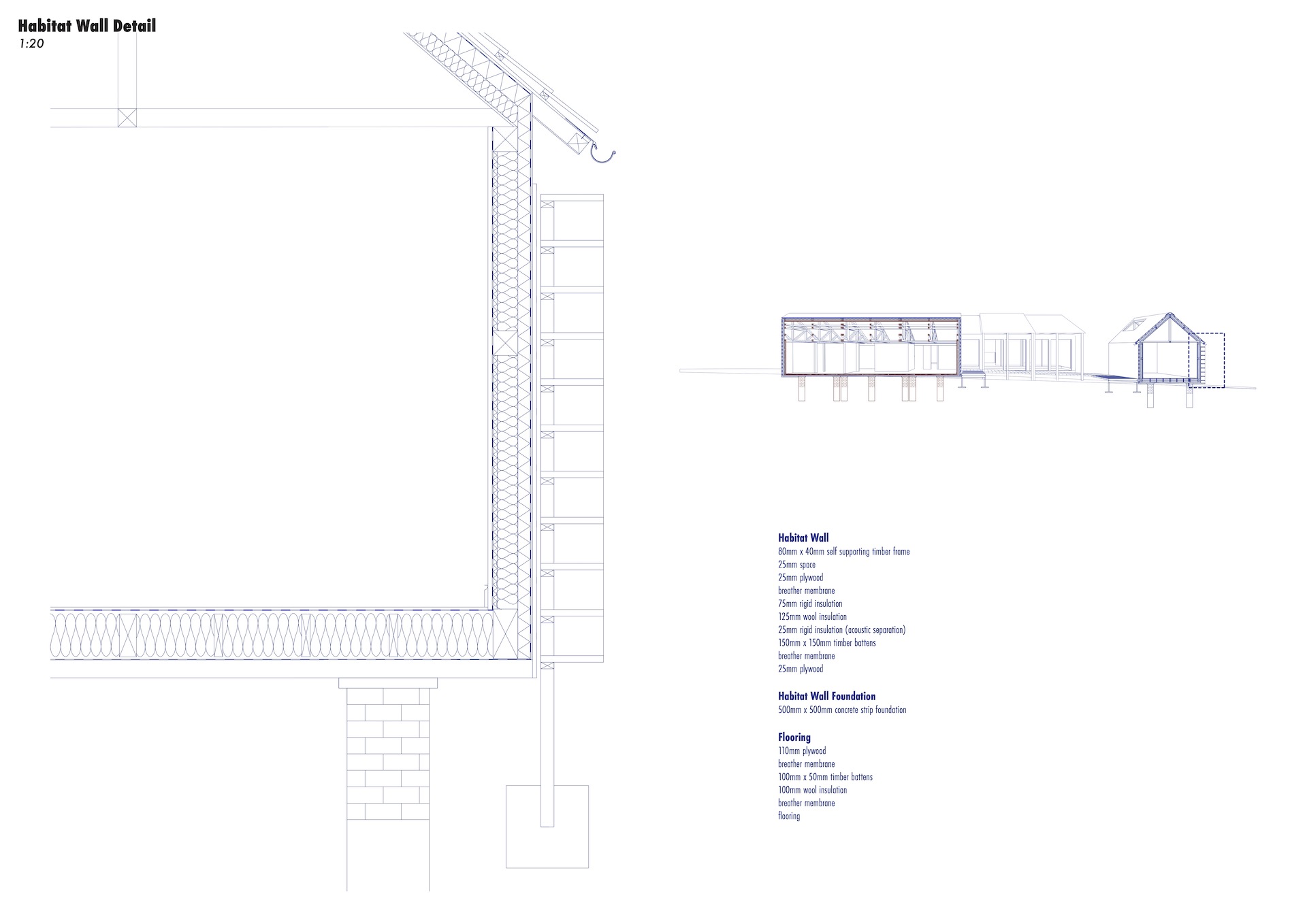
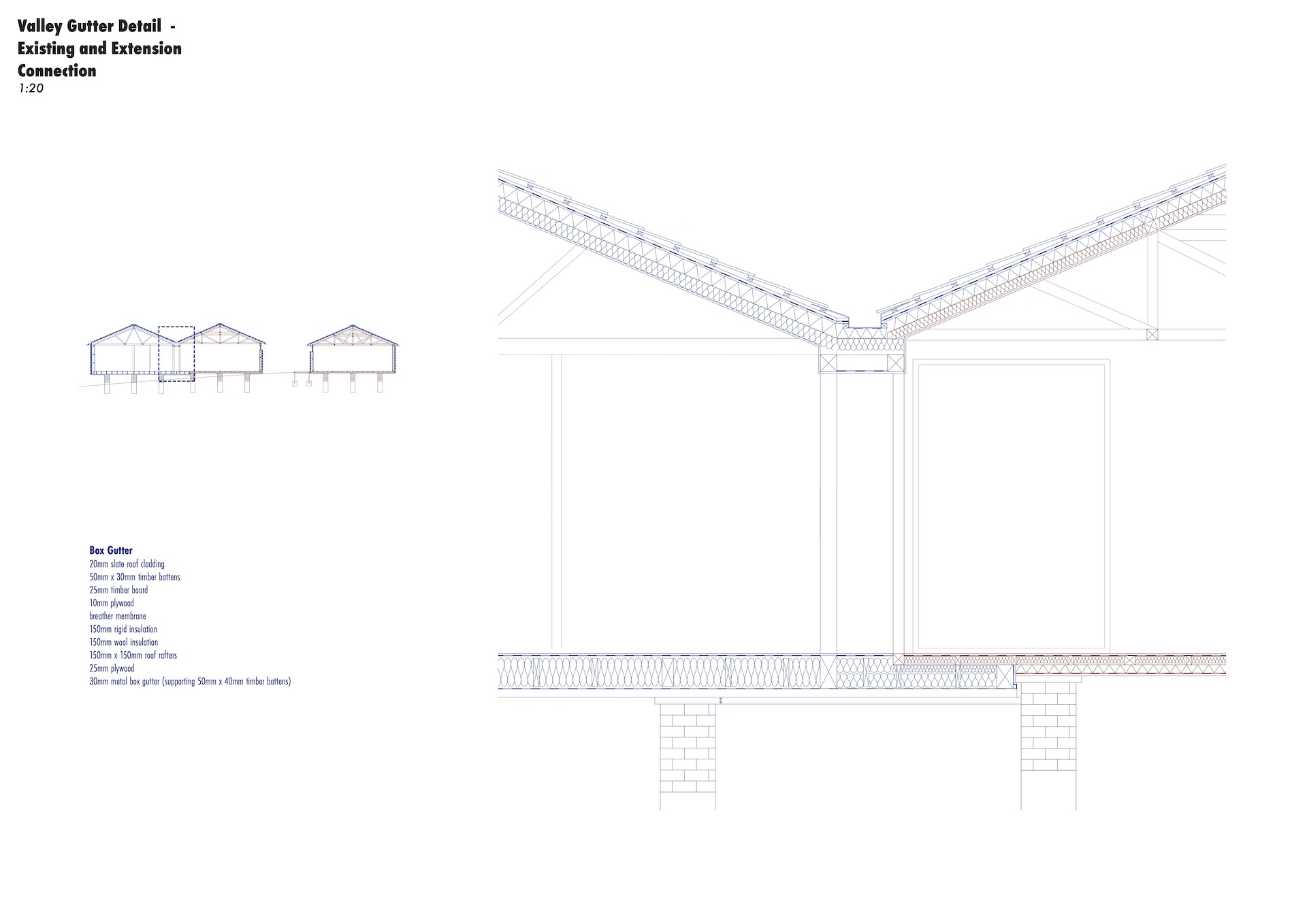
The conservation area settlement pattern creates an intimate and domestic environment throughout the village; encouraging a strong bond within the community. The site is approached by the visitors of the Union Canal as it is also close to the Bridge Inn, the only standing hotel in the village. The site is accessible by all sides, either by pedestrian or vehicular paths. The existing trees are important to the site and should be maintained. The Ratho library has been home to the community ever since its opening day. The library has a very active Facebook group where the community organized weekly events to be hosted in the library. Even though the building’s original function is a library, the community has used it for various other activities. They have organized events for people of any age, from adult coloring clubs to singing nursery rhymes to the children of the community. The demolition of the Ratho Library building greatly affected the Ratho community due to its significance and the values it held. The community was left without a home, forced to host events online in hopes of continuing to connect with one another. The significance the library holds to its highly involved community makes their opinions and needs the priority in the new development on the site. The re-use strategy makes use of the modularity of the building structure. The structure in the individual modules will either remain in their places or moved on-site depending on the program of the new proposal. The modularity of the design allows for flexibility and easy deconstruction and re-construction where needed. The final program requires the building to be separated into two: 3 modules kept in their original place, two replaced on site. This diagram creates an inventory of the quantity of structure in each separation.




Our unit was divided into groups that were assigned to the same demolition site. The related student work feature work from students that have also worked on the Ratho site to develop a new scheme for the community.