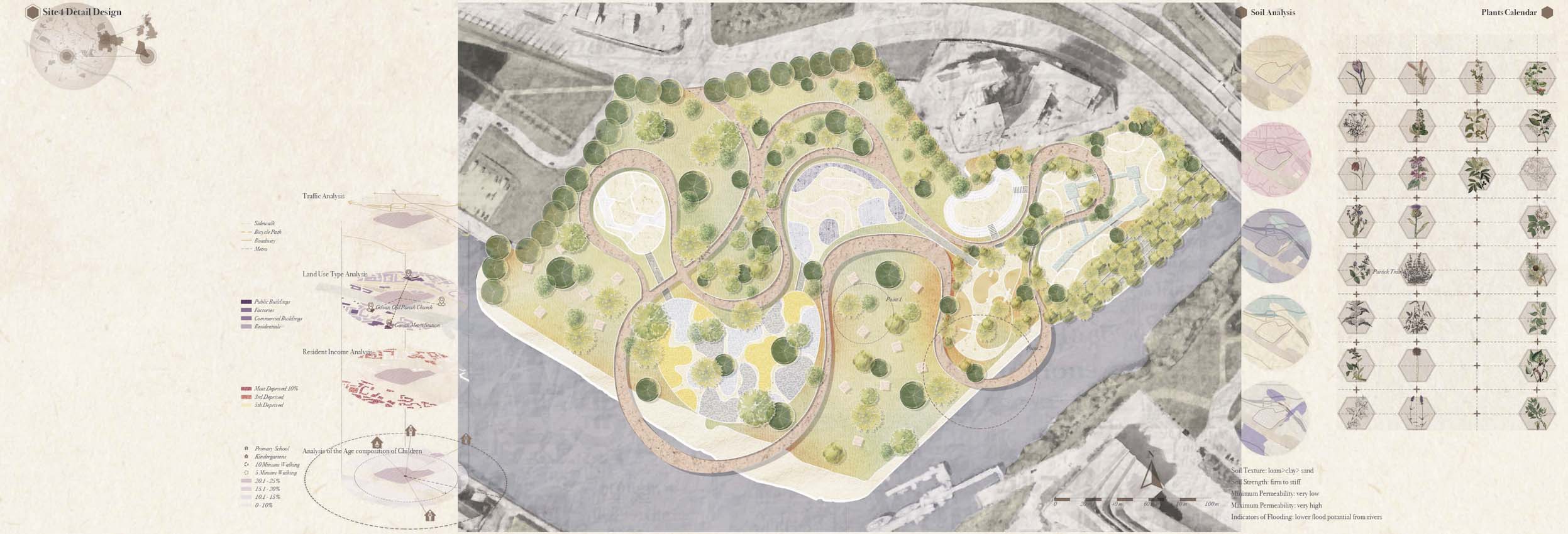


My design concept is to enhance the connection between children living in low-income areas of Glasgow and nature and to provide children with quality outdoor activity spaces.
During my analysis and design exploration, I learned that the number of bumblebees, an endangered species in Glasgow, has been declining in recent years. The main reason for this phenomenon is that green spaces in the city that are rich in herbaceous plants, have been greatly reduced or have even disappeared completely in some areas. Therefore, this semester, I made the protection of bumblebees in Glasgow the starting point of my project and my design vision is to create biodiverse urban gardens that provide science activities and outdoor classrooms for children living in low-income areas.
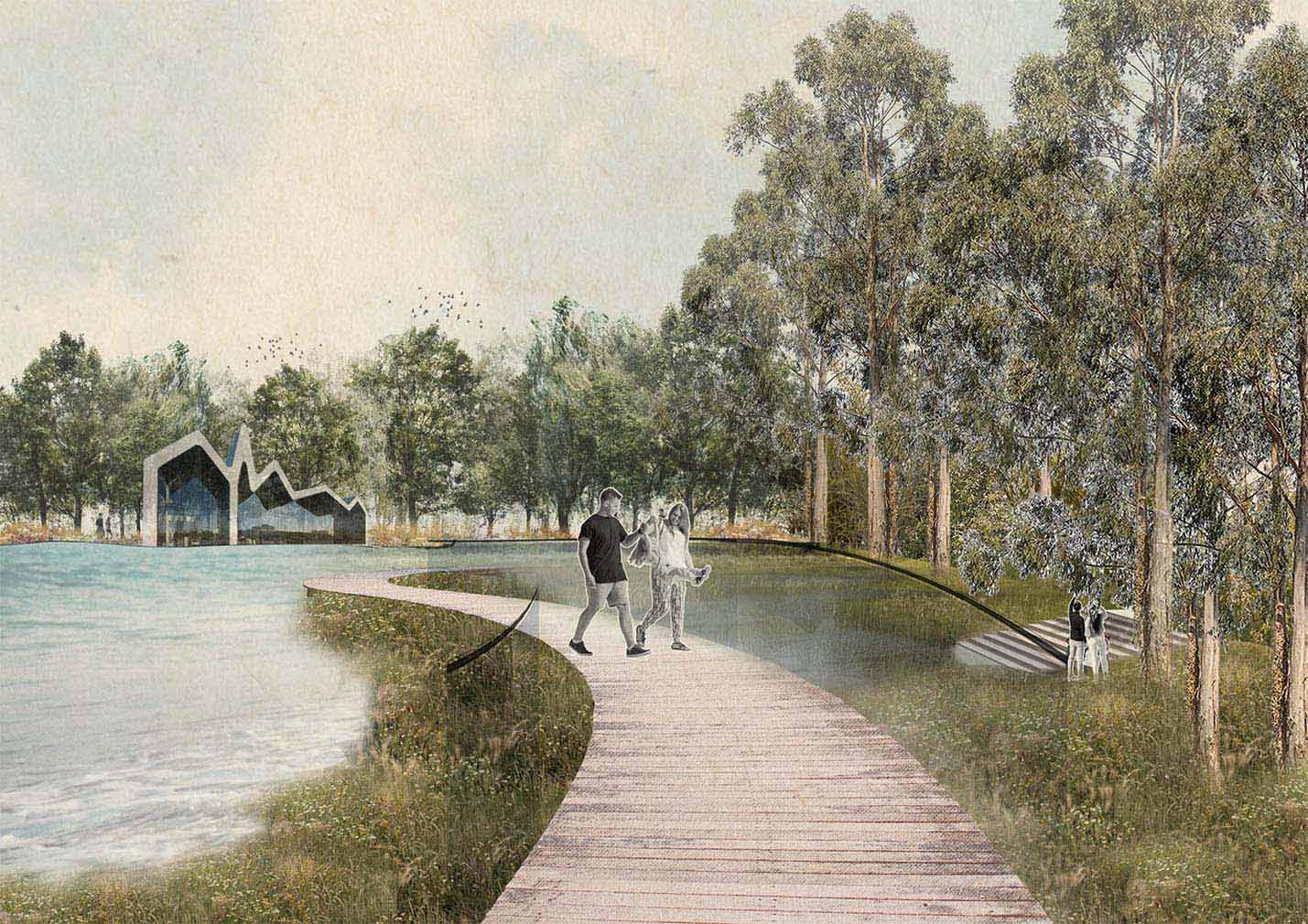
The introduction of nectar herbaceous flowers that can provide food for bumblebees in sites makes these green spaces gradually become more stable habitats for bumblebees in the city. In this process, the prey of bumblebees will gradually appear in the venue, and at the same time, its predators will be attracted to the venue, and finally a relatively complete small ecosystem will be formed in the venue. When changes occur inside the site, as the number of bumblebees increases, their contact with the outside of the site will become more frequent. As the frequency of activities increases, bumblebees will bring the plants in the site to different corners of the city through their own pollination. Over time, all kinds of herbaceous flowers and plants will gradually take root and sprout in every corner of the city, which will also attract more and more bumblebees to the city. In a few years, the urban green space will grow various colors of herbaceous flowers in different seasons, and at the same time, the richness of other plant and animal species will also increase. Bumblebees and the abundant flora and fauna in the site provide opportunities for outdoor science education and a variety of activity Spaces for children.

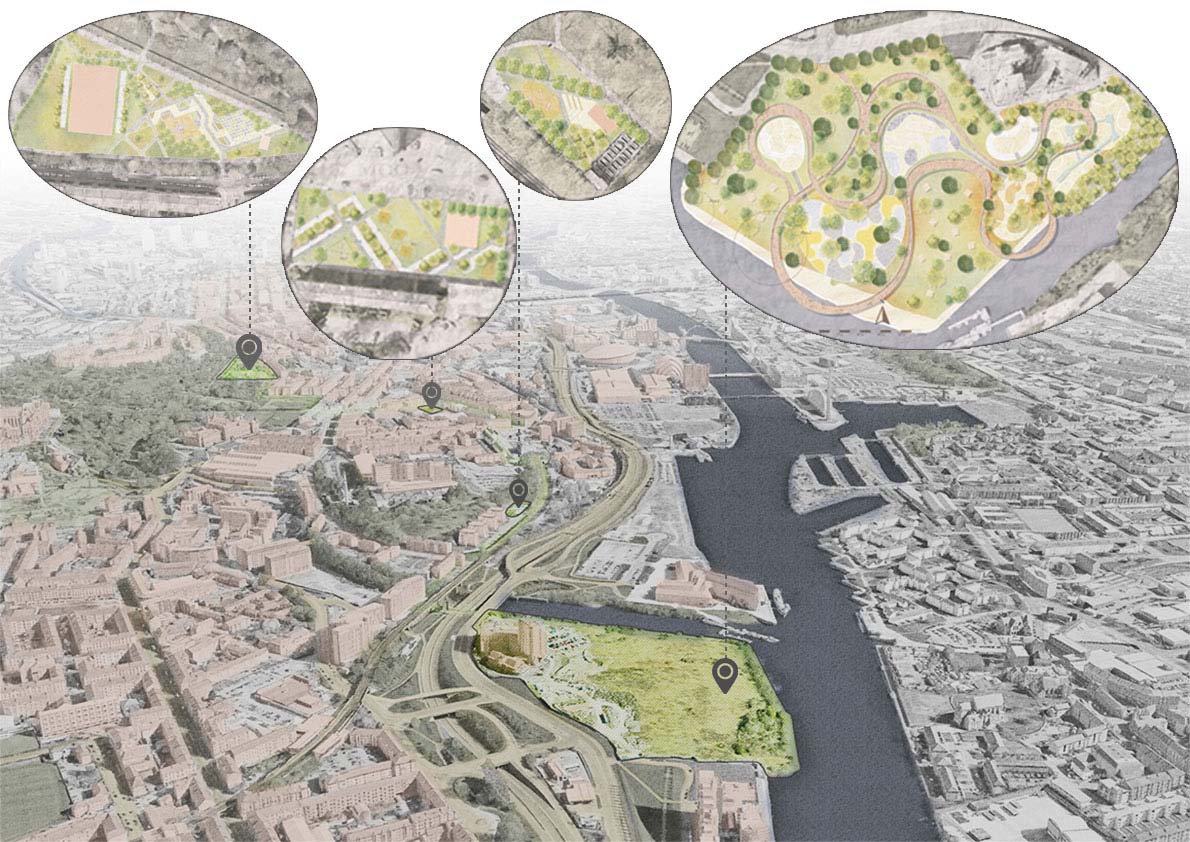
I chose two types of sites as the starting point for the design site of this semester. One is the green space that contains playgrounds and can serve children in the surrounding low-income areas, and the other is the open space in the city to be developed.