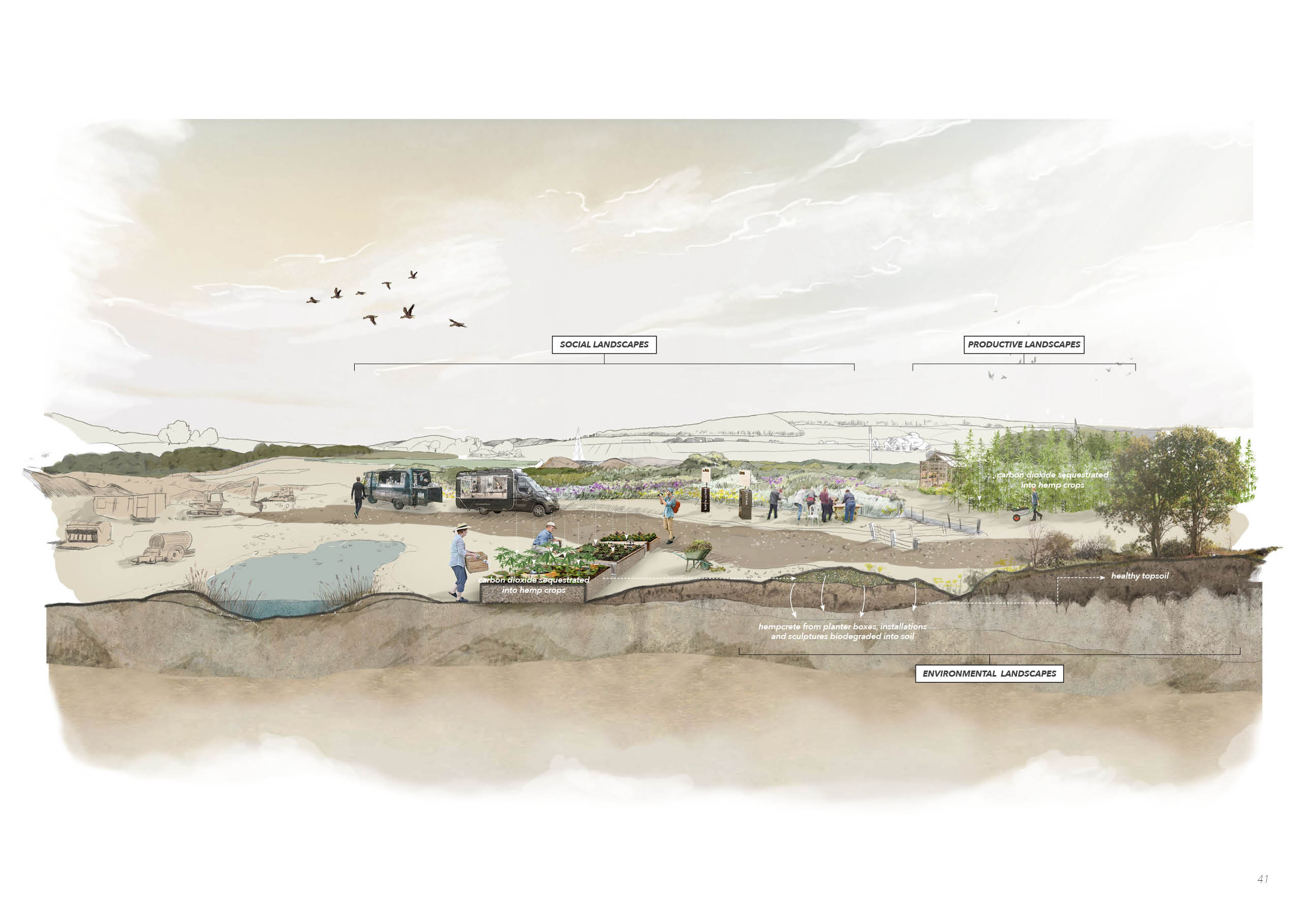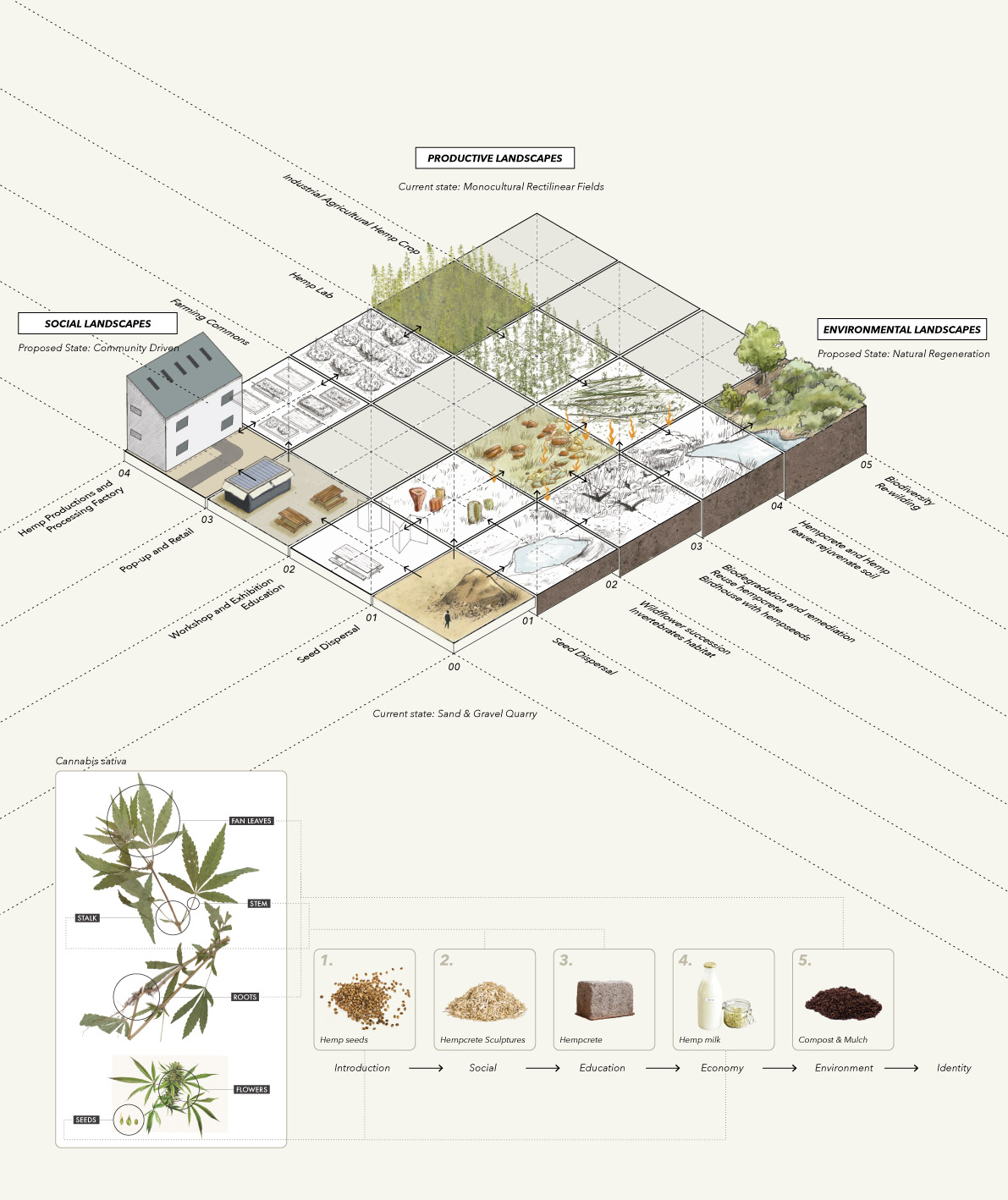

Cromarty Firth was once an important military base and an industrial site in Northeastern Scotland, both of which are still signified by the vestiges of physical installations that still sit on its landscape. As we enter the post-industrial zeitgeist that has begun to arise as oil and fuel prices began to slump, and the industrial heritage decommissioned, the question addressed in this design project is: what might the future of post-industrial landscape become, beyond the undesirable aftermath created in the Anthropocene?
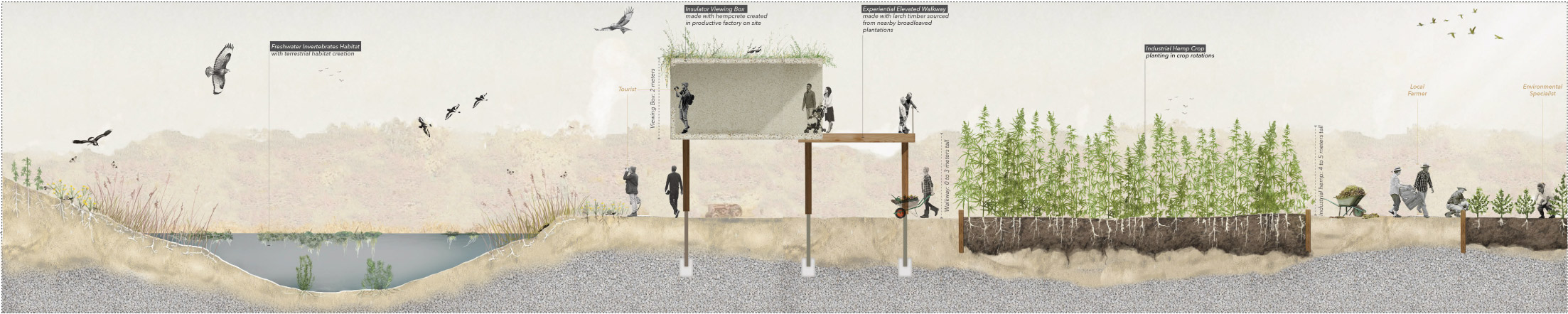
The reintroduction of hemp, a historic crop that had once brought prosperity to the Highlands in the 18th century, is to weave together social, ecological, environmental and economic threads to produce a fabric of sustainable growth of an indigenous kind. These intersecting domains create opportunities to boost the economy in a re-localised way with concerted efforts, to abate climate change and increase biodiversity, and to encourage community participation in a renewed socio-ecological economy.
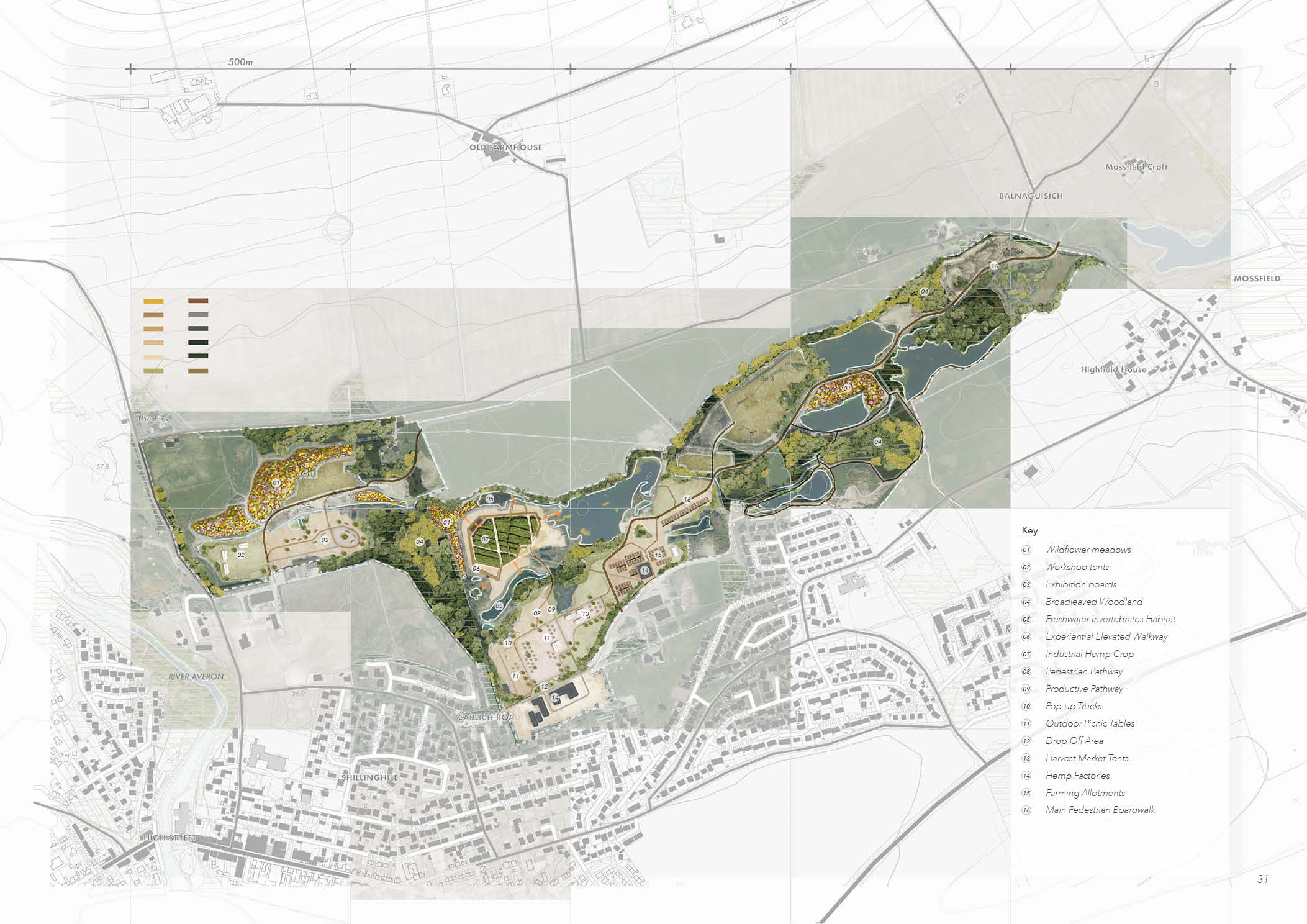
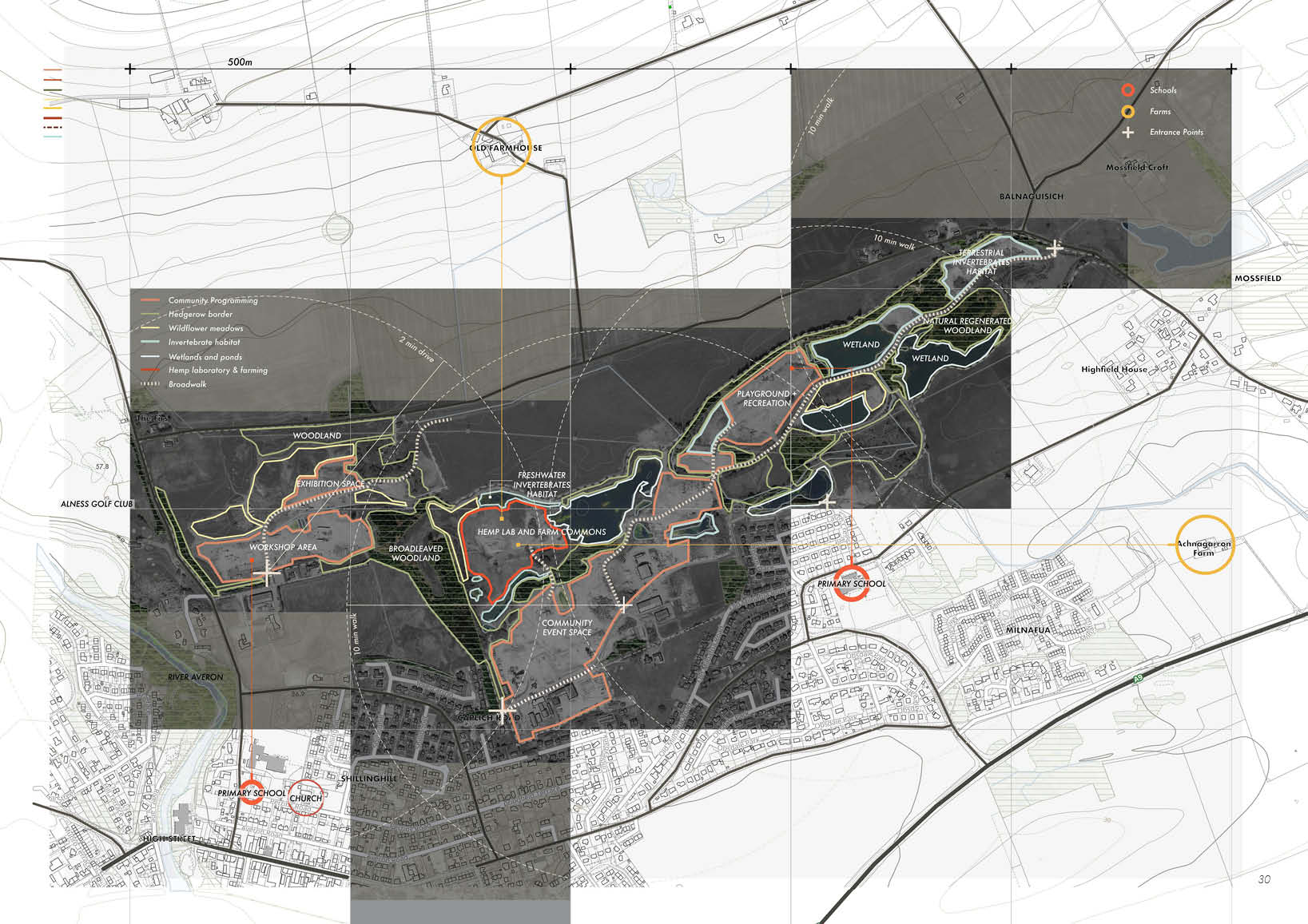
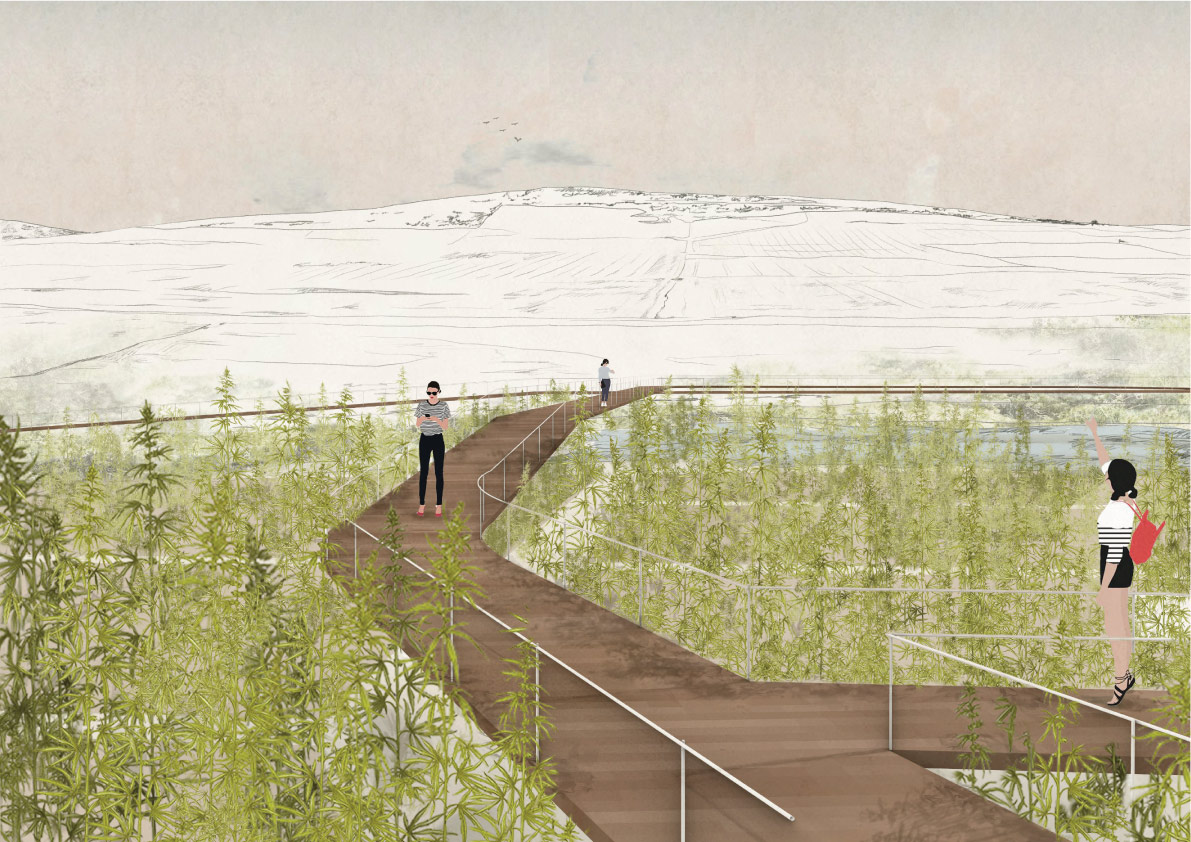
Remediating semi-derelict industrial landscapes such as the quarry site adjacent to Alness, and repurposing it into a Hemp Park, creates an opportunity to explore the extent of using hemp as an instrument for ecological transformation to remediate and regenerate disturbed landscapes. In the more distant future, the Hemp Park would create a productive and dynamic landscape to serve as a precedent for a renewed socio-ecological society that moves the area beyond the Anthropocene track of human dominance.