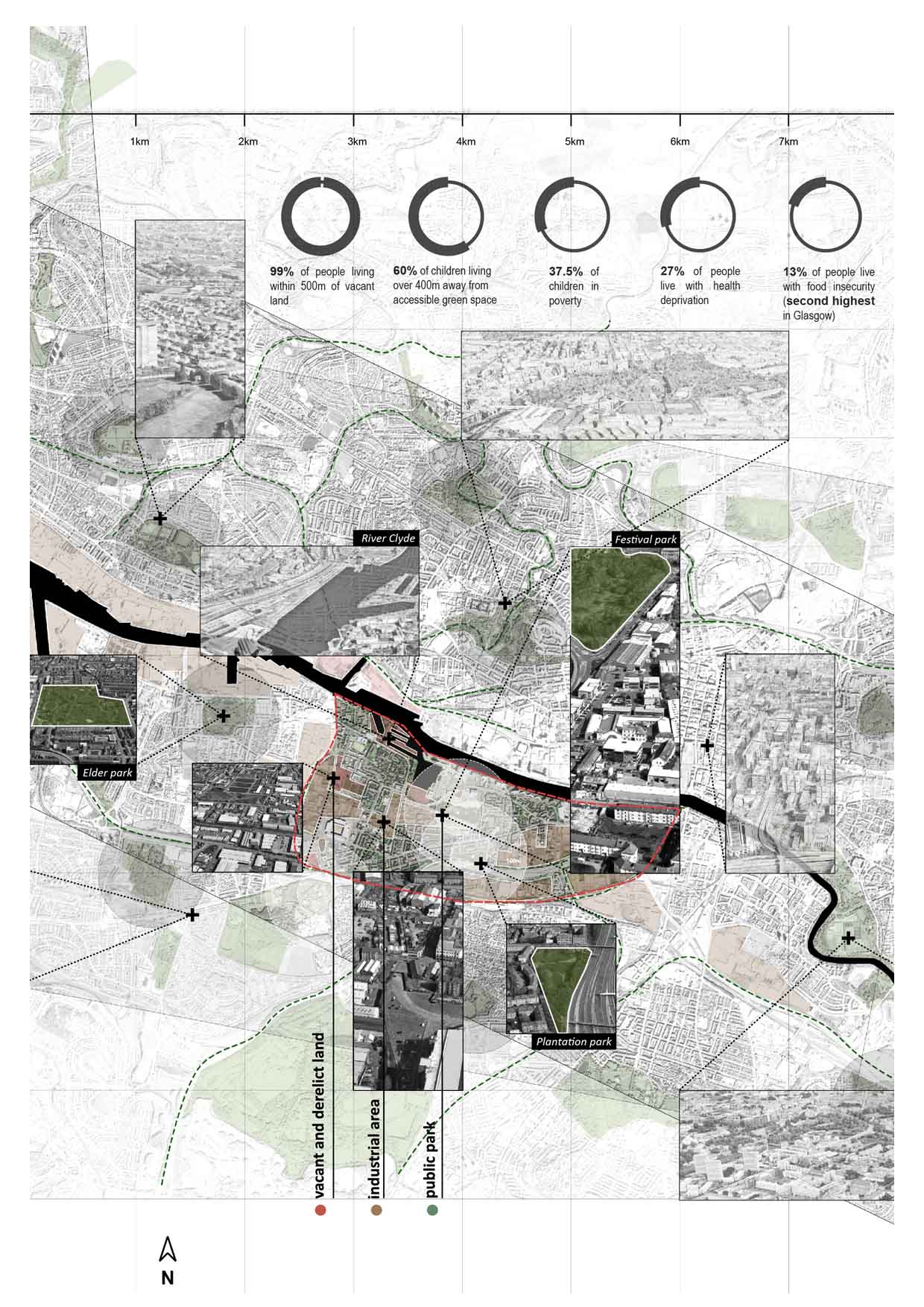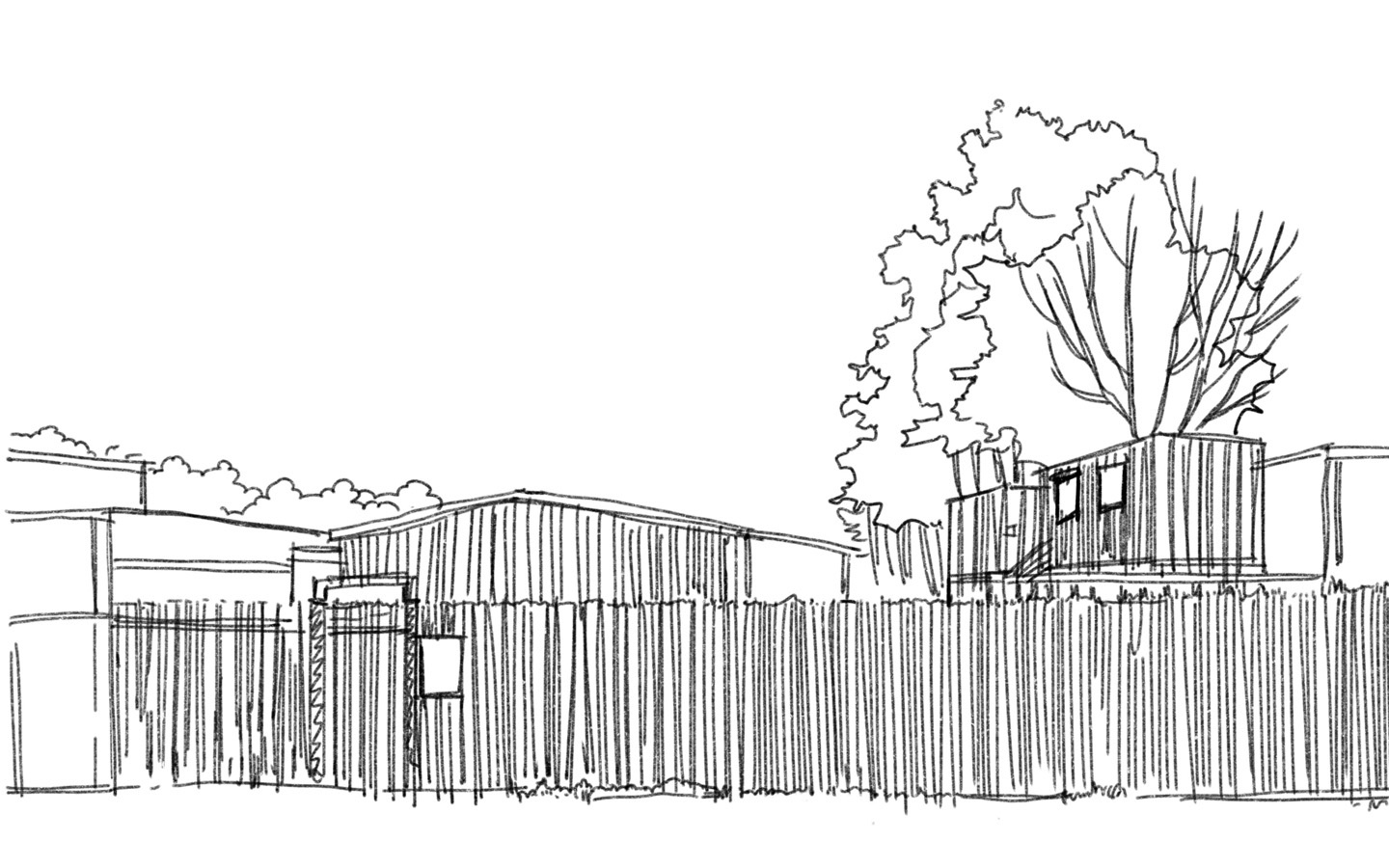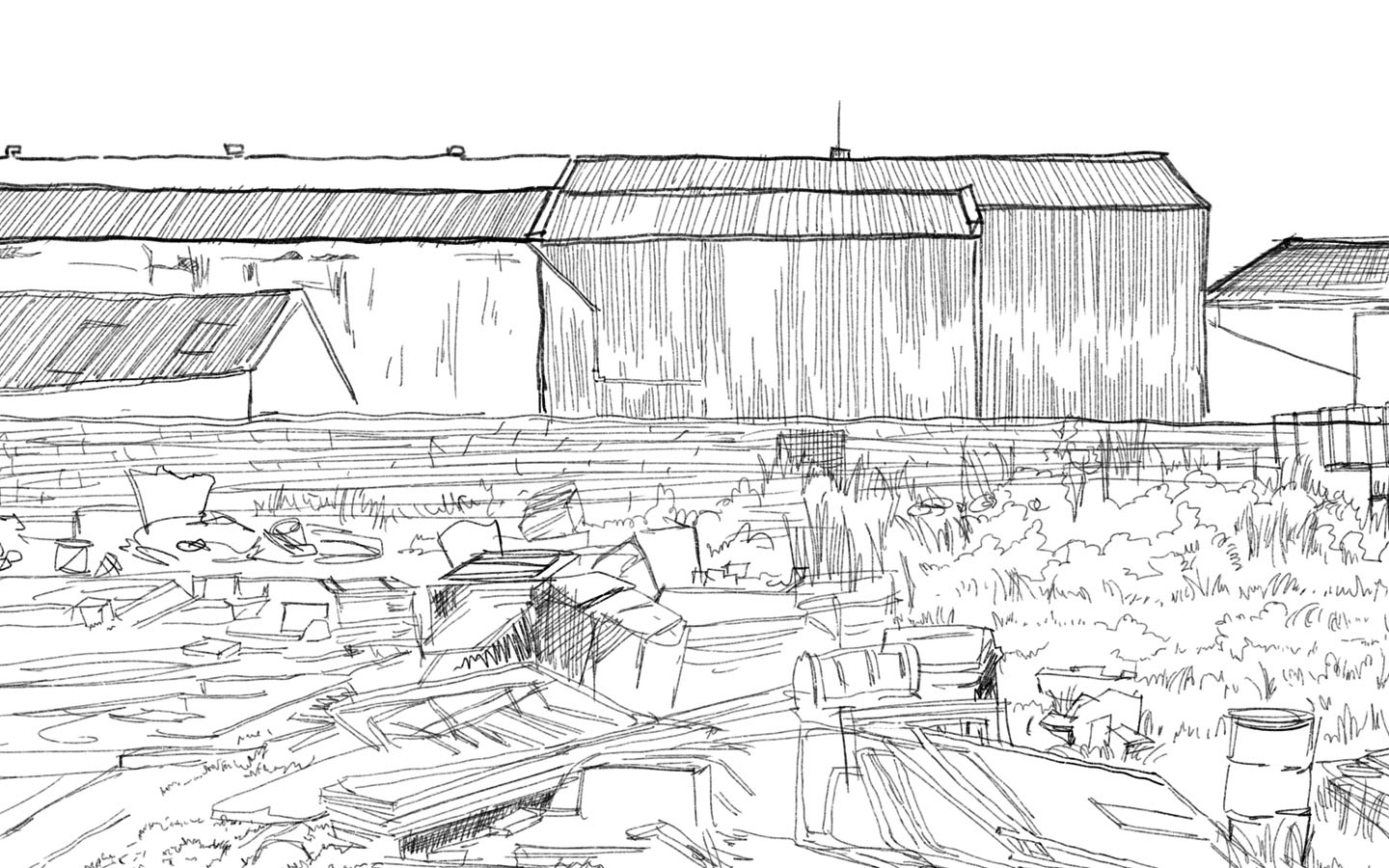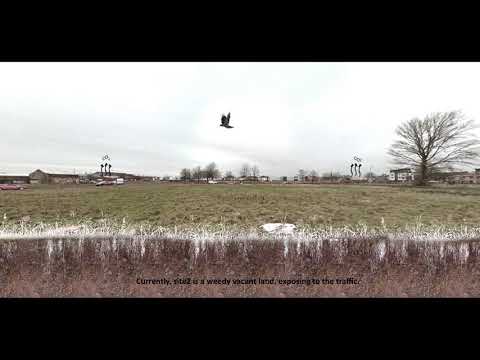

Lacking green spaces has resulted in severe ecological as well as socio-economic problems. Public transportation and domestic consumption resulted in Greenhouse gases, while industrial activities brought the site more contamination. Without green space to purify the air and remediate the soil, the climate and environment gradually damage human health and more than human.
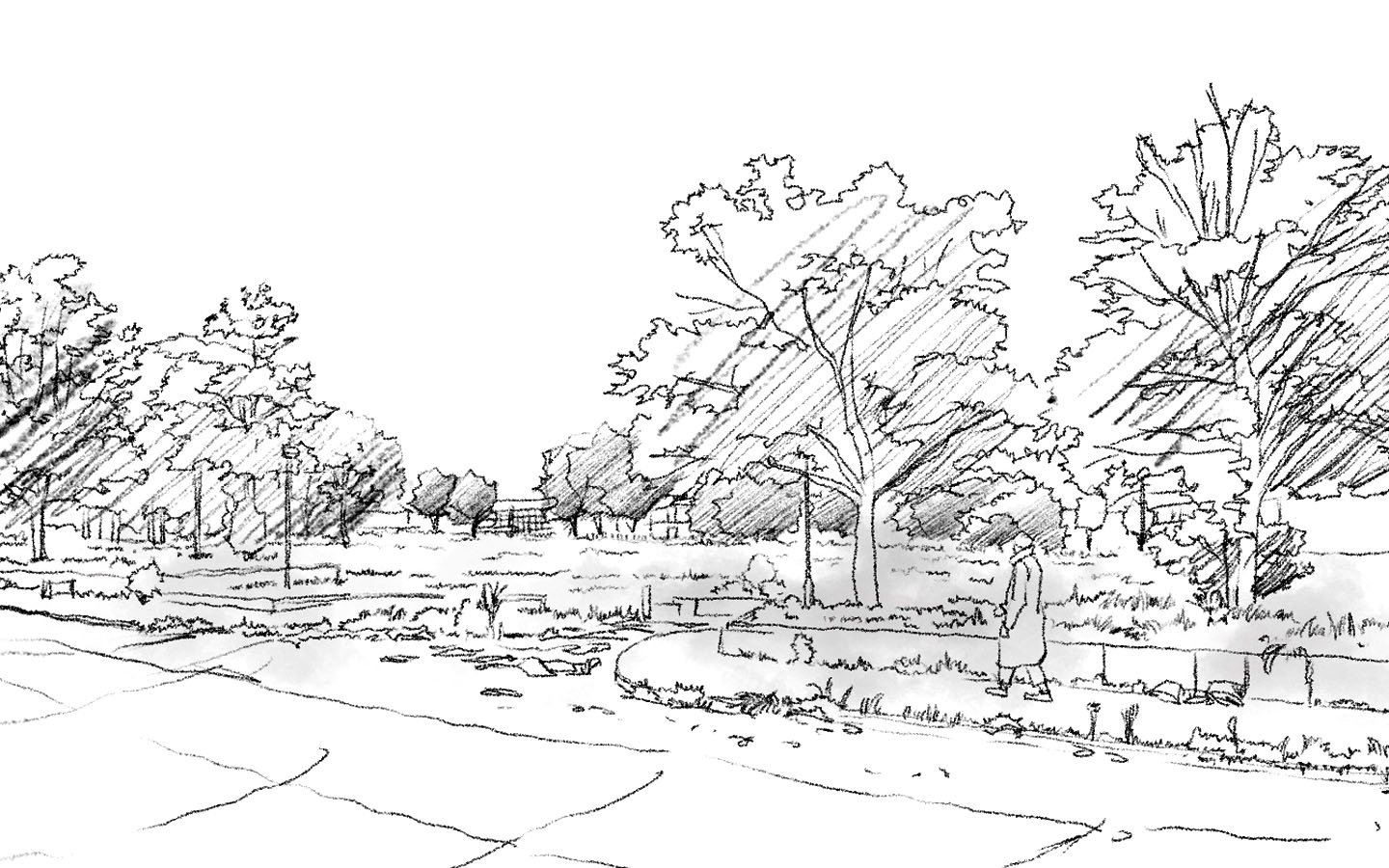
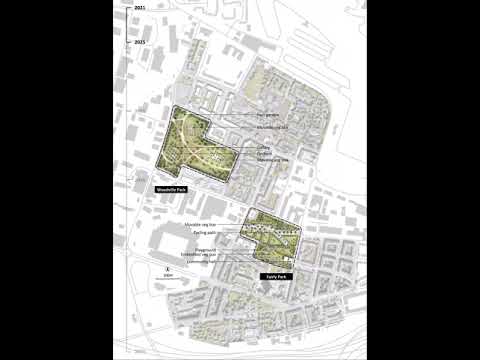
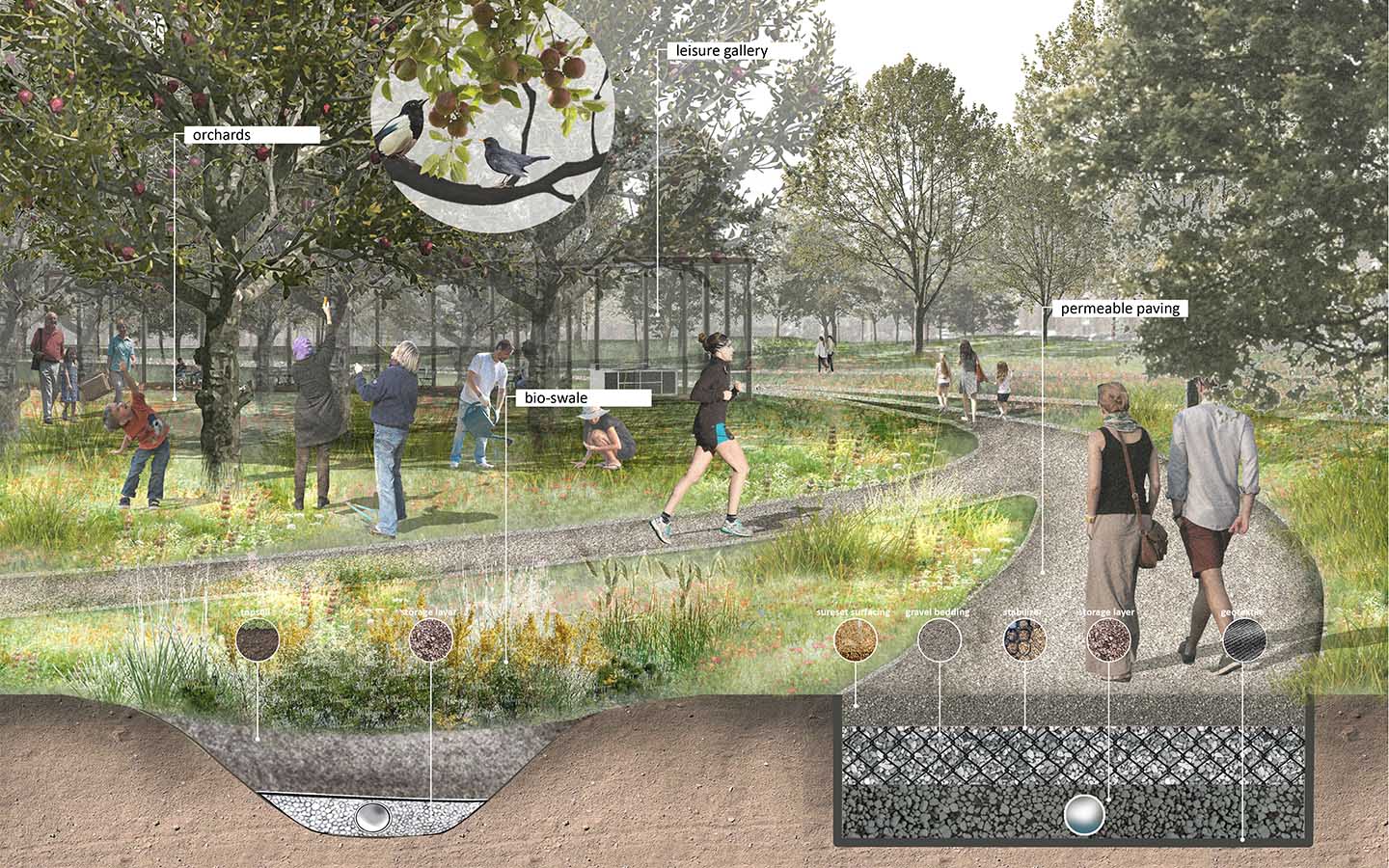
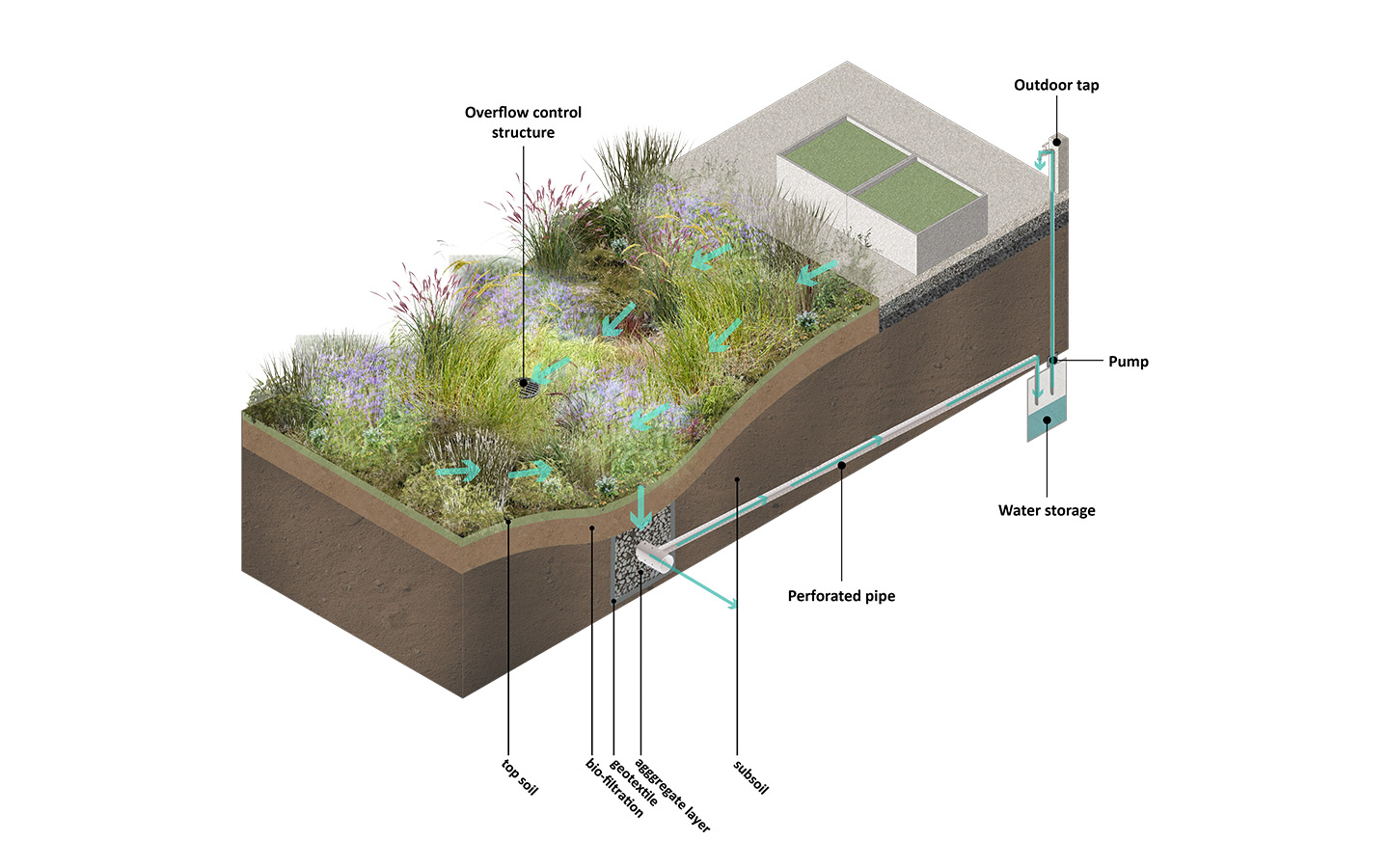
To solve these difficult problems remaining for over 100 years, the neighbourhood should have sufficient public green spaces for human and more than human. Firstly the contaminated soil must be remediated. More trees and shrubs should be planted because the roots can absorb the pollutant elements and transform them into nutrition. The seeds can also stabilize the soil and fertilize the soil. The urban forest can also effectively absorb carbon dioxide and nitrogen dioxide, improving the air condition.
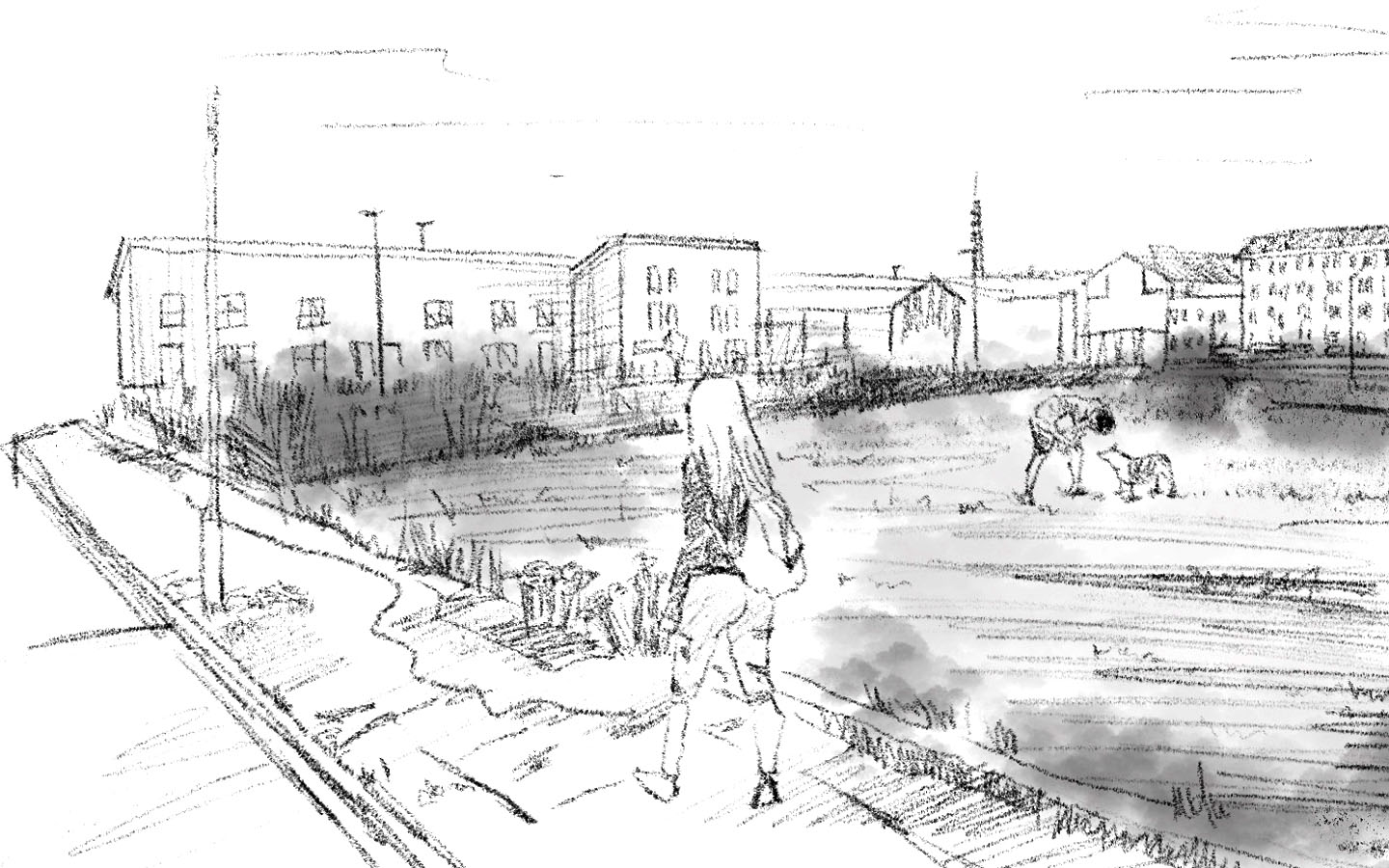
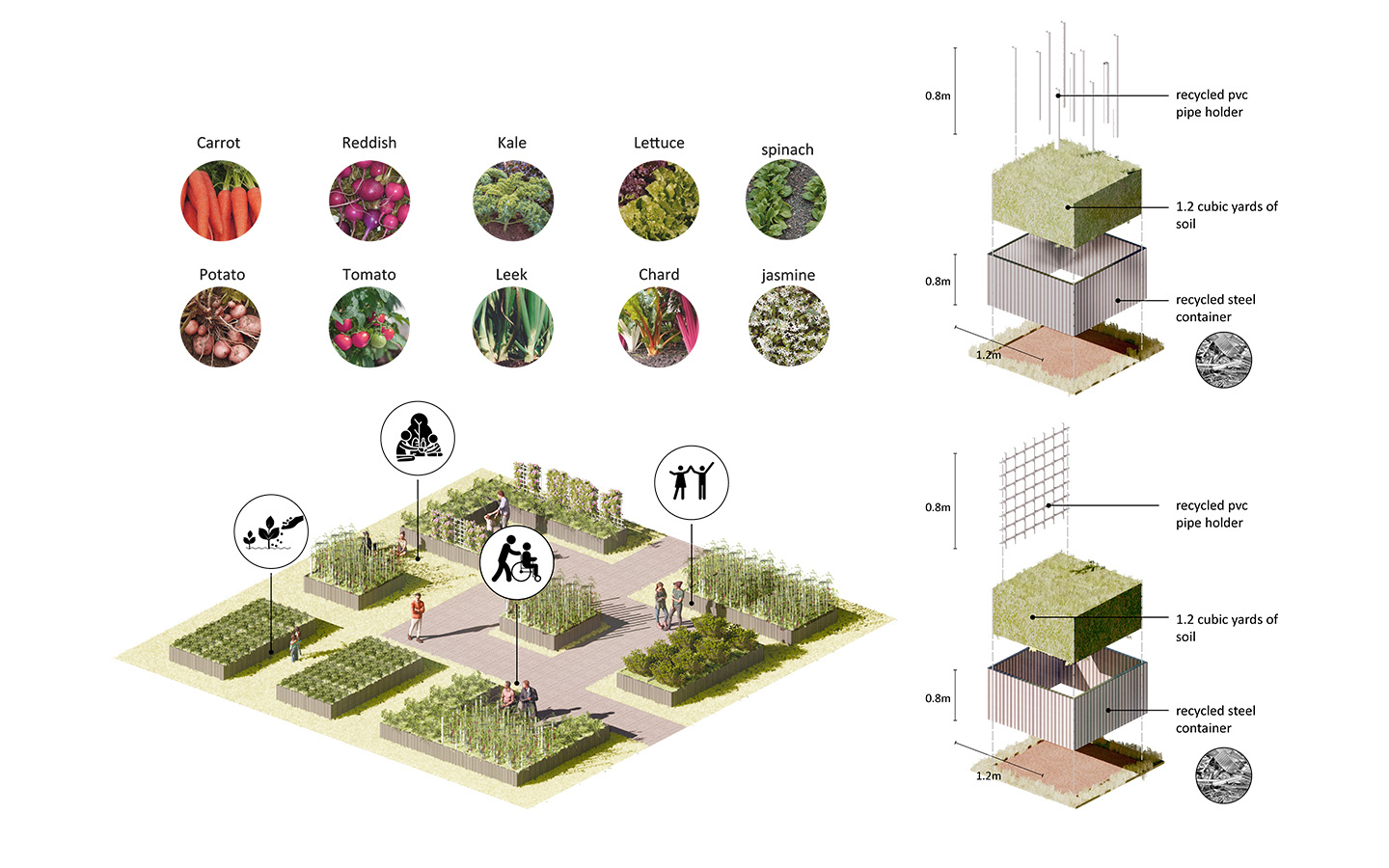
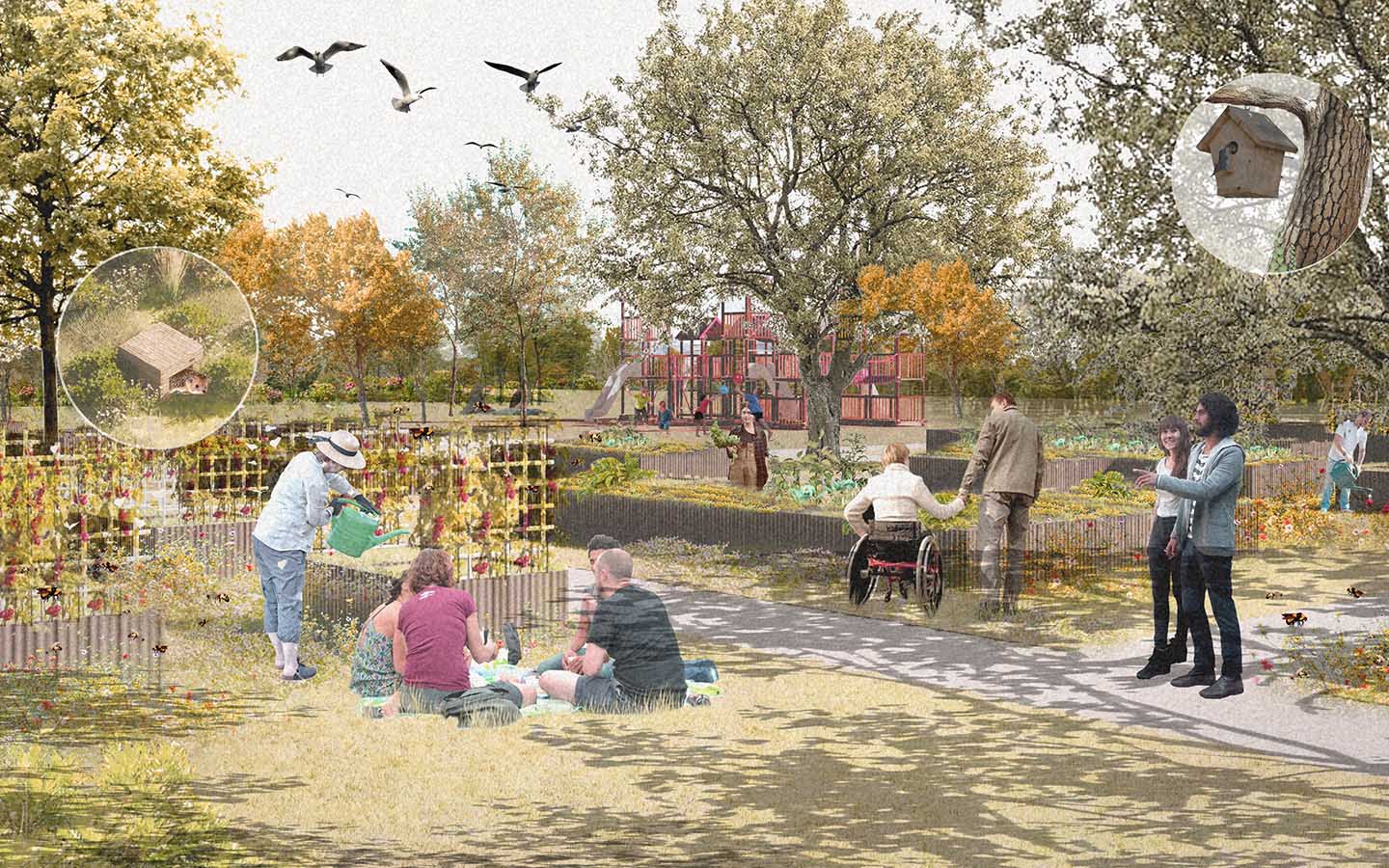
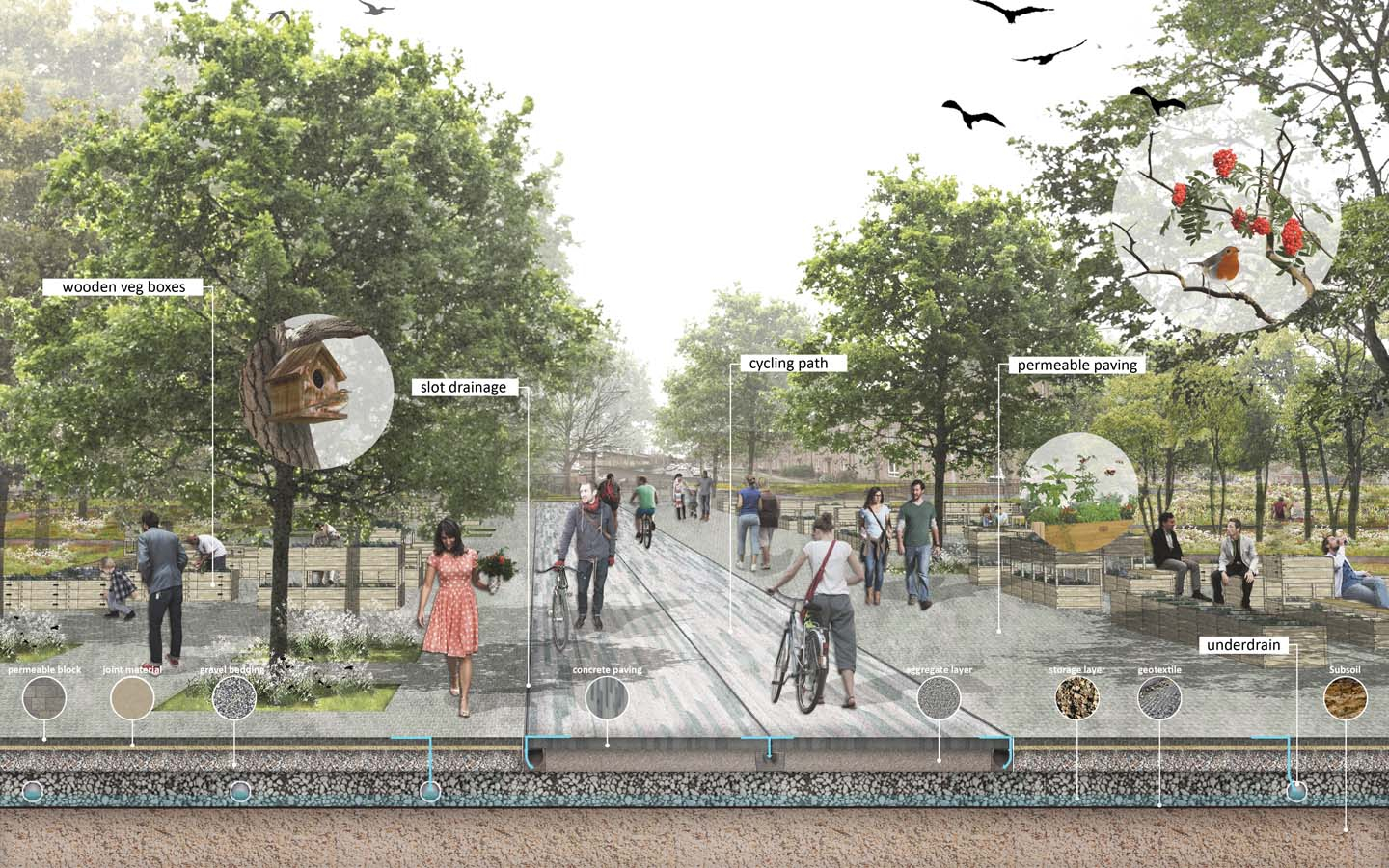
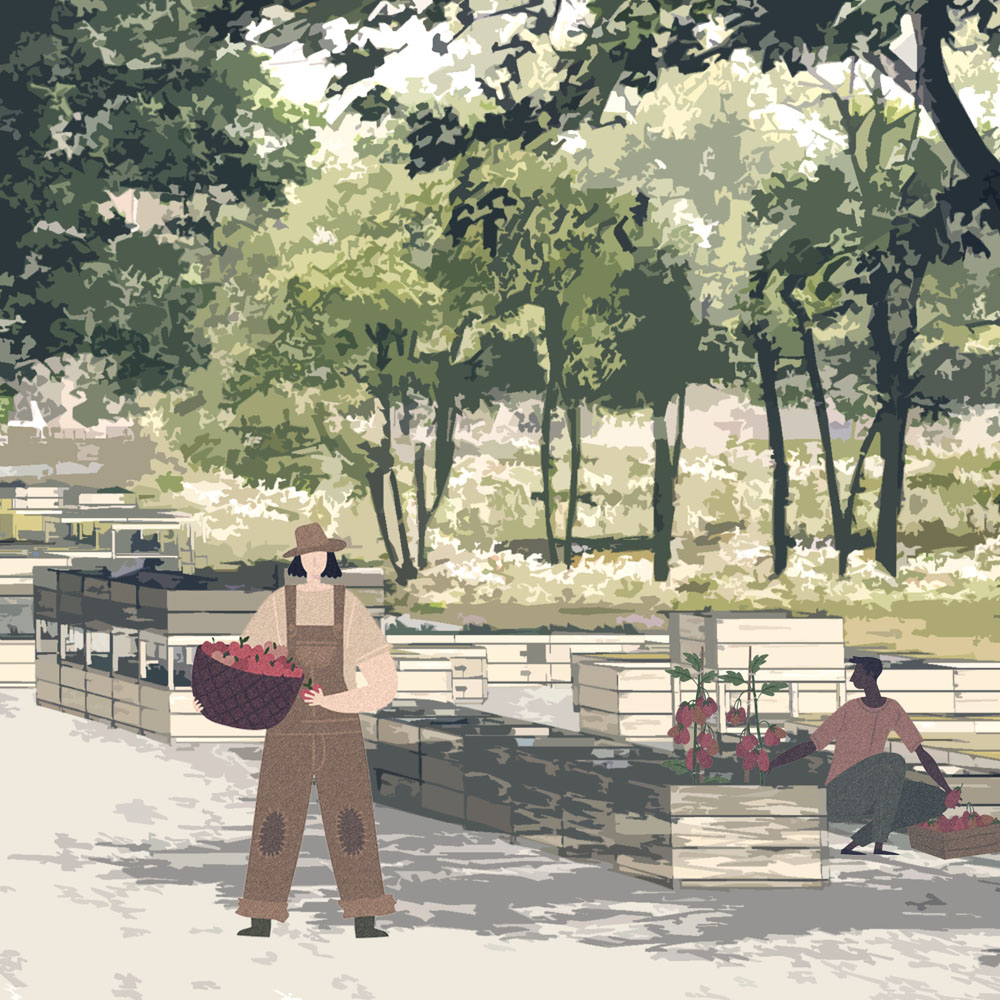
Urban agriculture is another proper strategy to activate the area. Usually, urban agriculture can be employed on vacant and derelict land. Residents can also be encouraged to participate in horticulture activities. Urban agriculture with ecological irrigation and cultivation can effectively transform vacant land into an active open green space. Urban agriculture can also activate economic activities with markets, bars, and kitchens, providing more chances for people to do social activities. Besides, crops and fruits are also healthy food resource for urban wildlife.