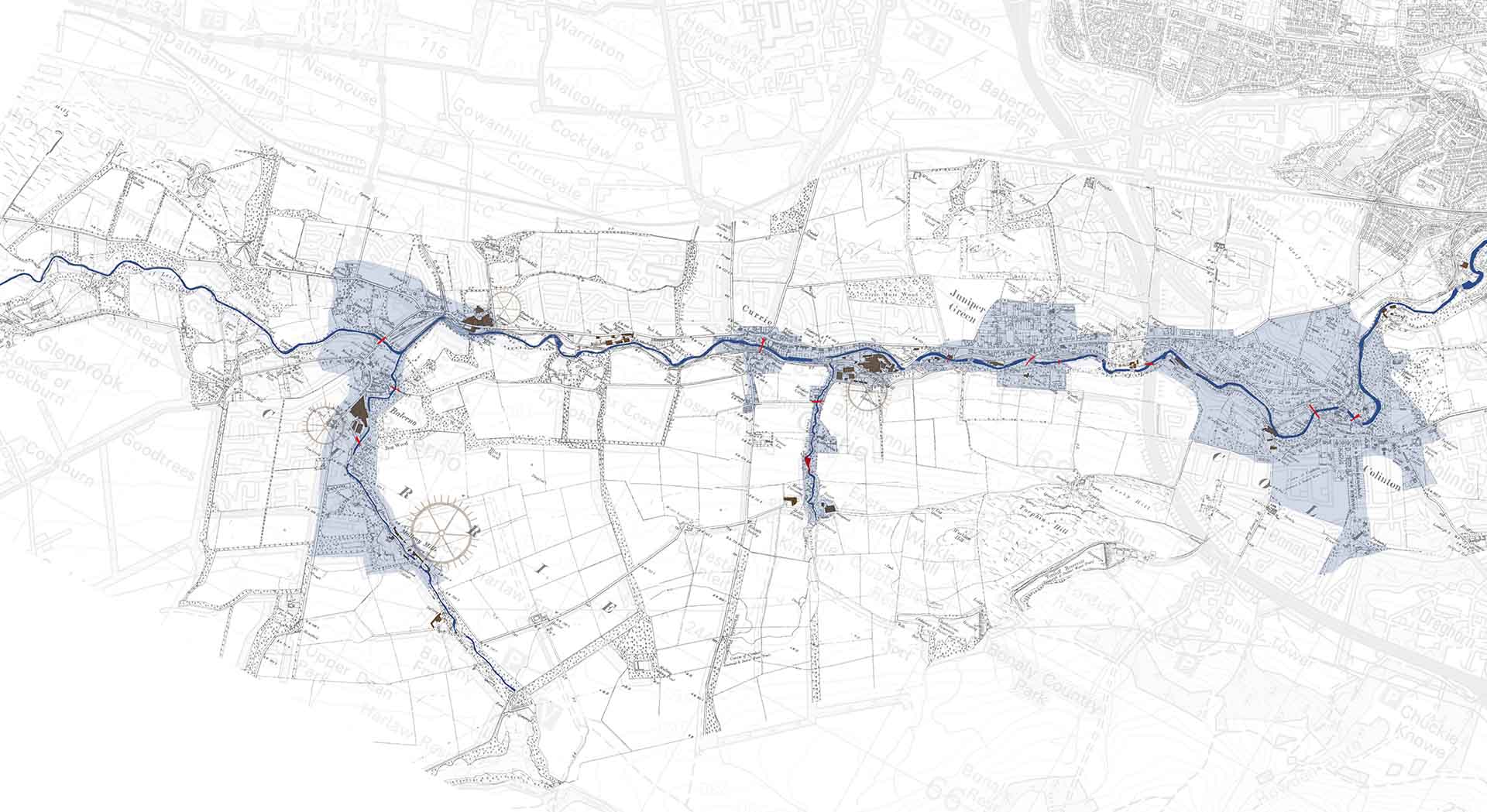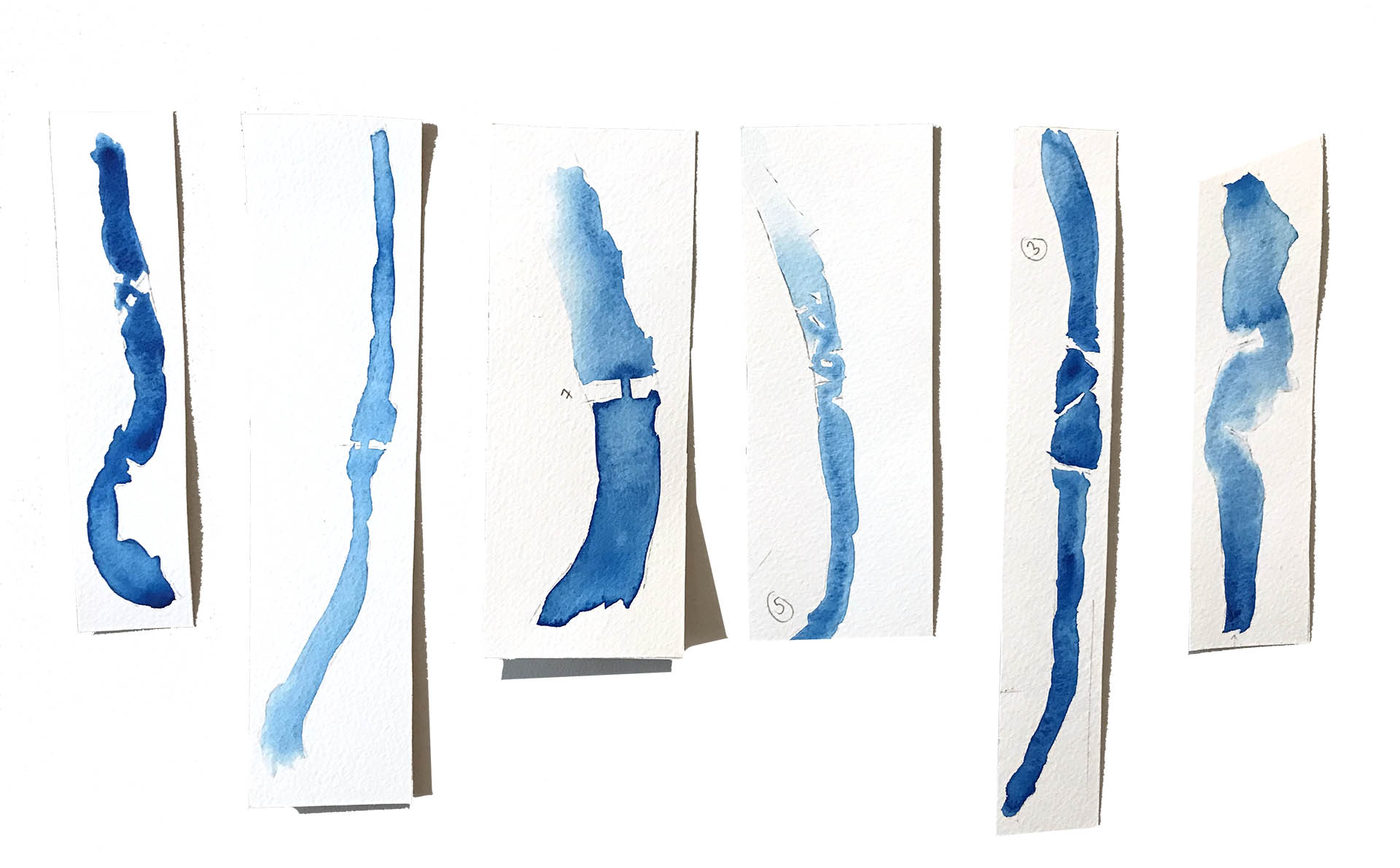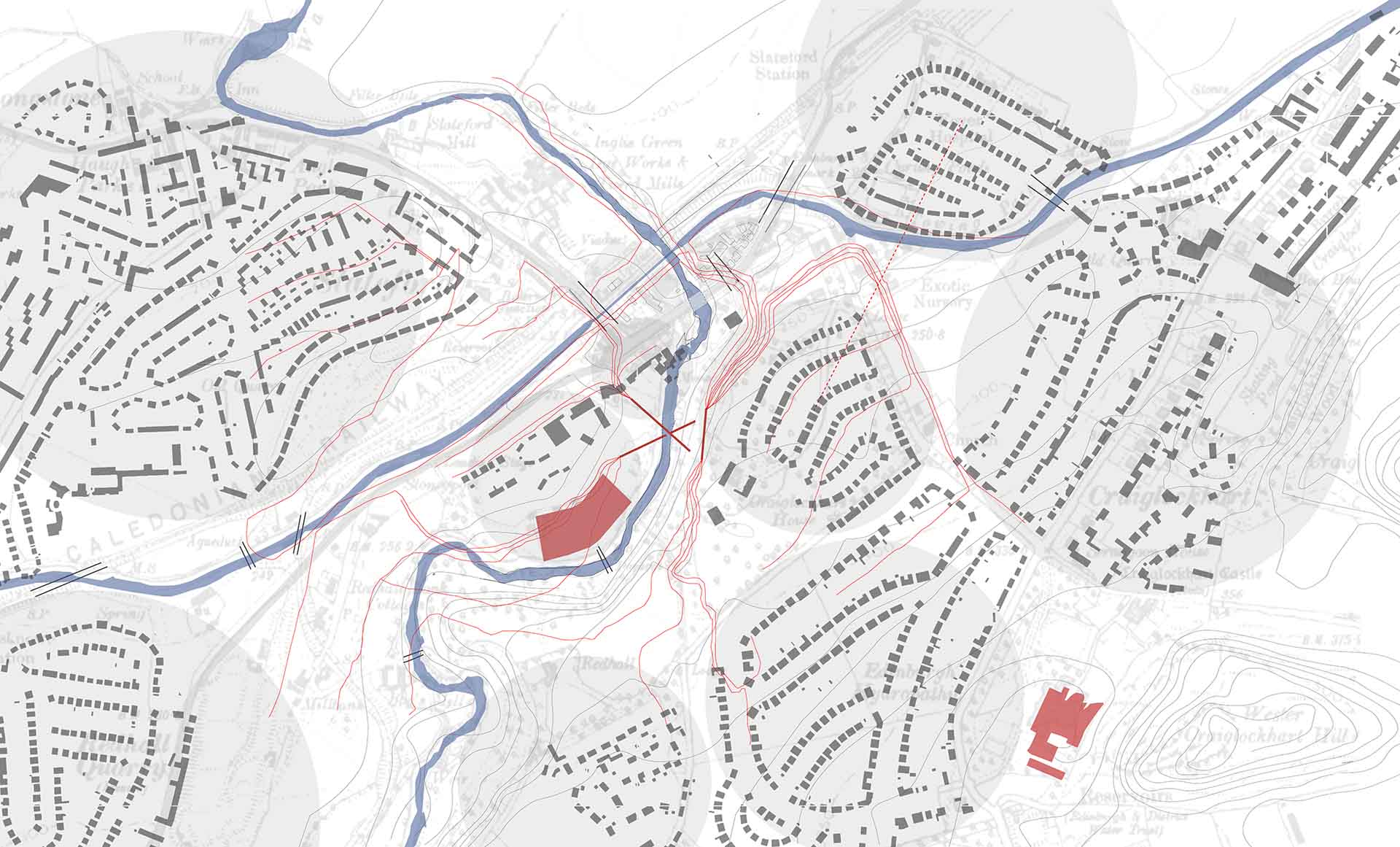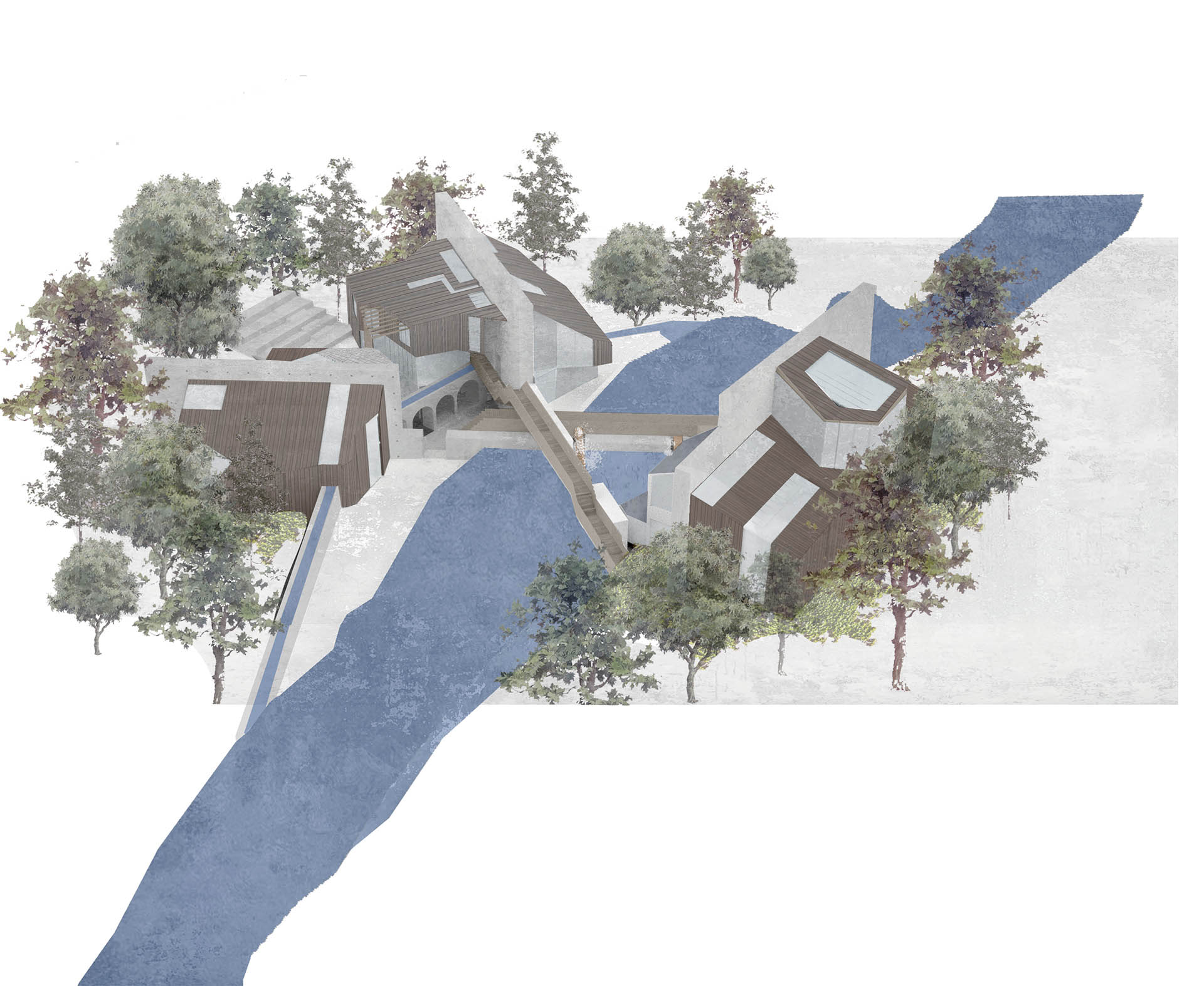


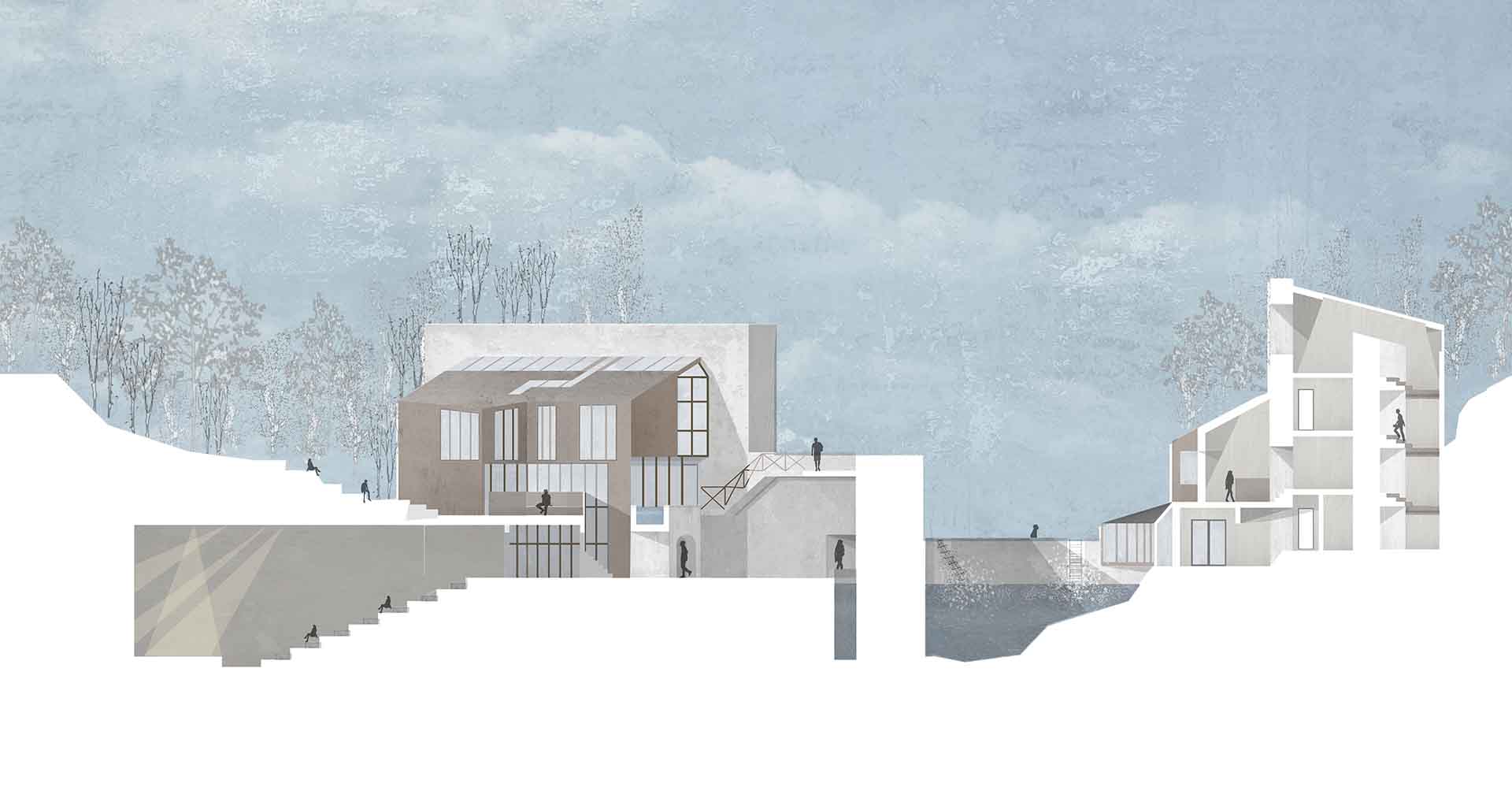
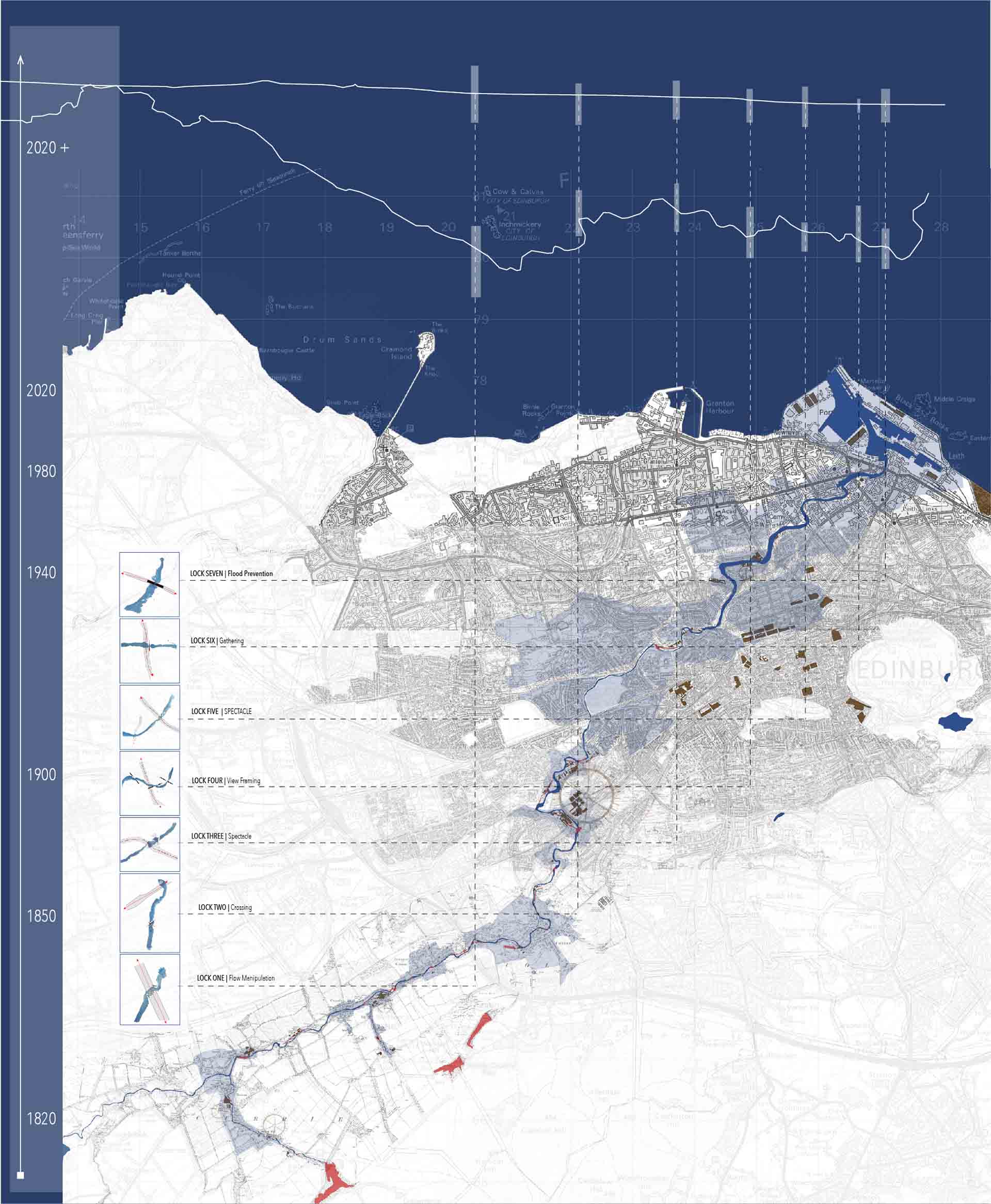
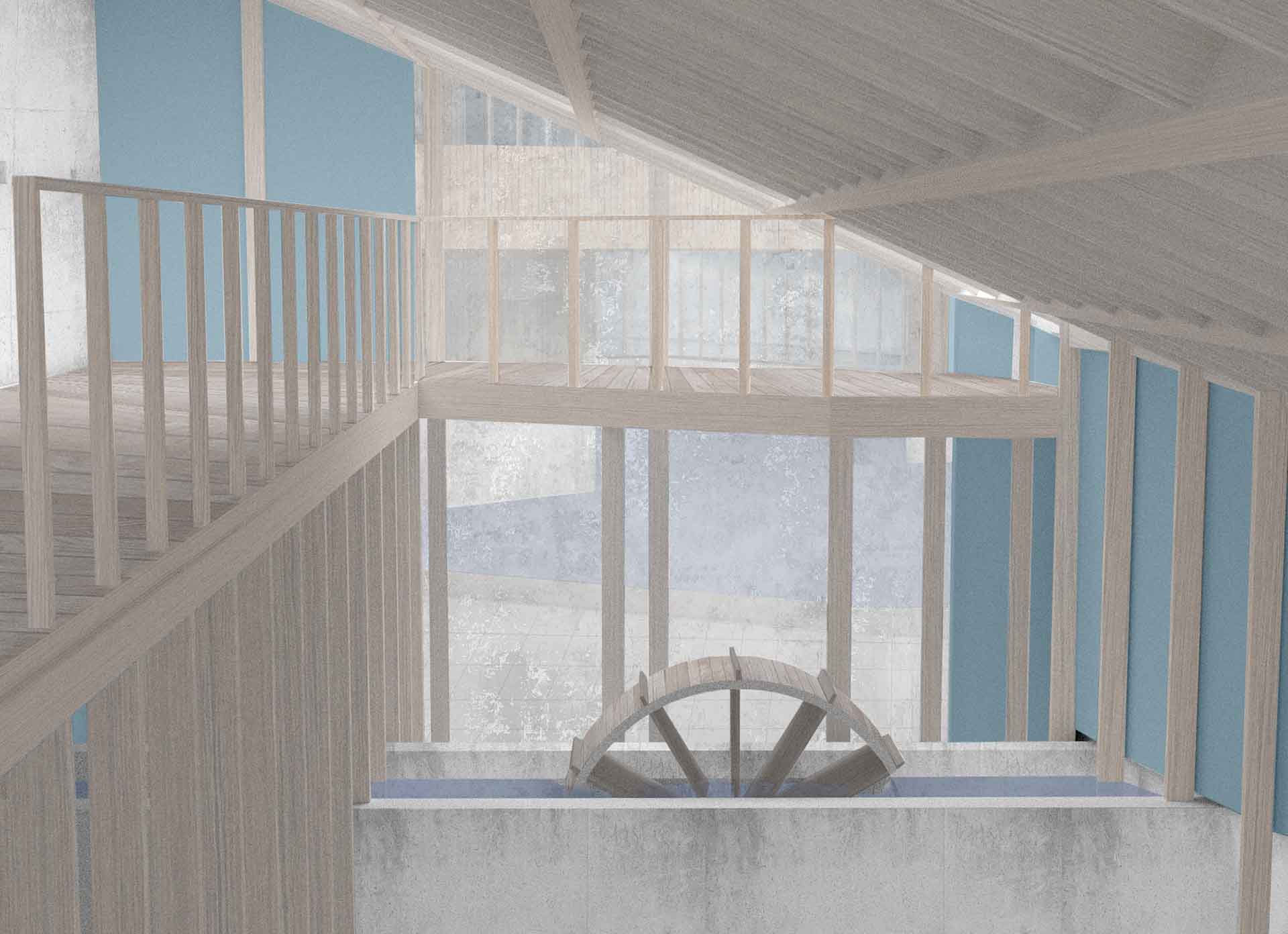
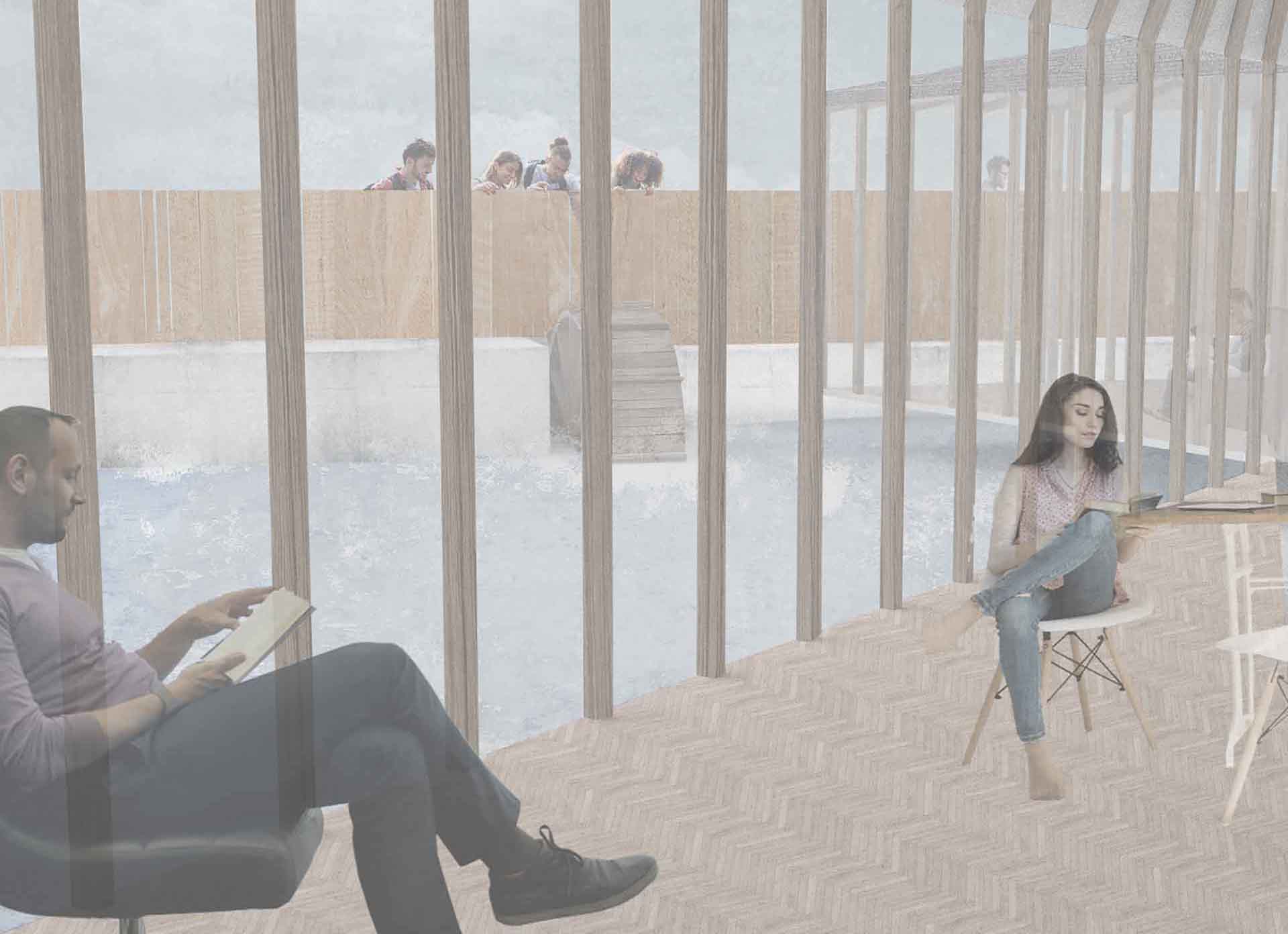
Over the last 100 years, the Water of Leith has de-industrialised. Leatheries, laundrettes, mills and breweries have disappeared from its banks. The river once enabled the social and financial livelihoods of neighbourhood communities, between the Pentland Hills and the Port of Leith such as the Edinburgh Steamies (public laundrettes). The river is now perceived as a boundary rather than a unifying resource. The project suggests a series of seven new ‘lock’ inhabitations of the 40km riverine band that aim to cultivate both waterside activity and localised social life. Each proposition makes a distinct reconnection through energy production, gathered activity, spectacle and crossing. Lock Two is a hydro research centre for specialised research into the role of water in energy production, housing river map archives open to the public and river viewing rooms.
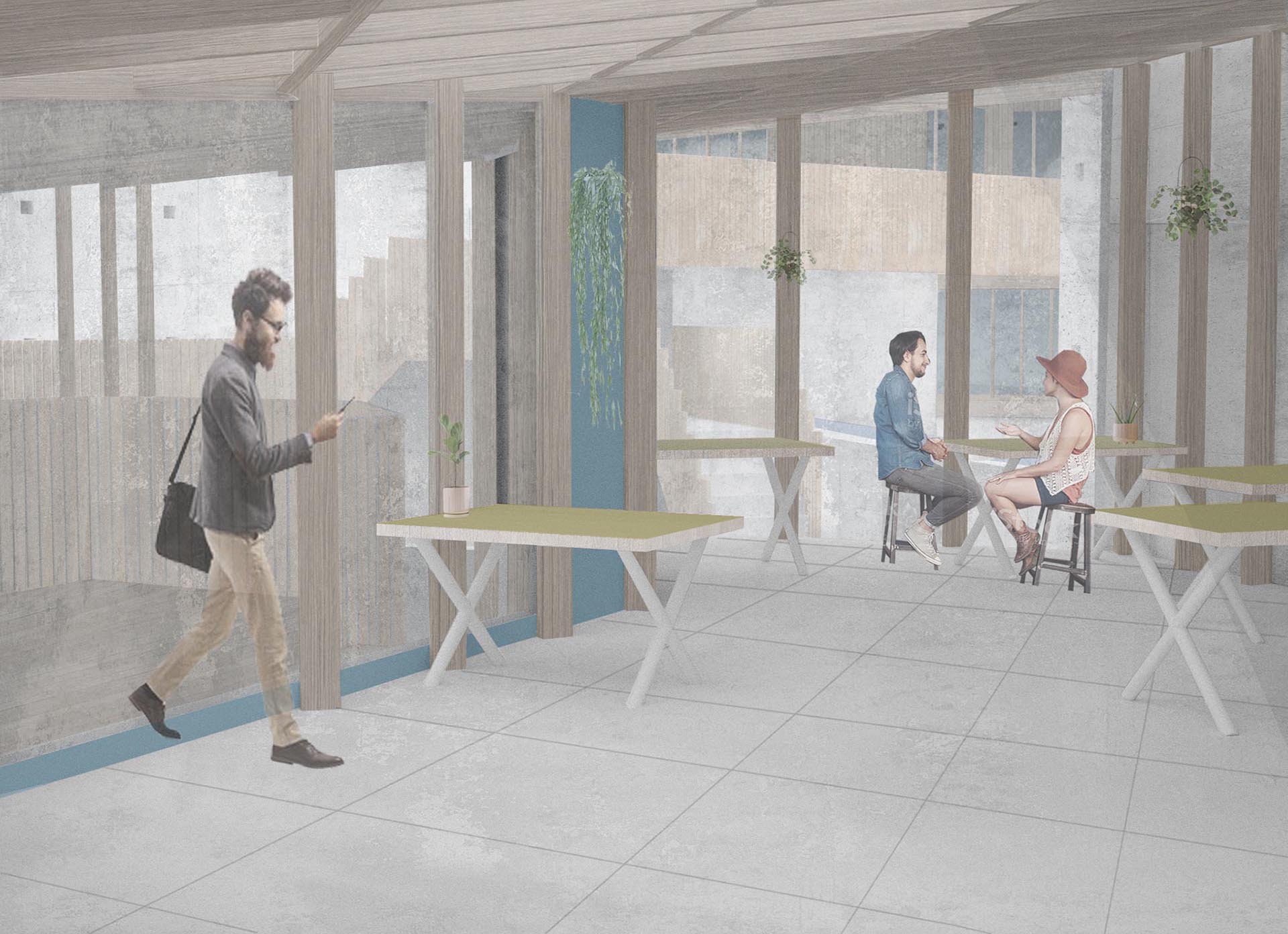
Lock Two comprises load bearing anchor walls which span beyond the width of the river, manipulating the water flow for hydro energy production systems, while also creating the primary tectonic character of the enclosed spaces on each bank. The modular design of these heavy elements support the construction of adaptable lightweight timber encasements. Glazing and circulation strategies carve the timber encasements to frame internal and external views which offer visual and acoustic connections with the river. The project aims to create a sense of shared custodianship of the river as an revitalised constituent of urban life.
ATLAS

VISUAL CONNECTIONS

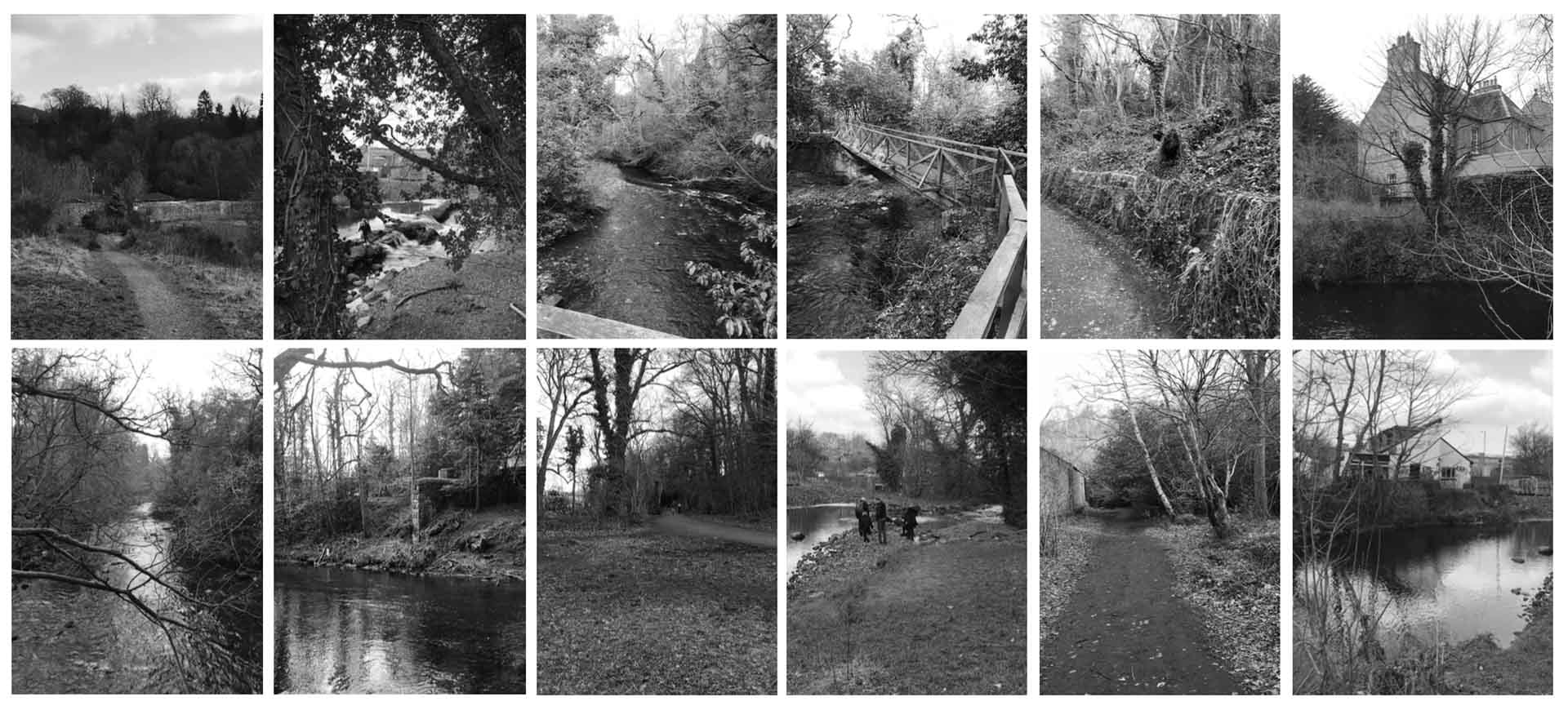
Re-Connecting Neighbourhoods
Historically, the river has been a vital resource the city has been dependant on for energy, industry and cleansing (6). In this mode of function, the river was the heart of communities. Industrial architectures sited themselves on the banks of the river to enable the harnessing of the waters energy through waterwheels and weirs, with residential inhabitations following suit to house the workers of these industries. This saw neighbourhoods span either side of the river and crossings being erected to enable flow from one side to the other the river was a shared resource rather than a boundary.
As running water become commonplace within the city housing stock, washing ma- chines within these homes became more affordable and electricity removed industries dependancy on the river, the rivers role in the city and the community changed. Gathering no longer occurred on the banks for cleaning, residencies followed industries away from the river and crossing points became redundant. As dependancy dwindled, so did the cities interaction with the river, leading to it becoming the boundary state contemporarily experienced in the city.
A growing demand for renewable energy sources holds the potential for the cities relationship with the river to once again be re-examined. The water within the river still holds the power to turn turbines and energise industries. By returning industry to the edges of the river, this dormant power can be re-engaged, once again making architecture dependant on the river as a resource and so re-establishing connected neighbourhoods across the river.