Project description

In a world where resources are scarce, we can no longer afford to waste them. In an ever-growing urban context, where open space is no longer easily attainable, but a privilege, it is unwise to underutilise the space we do have.

We often equate open space to quality space. However, all it takes is to venture away from the city centre into a residential neighbourhood, to realise that there are neglected open spaces which have none of the qualities assumed of parks, but instead create areas to be avoided, disinterested in, and scared of.

This project recognises the importance of neighbourhood parks for the local population, ecology, and wider city. It is a project which seeks to understand why certain parks are more loved than others, and what it is that makes a place “specific”. It aims to apply this knowledge to three physically similar though contextually different settings in Edinburgh, in order to enrich them. 

Three parks in different socio-environmental contexts were chosen to show how a use-specific pavilion can help bring life into these previously undervalued spaces. Through long-lasting, sustainable design with a high focus on tangible use, Specific Place aspires to positively transform the places which have the greatest and most immediate impact on the outdoor life of locals.

Project concept collage
Newcraighall Public Park

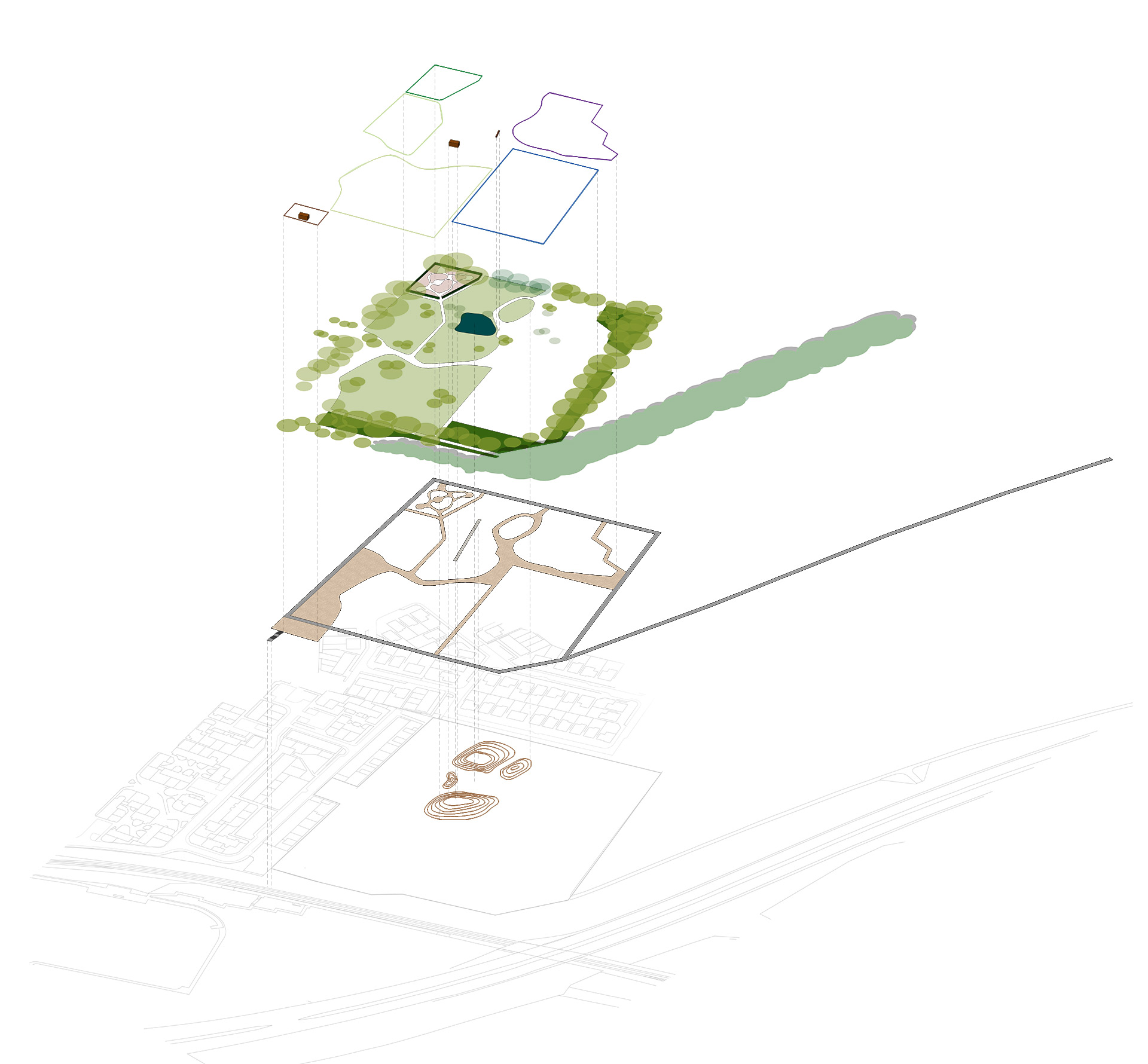
An empty square of lawn on the edge of a growing residential neighbourhood is transformed into a place to be explored, used and loved. Through altered landform, a spatial path framework and strategic planting, a sense of mystery and playfulness is created. 

Exploded diagram of Newcraighall Park layout
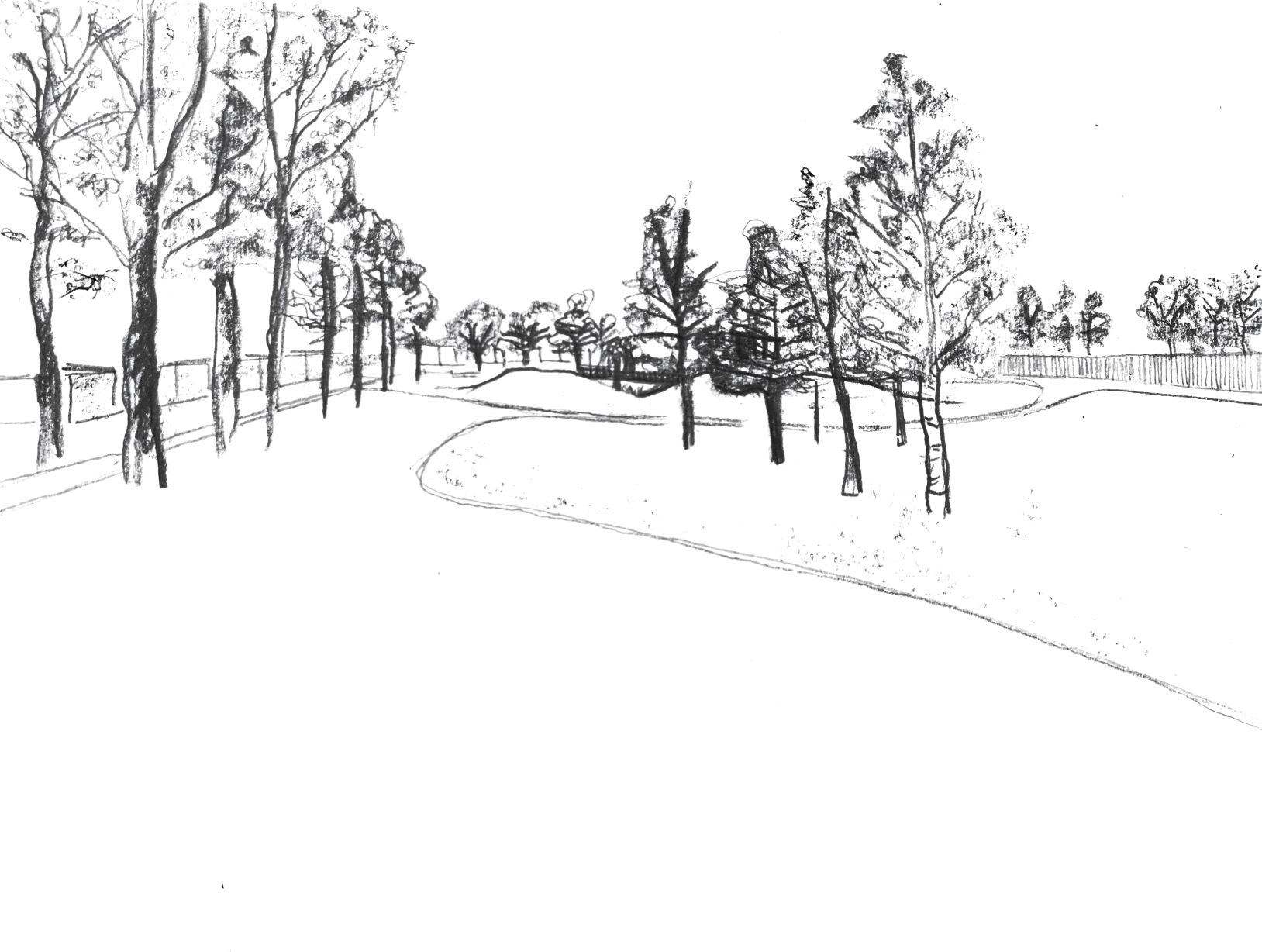
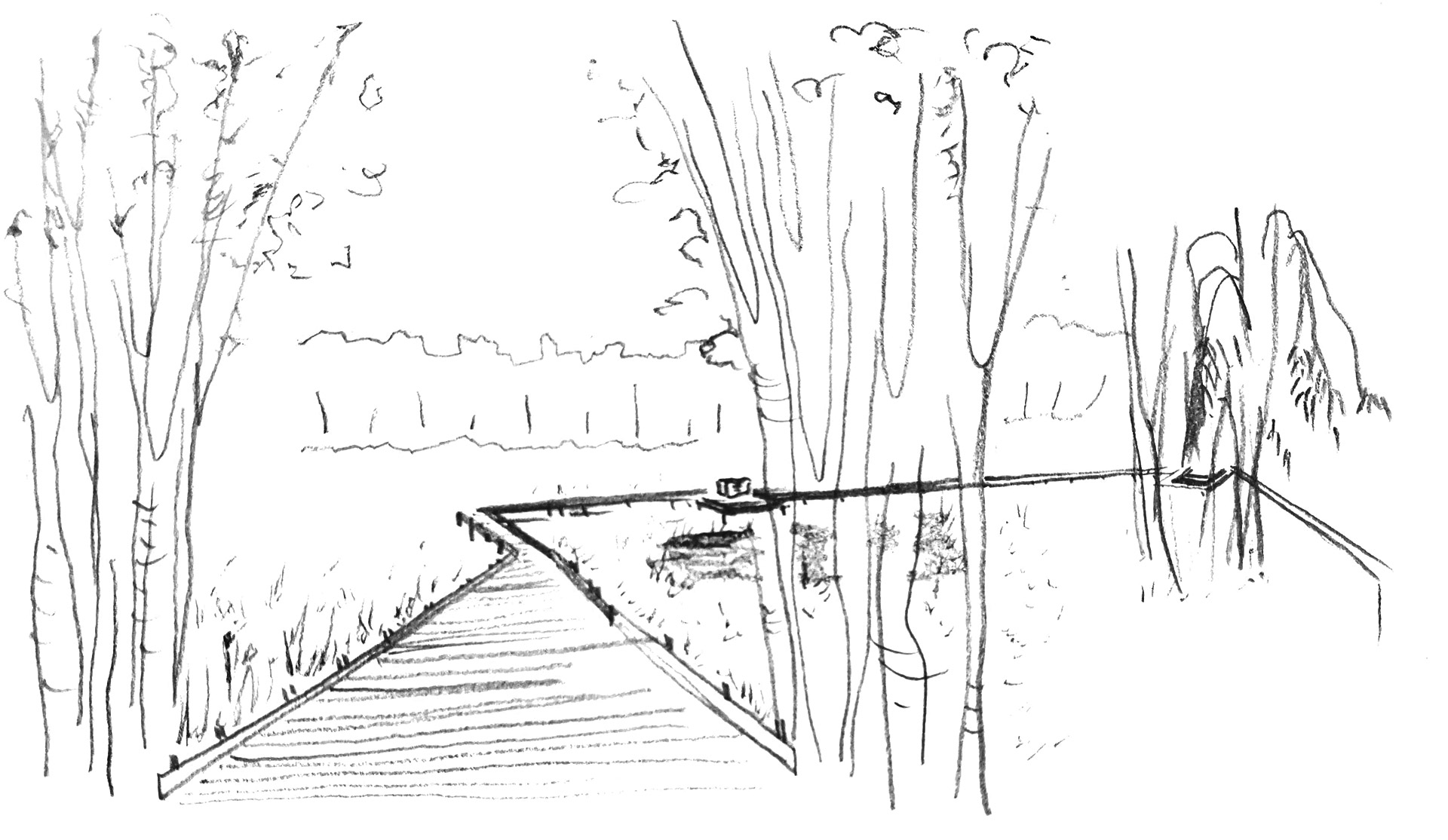
Pencil sketch picturing the concept of hiding and revealing views
View towards the pavilion, strategically hidden by spatial tree planting and path framework.
Newcraighall Public Park detail plan of landform area
Detail section cutting through the mounds, wetland and miniature library
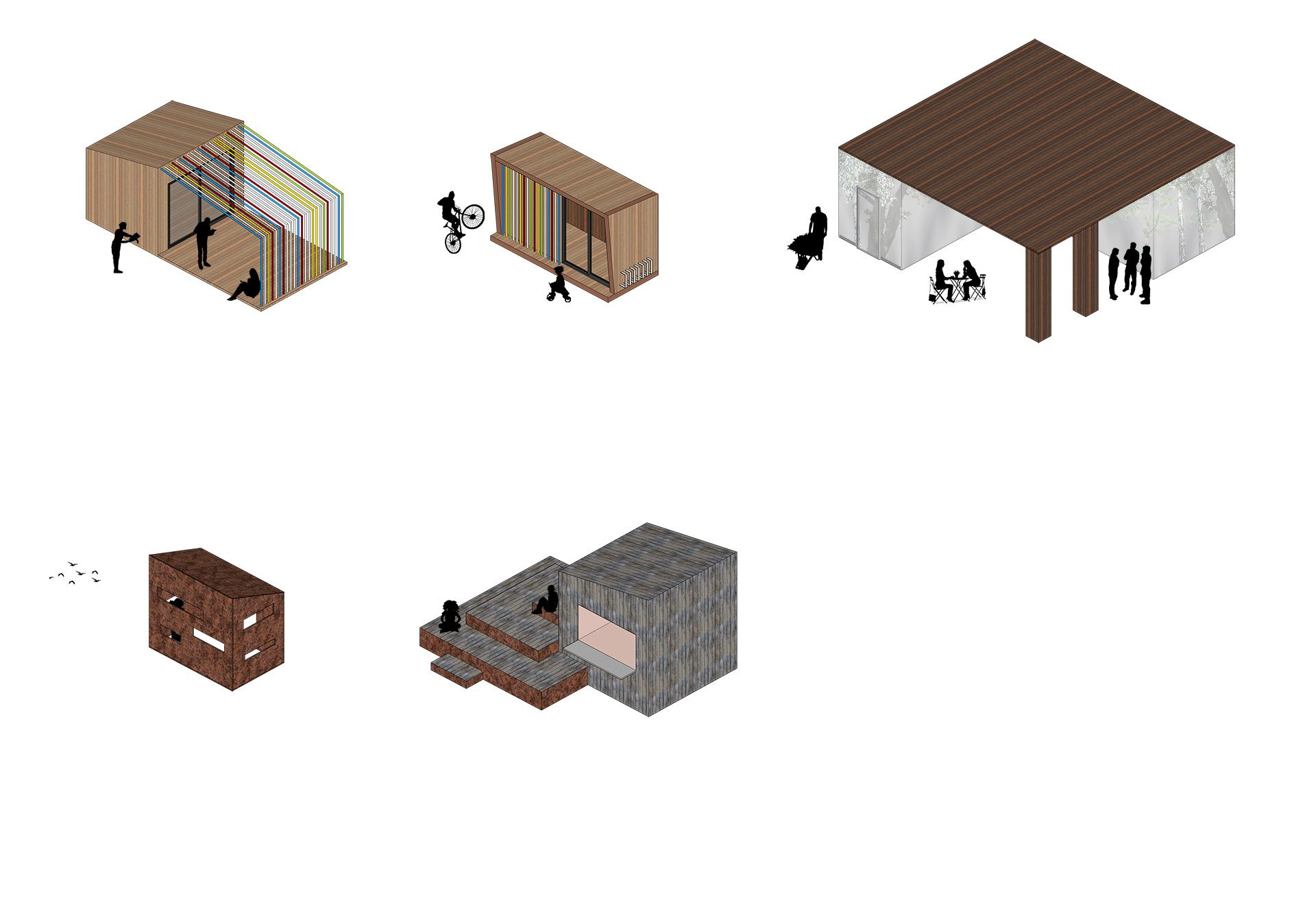
A miniature community library pavilion sits on top of a mound in the landform area of the park, accessed via terraces on the one side, and a bridge over a small wetland area on the other side
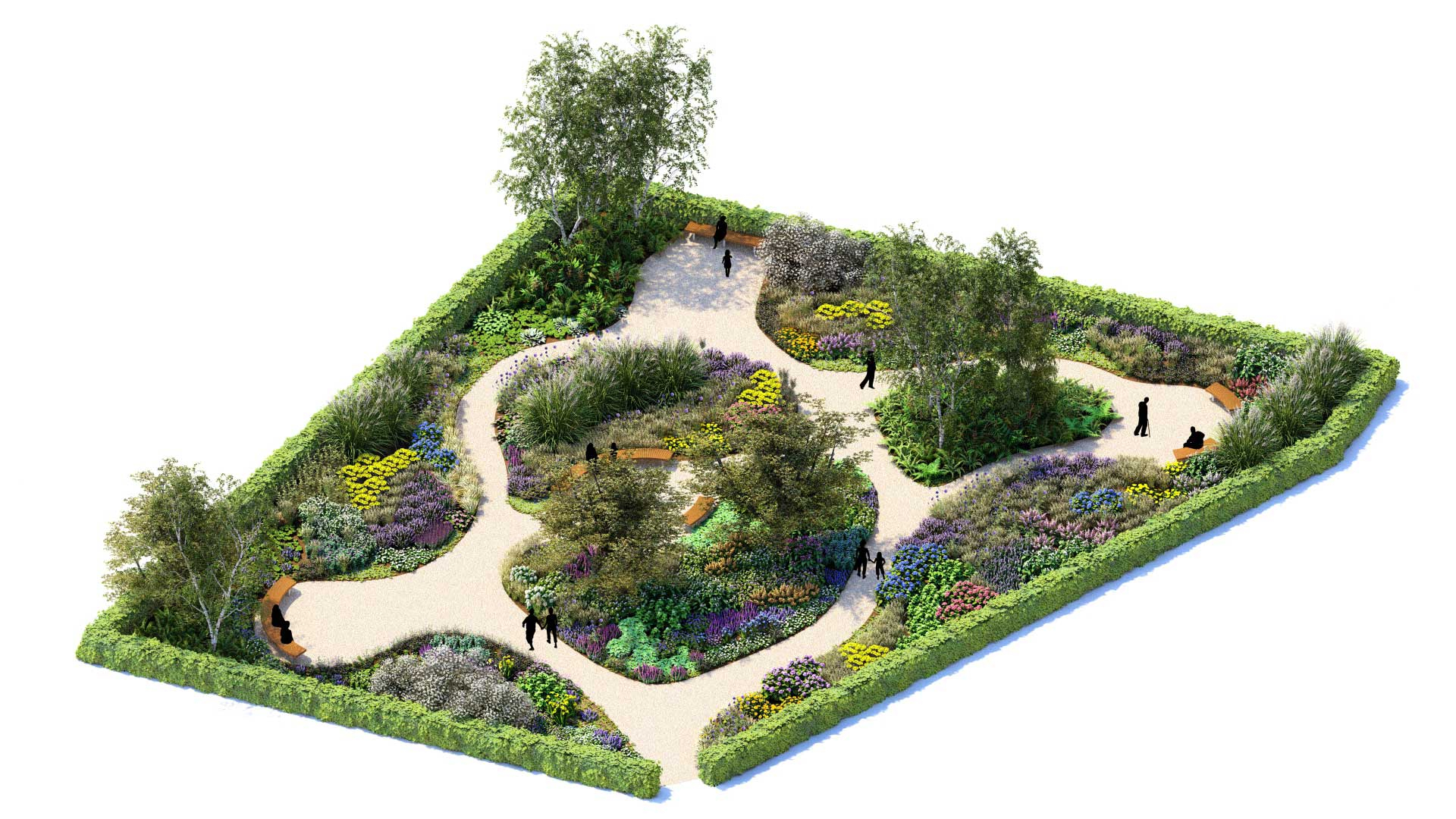
Isometric of hedged perennial garden.
The hedged perennial garden provides an opportunity for seclusion. Its resilient planting palette is comprised of a mixture of native and ecologically pro-active species.
The Jewel

A long stretch of waterlogged lawn is transformed into a usable community space and an ecologically rich birdlife habitat. The Jewel's spatial framework roughly divides the park into a designed urban park area, and a more naturalistic wetland area with a boardwalk. A series of different platforms off the boardwalk allows for relaxation, observing wildlife and accessing the water.

Exploded diagram of The Jewel's layout
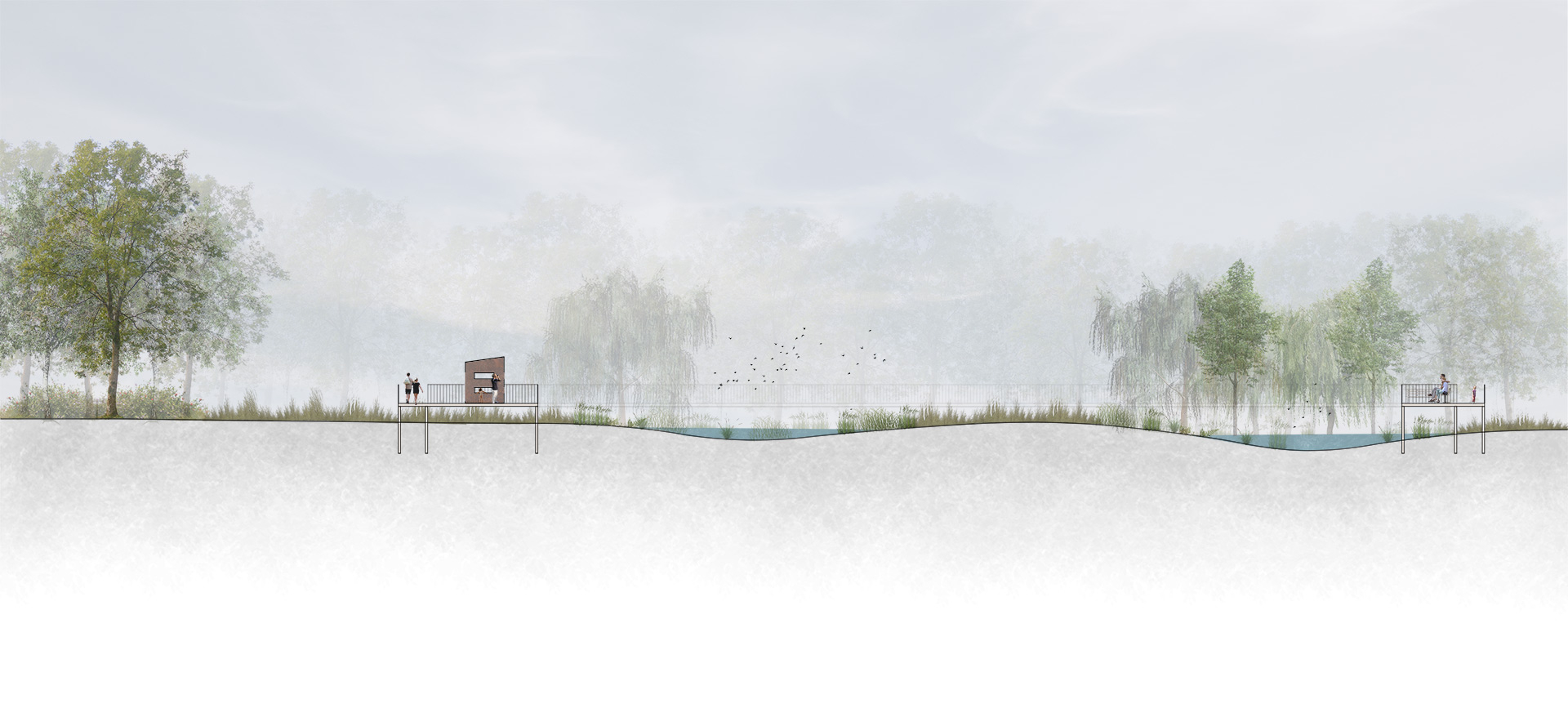
Section cutting through the wetland and boardwalk.
A Corten steel bird hide pavilion sits on one of the boardwalk's platforms, within the designed wetland.
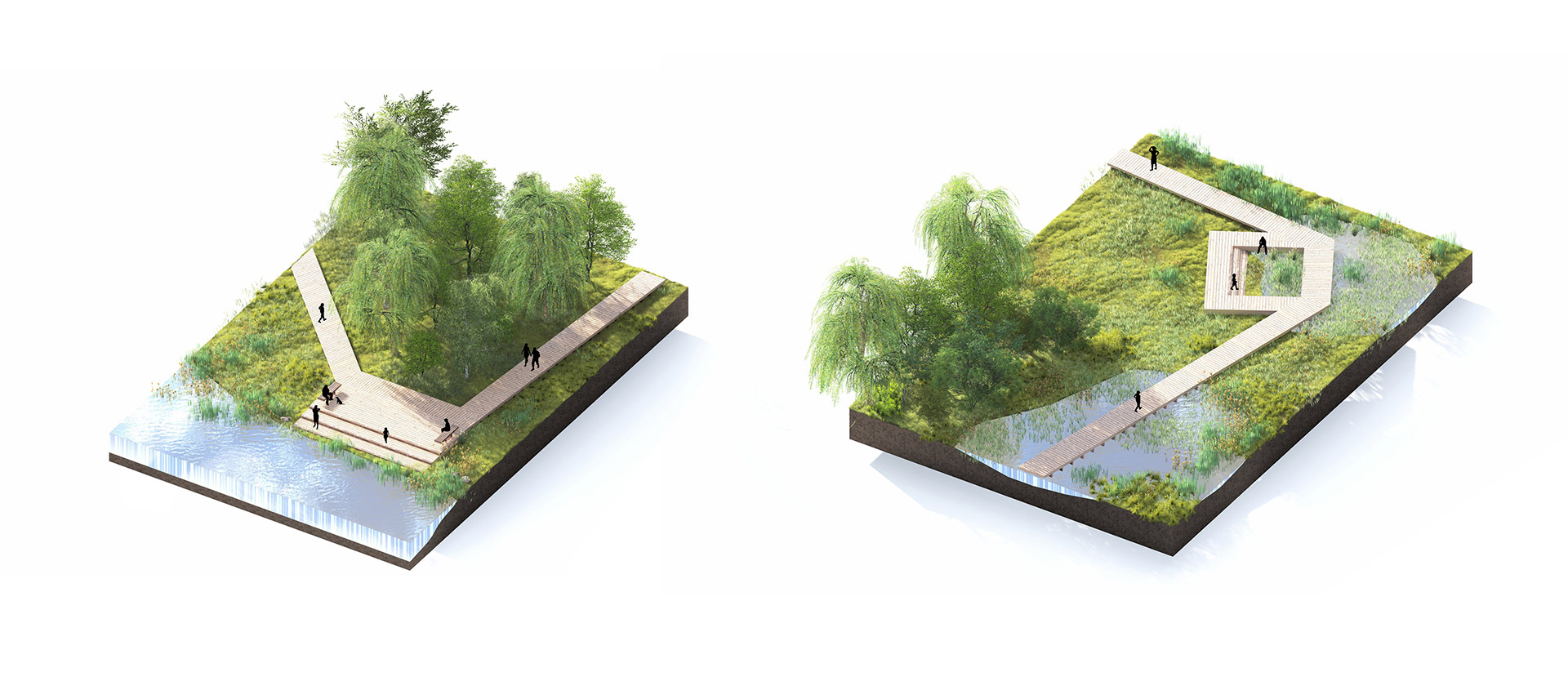
Detail isometric studies of the wetland boardwalk
Two extensions of the boardwalk step down intro the water, allowing for access and interaction.
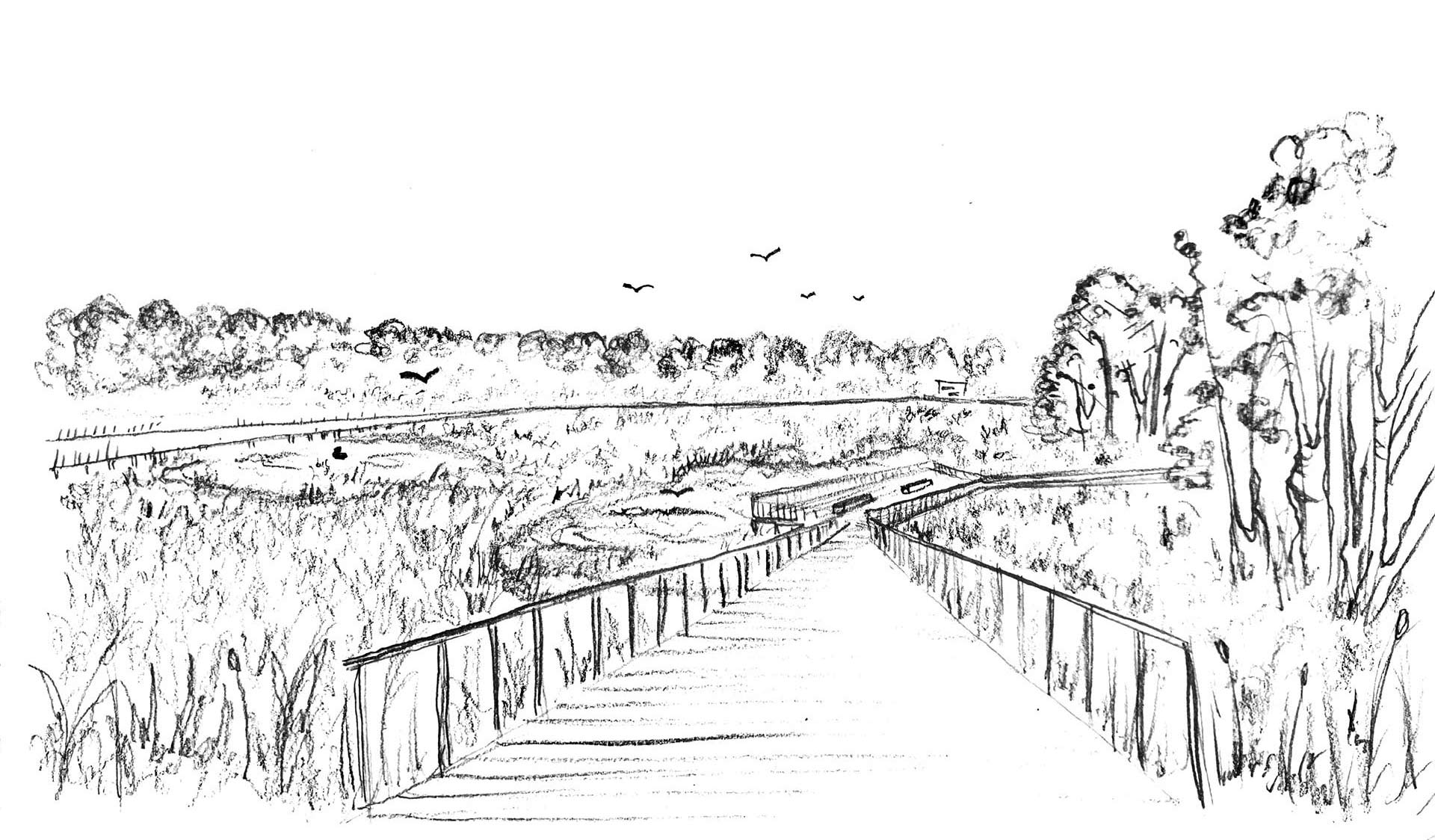
Pencil sketch of the wetland area
Framed view towards the bird hide, created by blocks of wetland tree planting.
Pencil sketch of the wetland area
View towards one of the boardwalk's seating platforms.
West Pilton Park

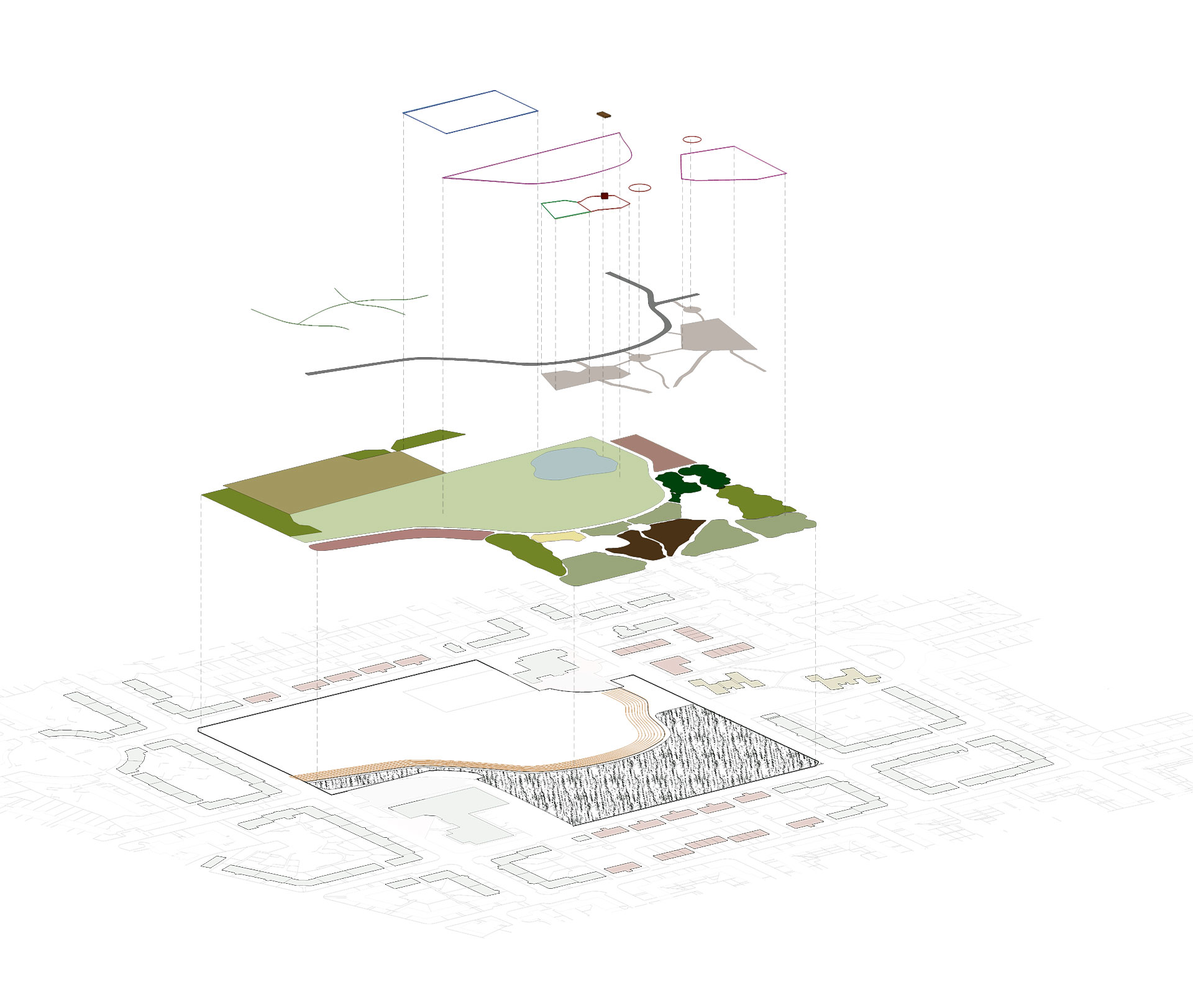
A generic neighbourhood park, in one of Edinburgh's most deprived areas, becomes a space with a strong character, a rich woodland habitat, and a community area for connecting with others and food growing. The concept for West Pilton Park consists of an upper level, comprised of six different woodland typologies with paths and clearings programmed for different uses, and a lower open area with a "stage" and meadow planting.

Exploded diagram of West Pilton Park's layout
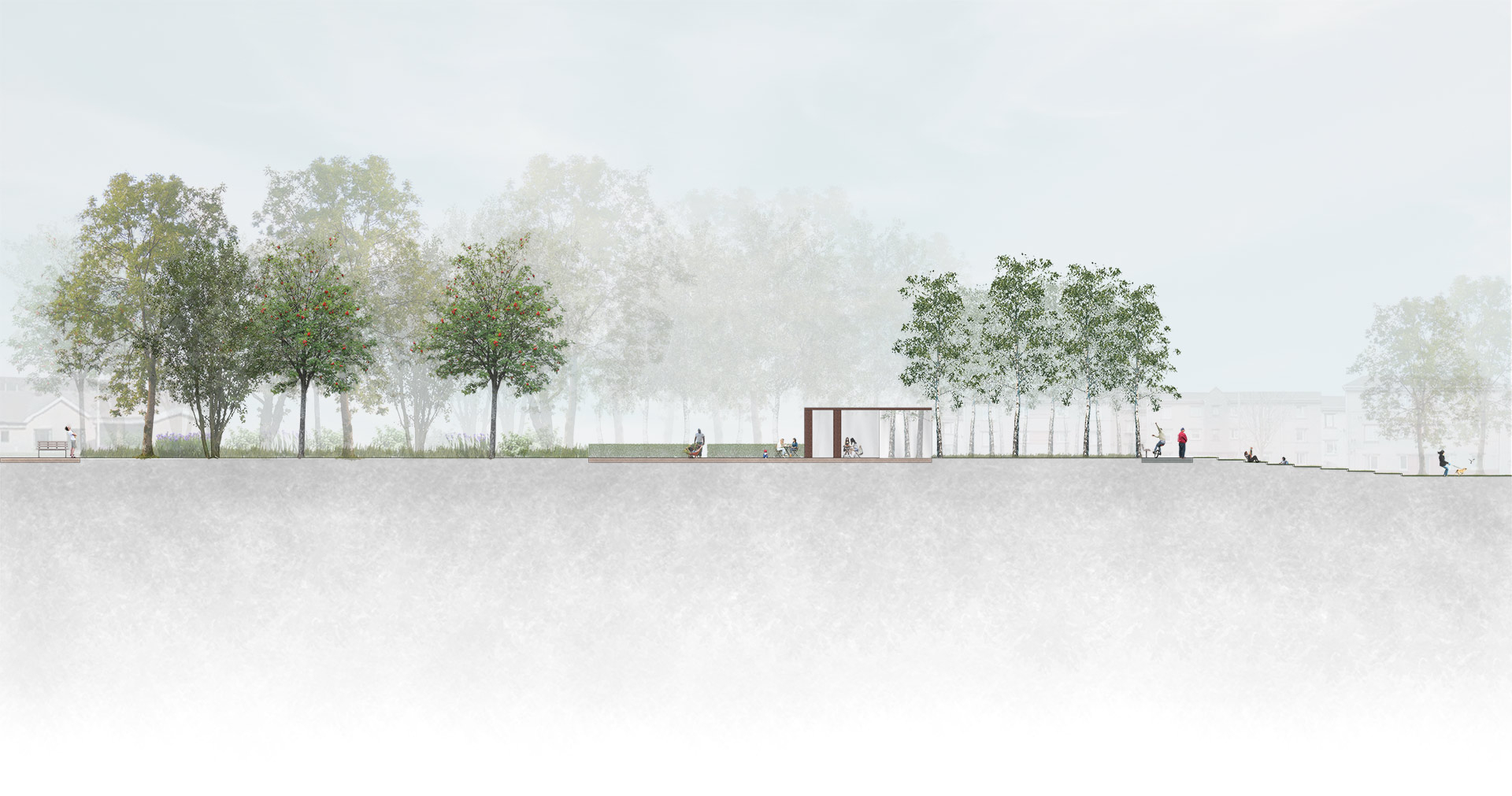
Section through the upper area of the park
The reflective café pavilion sits nestled between the different woodland typologies.
Visual of mixed species woodland
Visual of a path and clearing within the broadleaf mixed species woodland typology. Clusters of birch and rowan, wide-spreading oaks and areas of colourful woodland meadow, create a fairy-tale forest atmosphere.