

John Konsolakis was born in Athens, Greece in 1999. Since the age of 15 he has written music for film, documentaries, theatrical plays, video games, as well as a number of concert works. He has been the winner of 3 International Composition Competitions, the most recent one being the Oticons Faculty Int’l Film Scoring Competition. In 2021 he will be graduating with a Bachelors of Music with Honours in Performance and Composition at the University of Edinburgh.


John Konsolakis
Rescoring a Silent Film


Bio
Awards
2021 | Tovey Memorial Prize Runner-Up (Composition)
2019 | Oticons Faculty International Film Music Competition Winner
2018 | Emre Araci Composition Competition Winner
2018 | Tovey Memorial Prize Runner-Up (Performance)
2017 | Megaron International Animated Film Music Competition Winner
2016 | Marvin Hamlisch Int'l Film Scoring Contest Youth Category Runner-Up

Dissecting the Process
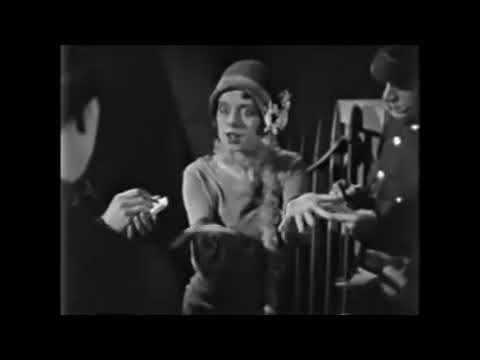
After watching Bluebottles (1928), directed by Ivor Montague, I was amazed by the way with which the film balanced drama and comedy, with its serious/mysterious opening making the viewer think they are in for a dramatic ride, one that quickly gets derailed by the over-the-top comedic sequence of the policemen responding to the whistle being blown. It was this characteristic of the film and the challenge it posed for my music to complement such extremely contrasting scenes (as well as everything in between) that made me interested in rescoring it.
My choice to use an orchestra for the film was mostly inspired by the whistle sequence, which seemed to require a sizeable ensemble able to keep up with the constant escalation in the visuals. I also wanted to be able to use a wide variety of orchestral colours and orchestrational techniques to reflect specific characters in the story. Some of those include the prominent use of muted horns and clarinets for the Policemen, the use of harp, vibraphone and sustained strings for the mischievous thieves, and the prominent, lyrical melodic lines played by the first violins for Elsa Lanchester’s character.
Regarding the style of the music I composed, I did not want to write pastiche/cliché sounding accompaniment to the film, but I consciously made an effort to use a musical language that would ‘feel’ appropriate for the period, as to avoid a stylistic mismatch with the images. Therefore, diminished and augmented chords, string tremolos, repeating triads, militaristic marches, etc. are all prevalent in my composition, not because I made a list of such conventional techniques and sought to include them, but rather because they ‘felt’ and ‘sounded’ more appropriate in relation to the film in comparison to a contemporary-sounding approach to those same issues. This idea of tonal matching is something that also informed my approach at producing the ‘recording’ (MIDI mock-up), as applying EQ in a way that imitated the sound of orchestral recordings in the early to mid-twentieth century (mostly by reducing the low frequencies) lent the music a ‘sound’ more fitting to the character of the film than a polished, high-end production value would have, thus facilitating a deeper immersion for the audience.
In my spotting of the film, I separated my chosen excerpt into seven broad sections (analysed below), based on its narrative structure, to help me organise my approach to scoring it. Furthermore, I spent some time finding general tempo values for each of those scenes and their subsections that followed the flow of the footage and the rhythm of the editing, and best matched the sources of diegetic sound (like the firing of guns, blowing of whistles and hitting of bells), all of which would have a matching sound effect if the film had not been silent. Here also my aim was not to produce a score that is ‘mickey-mousing’ such events, but to try to incorporate them naturally in the musical score by synchronising the tempo of the music with the editing of the film so that they align with parts of the musical bar. Additionally, to allow for this score to be performed live with either a click track or streamers and punches, I tried my best to keep the tempos as consistent as possible through extended sequences and to limit ‘rubato’ fluctuations, mostly featuring them at the endings of phrases or sections.
Scene No.1 - Opening Titles
My approach for the title sequence was to introduce it with a relatively grand, romantic-sounding musical statement, attempting to reflect ‘the wonder of the moving image’, which would gradually shift to a more ominous, mystery filled musical atmosphere, transitioning this opening section to the first narrative section of the film (Scene No.2). The ‘Elsa Lanchester in Bluebottles’ title is underpinned by a lyrical melody in the first violins reflecting the protagonist. That melody sits over very dense, chromatically moving harmony, which is pulling it towards progressively more dissonant/unsettling chords, following the appearance of the flies at the backdrop of the title cards. The music then starts falling in dynamic to transition to the next scene which is taking place in the quietness of the night.

Scene No.2 - The Ambush
Throughout this scene, I tried to set a quiet, mysterious atmosphere using mostly harmony and orchestrational colour to accompany the visuals. When the policeman is ambushed, I consciously contrasted the rest of the music in the scene in almost every way (tempo, dynamics, orchestration) to enhance the dramatic situation and add to the suspense. This being the opening of the film and still devoid of comical elements, I wanted to reinforce its serious/dramatic nature to help lure in the audience into a story that seems tense and dramatic, something that can be clearly seen in the way I approached the final moments of the sequence, with the music slowly descending to the orchestra’s lowest registers with the reveal of the whistle on the ground.

Scene No.3 - Introducing Elsa
This scene marks the introduction of Elsa’s character and takes place at a completely different setting, so I sought to completely change the mood by writing music that is reminiscent of the ‘popular’ music of the 20s and 30s, and so could function as a ‘semi-diegetic’ music that transports the audience to the location. When Elsa walks alone, I repeated the same musical statement with diminished dynamics and thinner instrumentation (flute and strings playing pizzicato) and incorporated her misstep on the whistle through syncopation. Her examining of the whistle and interactions with it are slightly more free-tempo in an attempt to include each escalating blow as part of the musical score.

Scene No.4 - Whistles
This was one of the most difficult scenes to score in this film. Taking the musical idea from Elsa’s interaction with the whistles, I wanted to have a spiralling, descending musical pyramid that lined up (as much as possible) with the policemen’s blows and then start a sequence of tension and urgency that builds with the visuals. The culmination with the appearance of the army felt like the moment when everything truly got visually derailed and so I decided to transition the music to an over-the-top rendition of ‘Rule Britannia’, derailing itself into a high praise of Britain and Her strength (something that has nothing to do with the actual story we had been following). Then, the best transition from that back to Elsa alone on the street was obviously through silence.

Scene No.5 - The Policemen
In this scene everything falls back down in dynamics to contrast the one preceding it and reflect the night setting. The music focuses to build some tension (underpinned by comedy with the shortness of the notes) as the policemen encircle Elsa, and lead to a grand statement of the policemen’s motif from the beginning as the main officer interrogates her. That leads straight into a romantic, over-the-top musical accompaniment of Elsa lying to the officers, with a first violin melodic line leading them to the location of the whistle. The music accompanying the wounded police officer up the stairs earlier is making a second appearance as they look up towards the steps and spot his equipment and a military call in the trumpets accompanies their collective move towards the door. Then everything gets progressively quieter as they are trying to eavesdrop.

Scene No.6 - Showdown
The ambush by the thieves begins with the same musical motif that accompanied it in Scene No.2, only this time it quickly transforms into a new musical idea as the policemen stand their ground. When the policemen are seen running, one of the motifs from Scene No.4 makes a reappearance. The storming of the door is accompanied by a militaristic march played only by the percussion to reflect their ‘professional’ body movements. Finally, the shootout from the thieves up the stairs contrasts them musically from the policemen with the use of orchestral register (low vs high).

Scene No.7 - For a hat's sake
For this final scene I decided to have a tone change as Elsa is trying to get her hat, underscoring the comedy in the situation with short repetitions in the woodwinds but also trying to build a bit on the element of danger that she is facing from the thief with a rhythmically irregular score that builds in tension and orchestration until she shuts the door. At that point, I underscored her relief with short musical statements, with the music ‘wanting’ to resolve by continuing into the next scene (maybe someday).


John Konsolakis
Rescoring a Silent Film

