


Interview by Eva Coutts
In realising her graduate project about local parks, Nikki Petrova has embraced back-to-basic pencil drawing techniques along with all things digital.
What is your graduation project about?
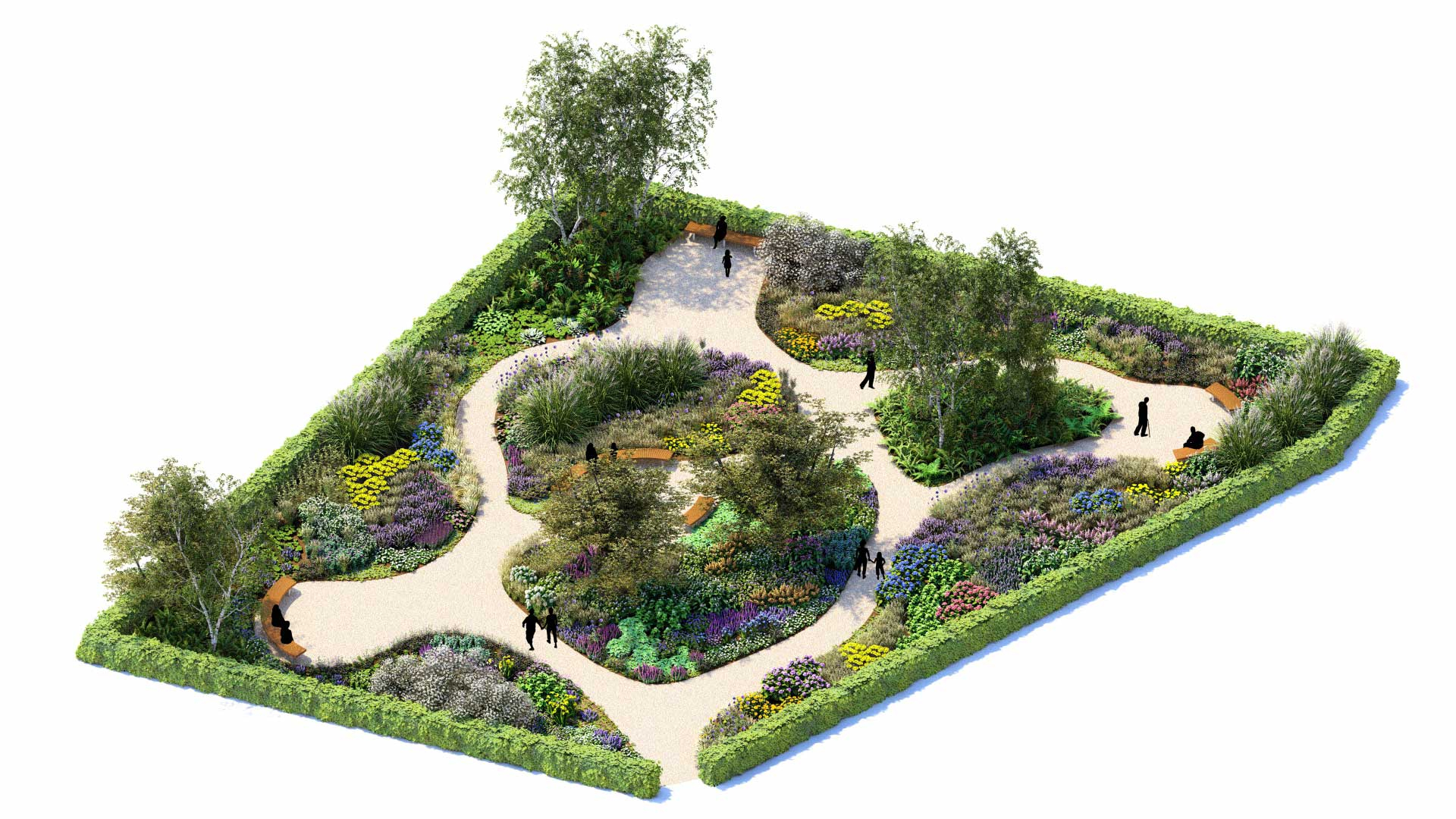
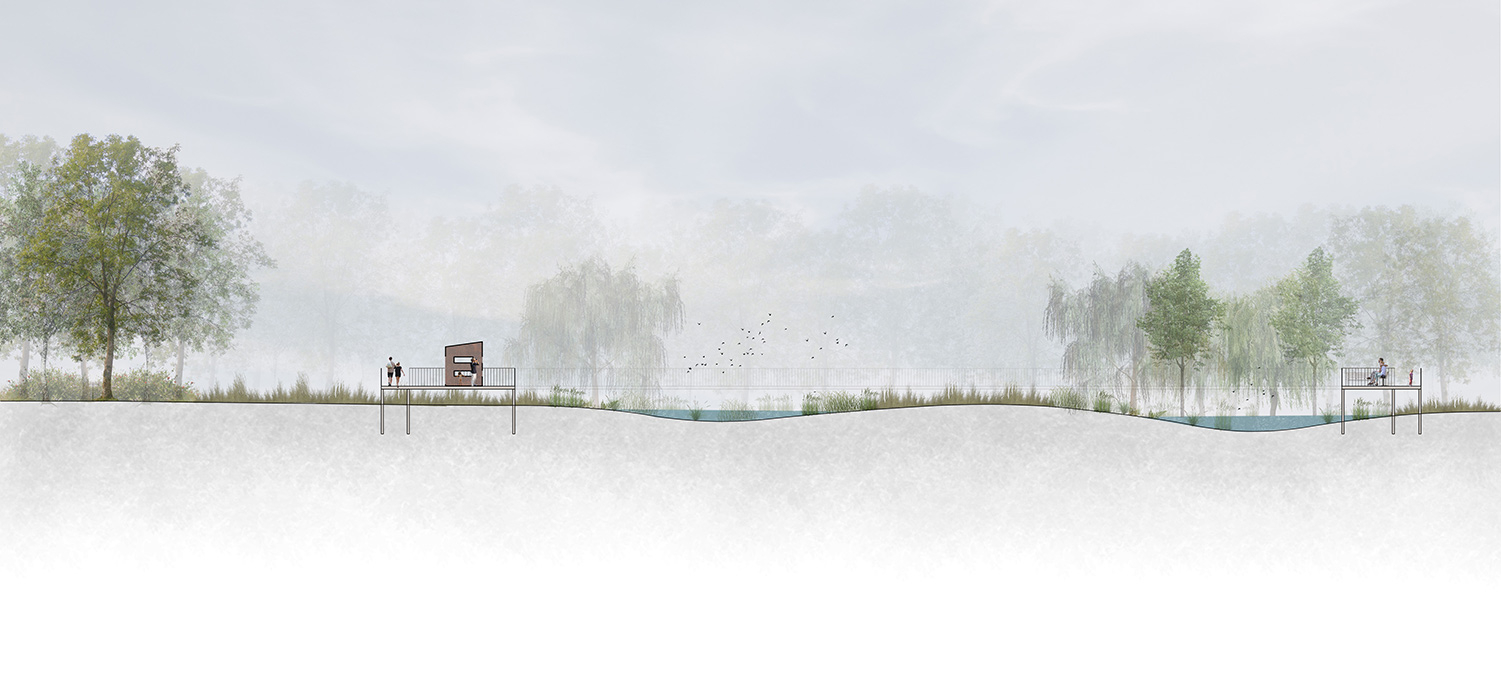
My graduation project is called ‘Specific Place’ and it tackles the issue of the extremely familiar standardised neighbourhood park, underused and ecologically poor. Through long-lasting, sustainable design with a high focus on tangible use, my project aims to transform these into vibrant, specific places. Three parks in different socio-environmental contexts were chosen to show how a use-specific pavilion, such as a mini library, a bird hide or café, which responds to its distinct landscape, can help bring life into these previously unnoticed and undervalued spaces.
How do you best like to work?
To me, good design is the creative solution to a constraint, and landscape architecture projects always exist within the “constraints” of their context – natural, cultural, historical. Therefore, I never see my designs as a clean slate. I work by learning from what is already there and finding a response, which can shape the landscape in a new and unique way.
I like exploring a variety of media to represent my projects. In the past, I have used many mediums such as; printmaking, analogue collage, model making and watercolour. This year, since working from home, I have relied more on digital media to depict my ideas – from computer-aided design, to photoshop and 3D software. I have also returned back to basics and represented a lot of my ideas through the simple but clear method of pencil drawing.
Can you tell us about some of the things which inspire you and your work?
I am inspired by the work of contemporary professionals in the landscape field such Kathryn Gustafson, Kate Orff and Nigel Dunnett. At the same time, I draw inspiration from permaculture, which I have had training in. Permaculture teaches that the land has an answer to all our design problems, and that answer is often rooted in common sense. There is a particular quote by Kathryn Gustafson which summarises the approach I aspire to have towards landscape; “Designing a landscape is about connecting the body, soul and mind to the land itself.” Most importantly, and what makes a design specific, is the inspiration drawn from each new site – from its historical heritage, ecology, the way people are using it, to its surroundings. I aim for my design proposals to respond to their context in an honest way.
This year, I have been particularly inspired by the playfulness of landscape – hiding and revealing views through landform and planting, as well as by the way children use elements in the landscape in spontaneous and unexpected ways.
What have been the highlights of your time at ECA and Edinburgh?
I’ve truly enjoyed going on site visits in and around Edinburgh with my coursemates, as well as the long days and late nights spent in the studio together – the atmosphere was always so inspiring and supportive!
How have the events over the past year affected your work?
Seeing everyone’s working process and pinned up drawings in the studio is something I have missed dearly, and I feel like this has negatively affected my motivation and inspiration this year. The constant exchange of knowledge and ideas is something quite difficult to replicate in a lockdown context. In terms of working methods, while prior to Covid I had the chance to experiment with more analogue and big scale media, the lack of studio space and equipment has meant a strong shift towards digital methods of representation.
Have you got plans for after graduating?
I am excited to get into the professional world of landscape architecture and see how the knowledge I’ve built up over the years has the potential to result in real-life physical spaces which positively impact a community. In the future, I would also love to have a chance to teach landscape architecture.