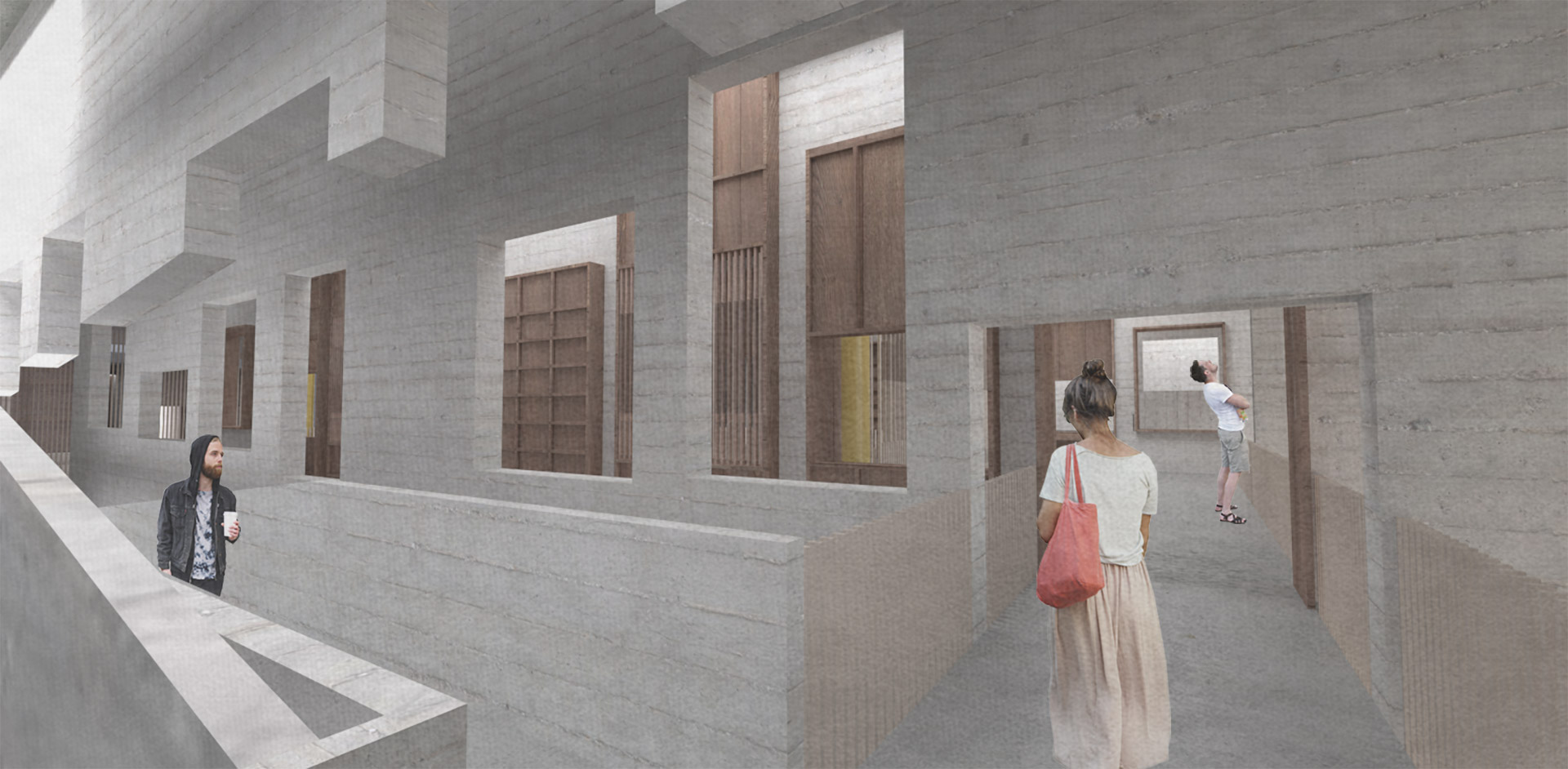
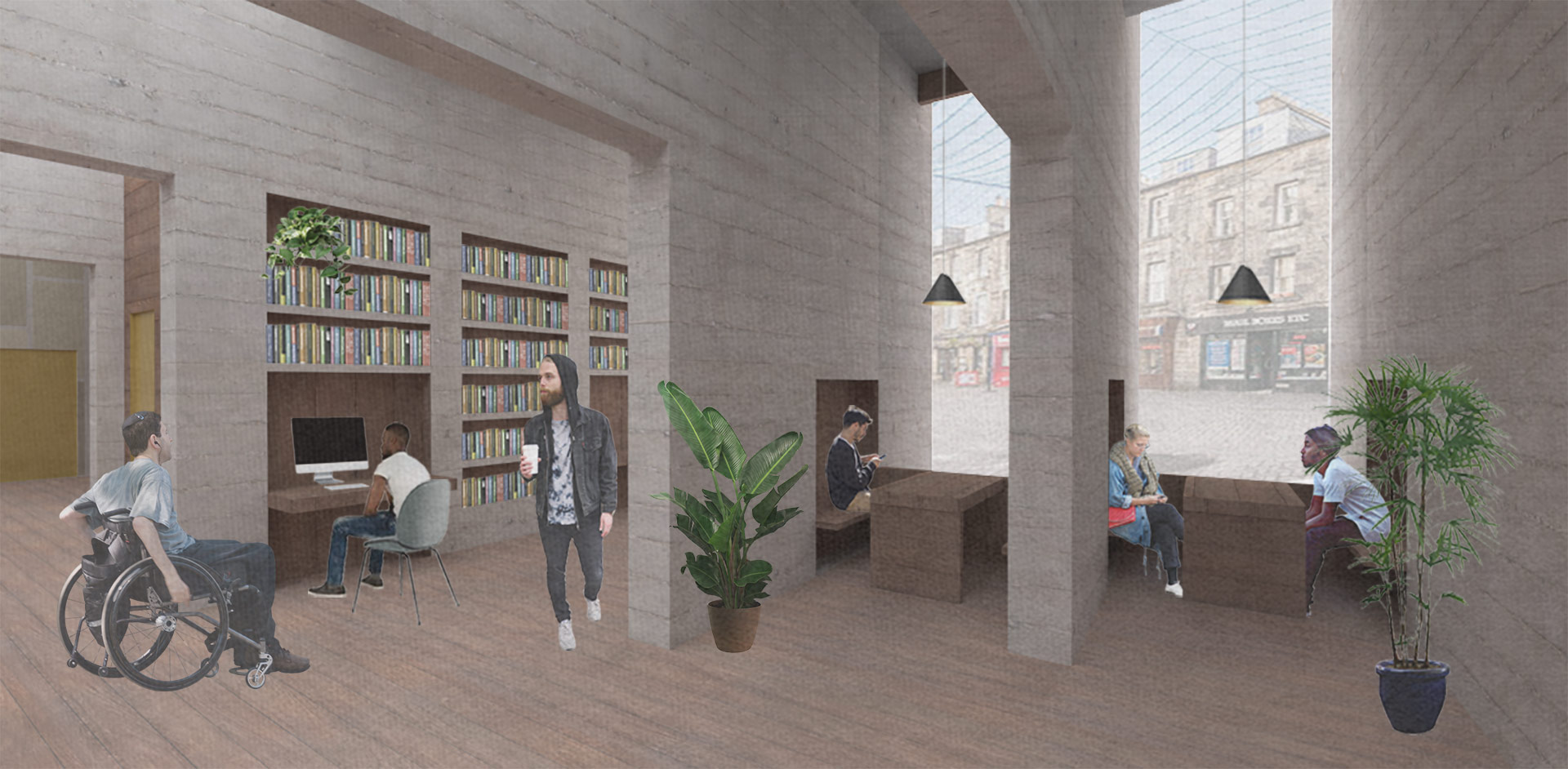
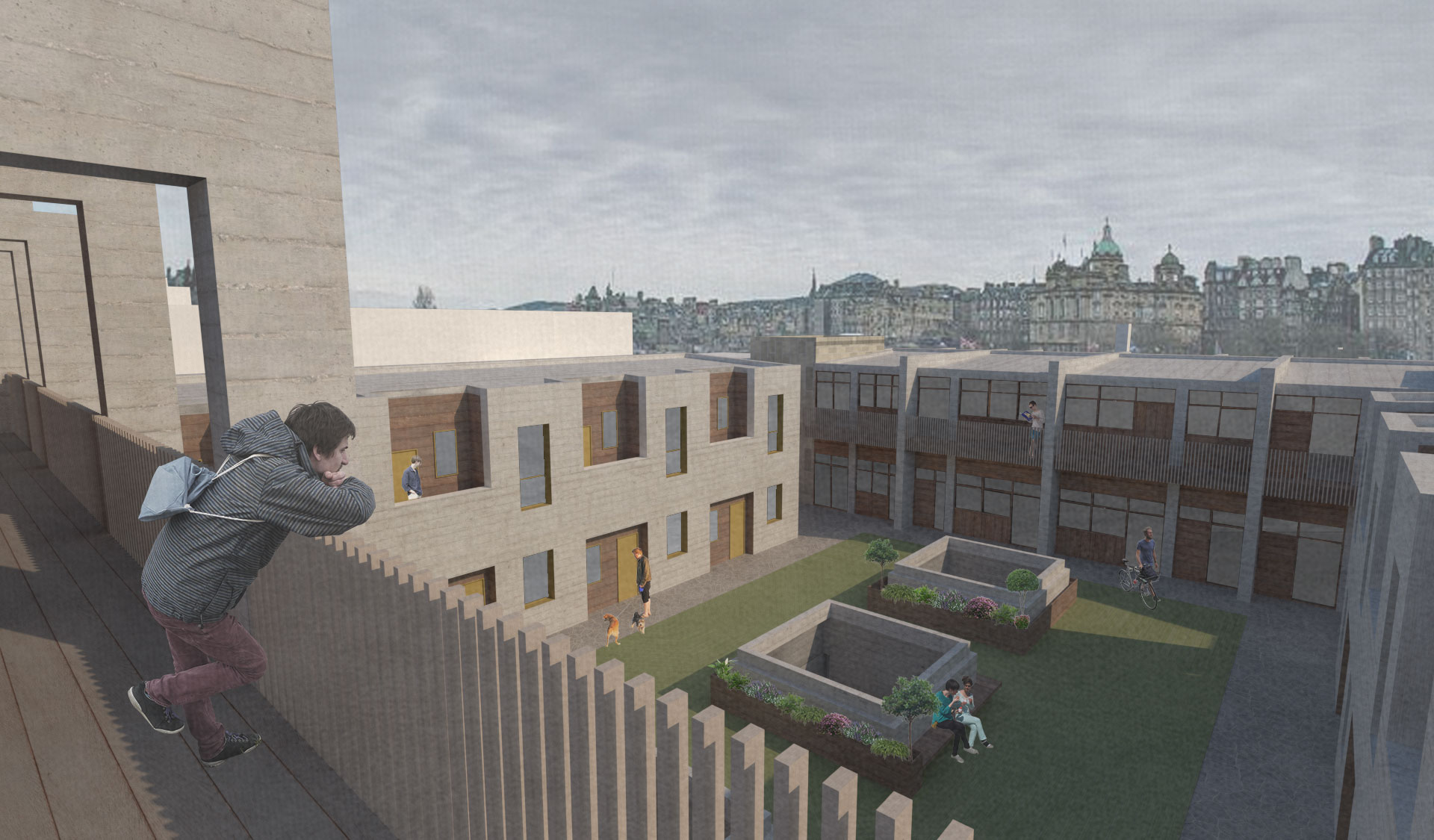
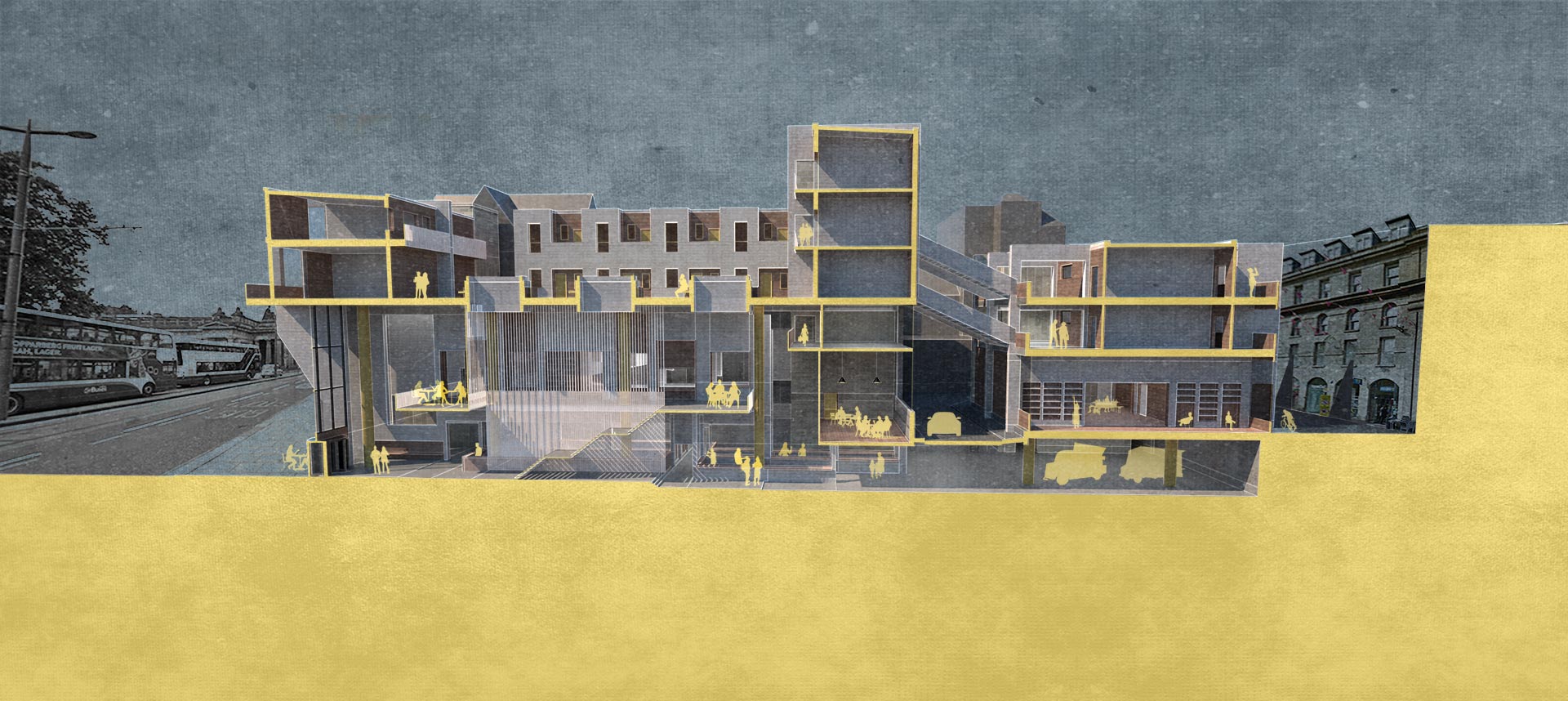
(Re)Placement: Procuring Permanence in the City aims to identify and utilise a perceived condition of ‘emptiness’ in the New Town to create a vibrant, diverse and socially sustainable community centred in the heart of the city of Edinburgh, in response to a lack of current community provision, a low resident population and a current skew towards consumer and tourist-based interests. The project seizes upon pre-existing challenges that have been accelerated by the effects of the COVID-19 pandemic, such as the widespread closing of high street retail units and the abandonment of luxury Airbnbs, and seeks to turn these into opportunities for housing, leisure and work provision, with a focus on re-integrating and accommodating the needs of Edinburgh’s most vulnerable populations, such as those experiencing homelessness.
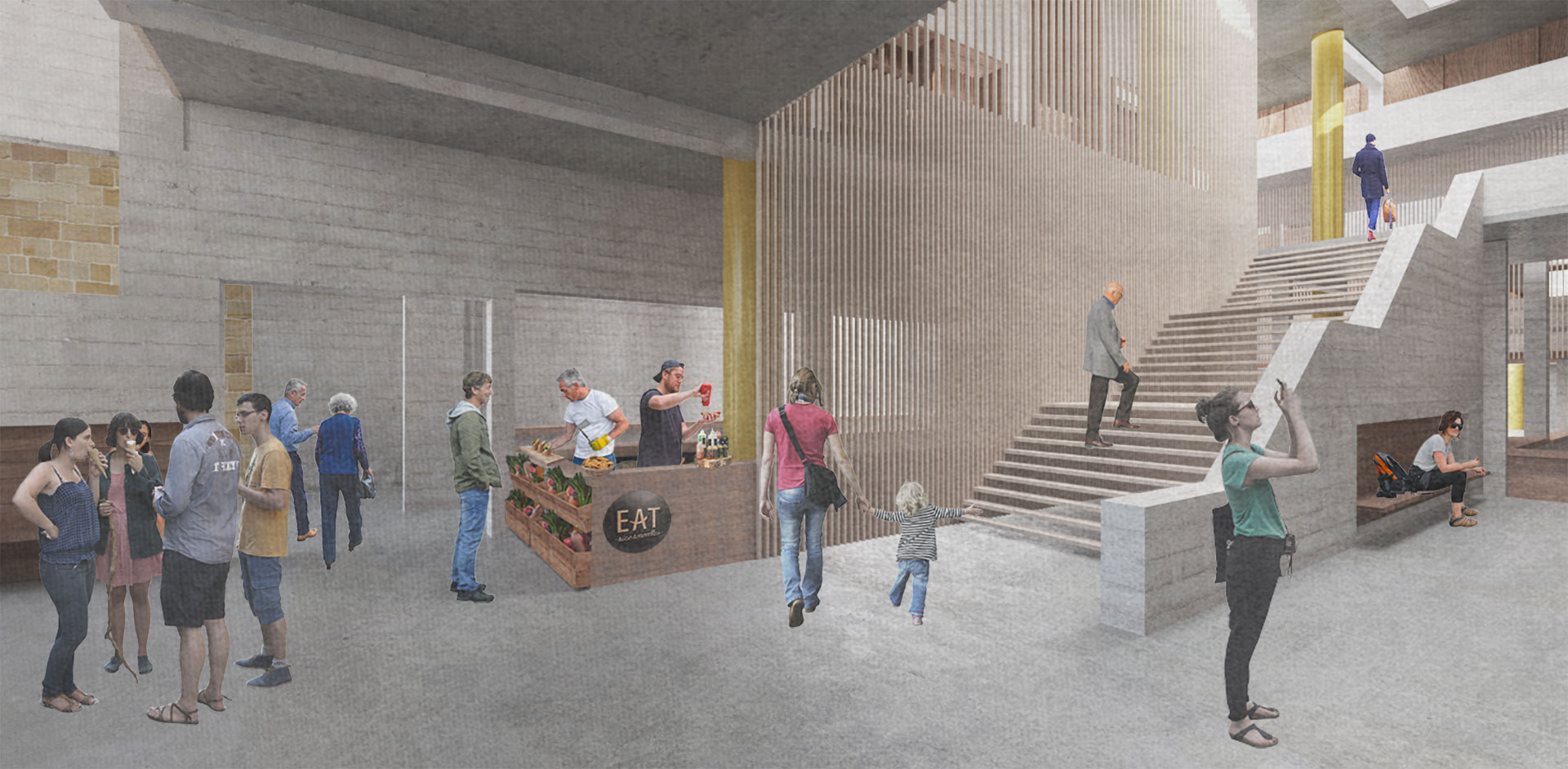
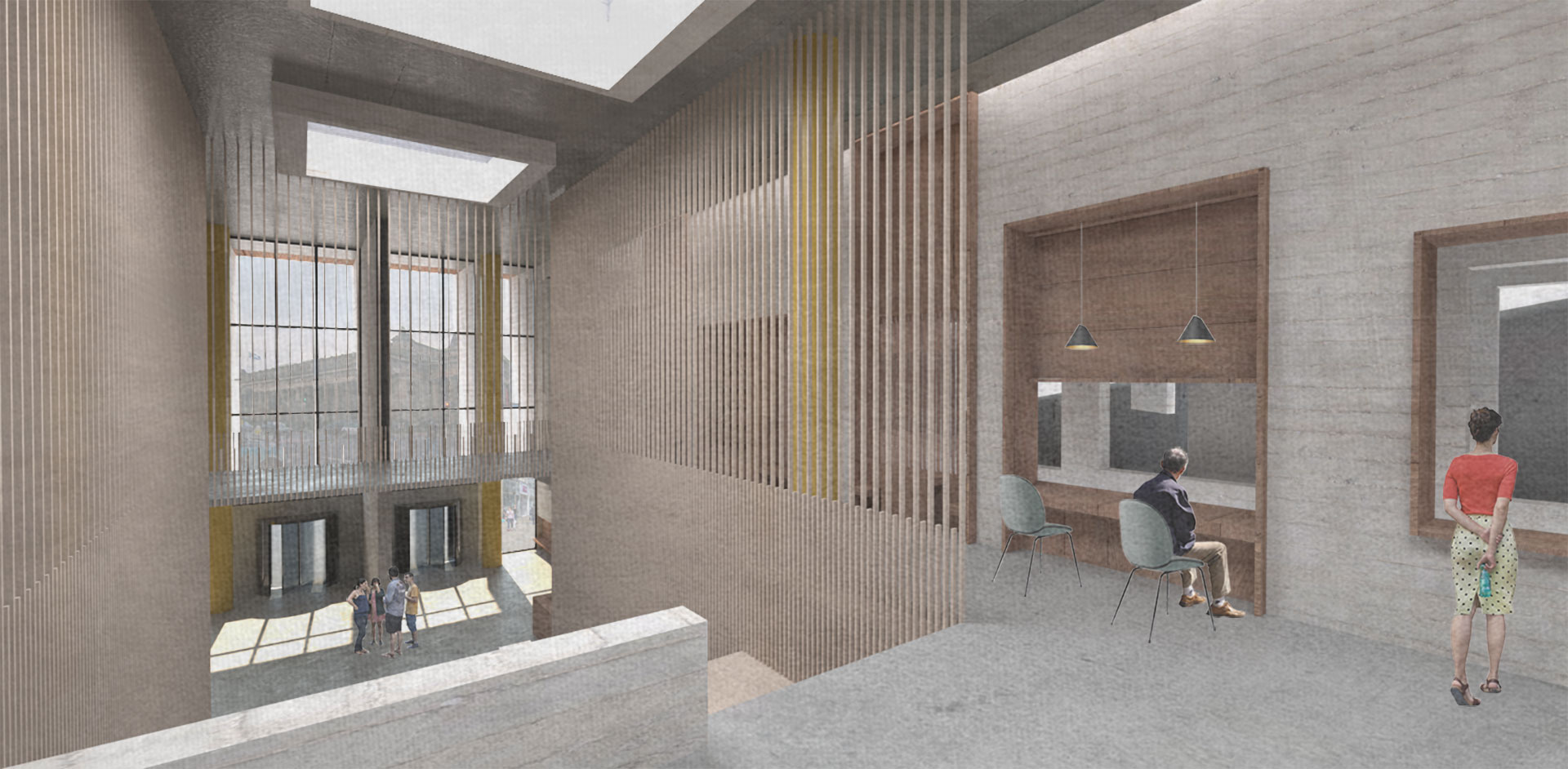
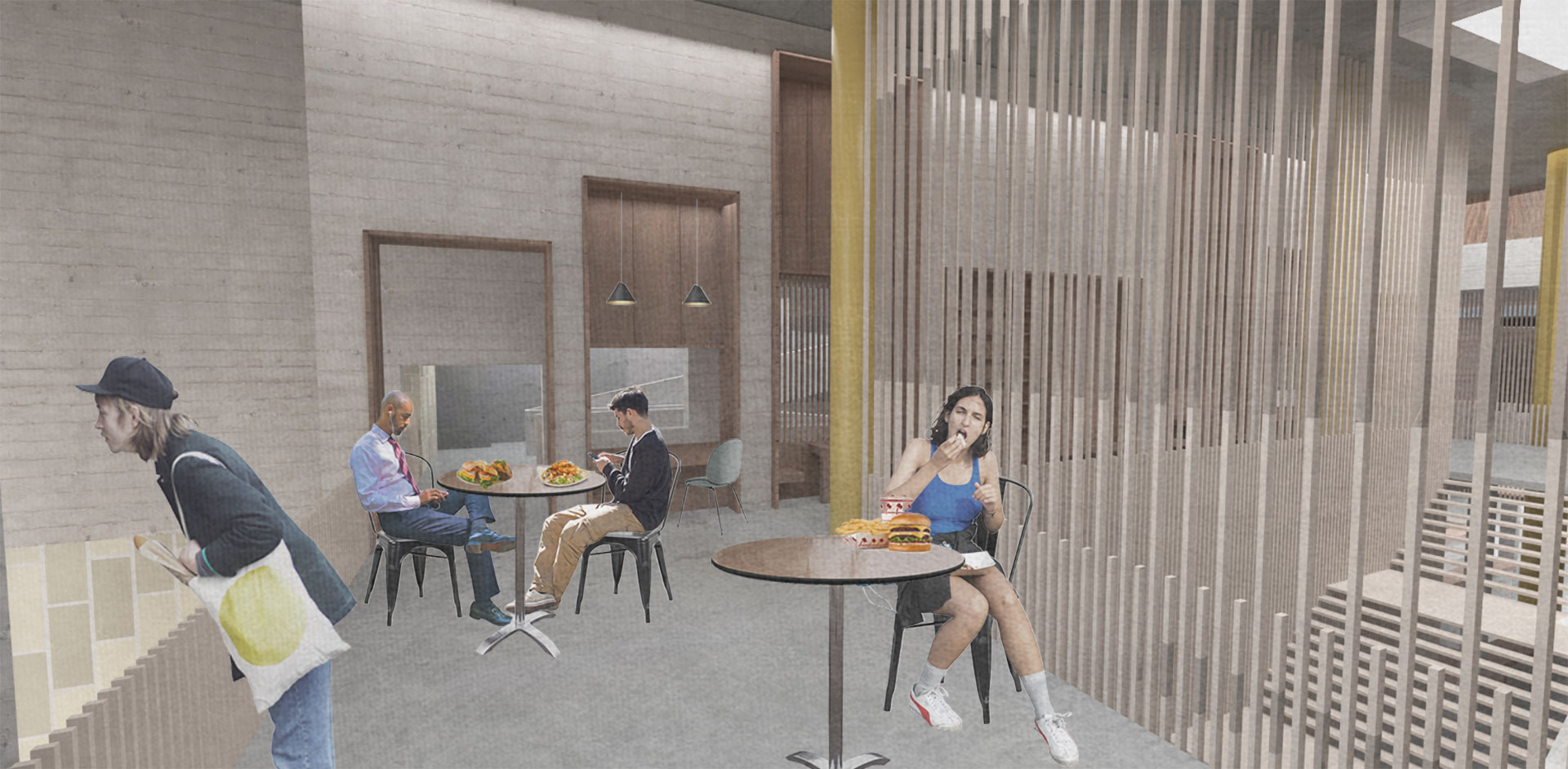
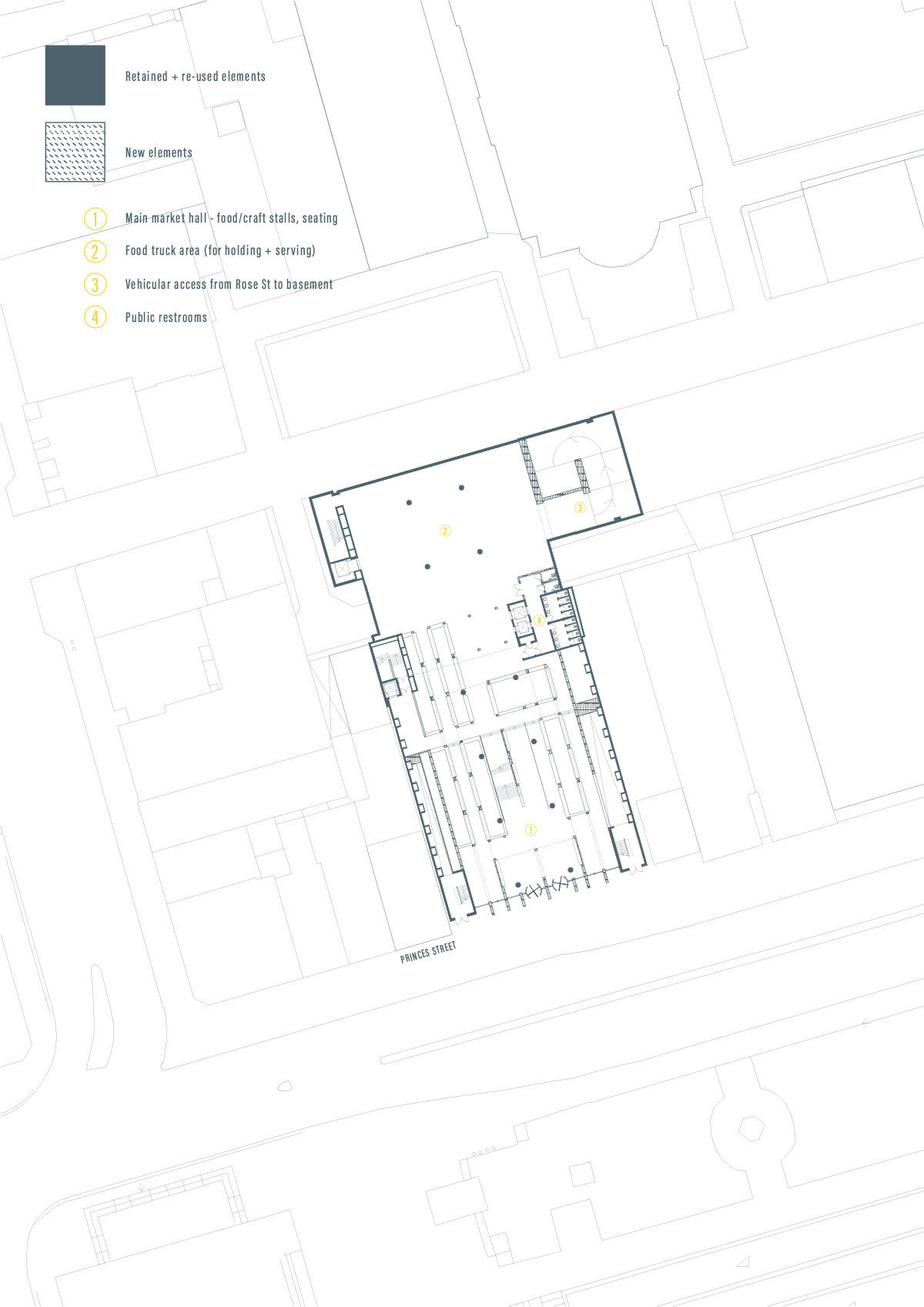
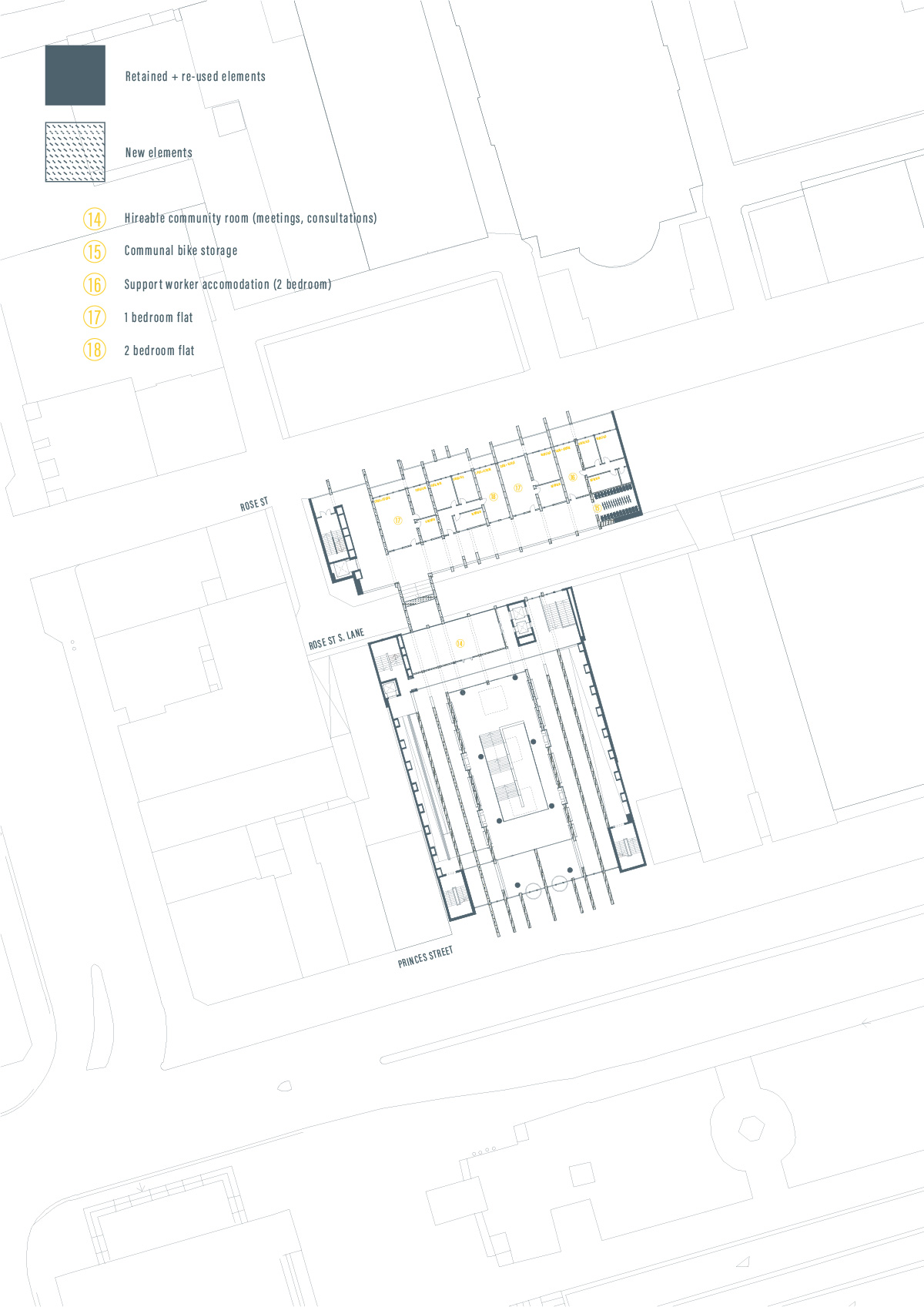
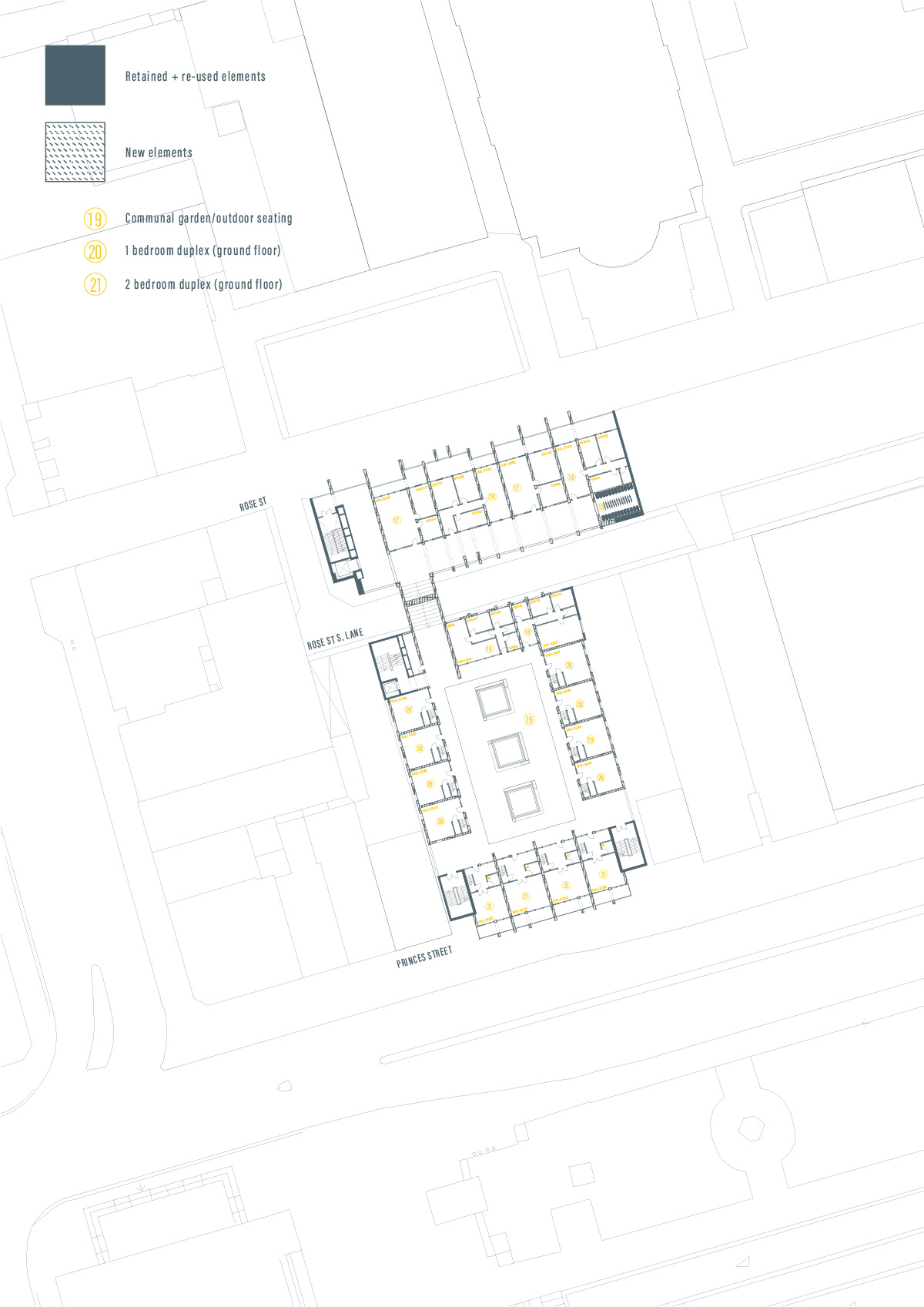
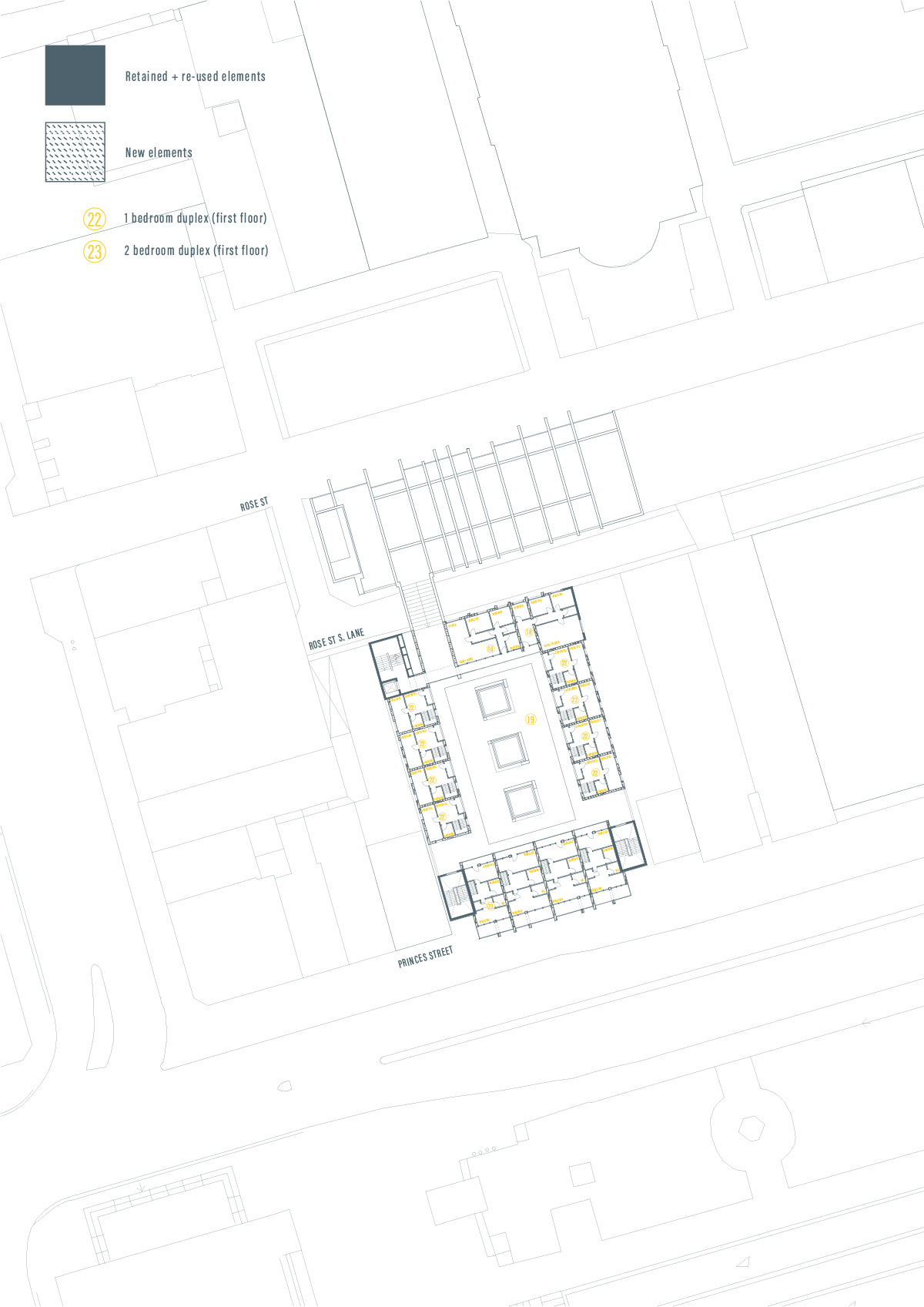
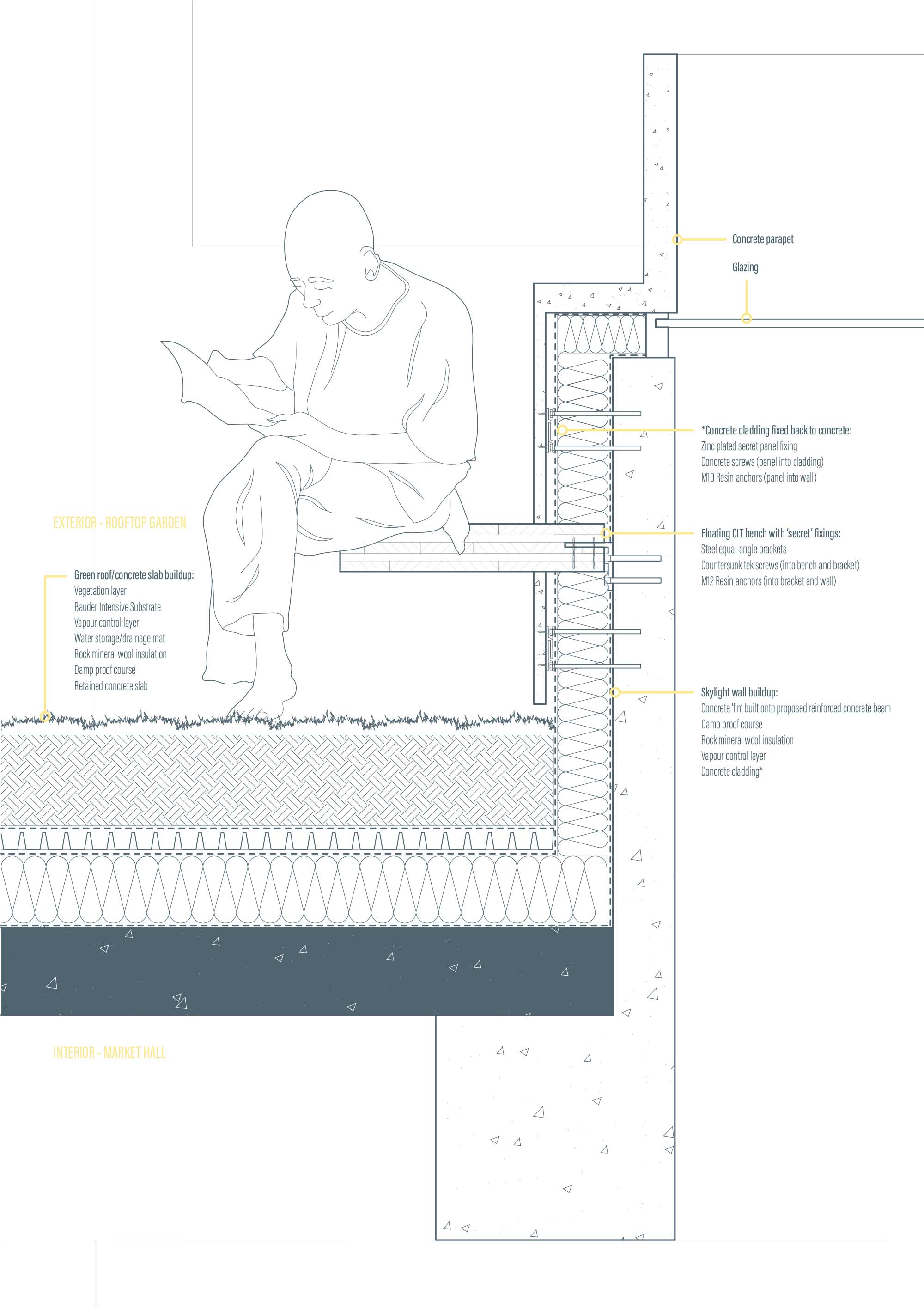
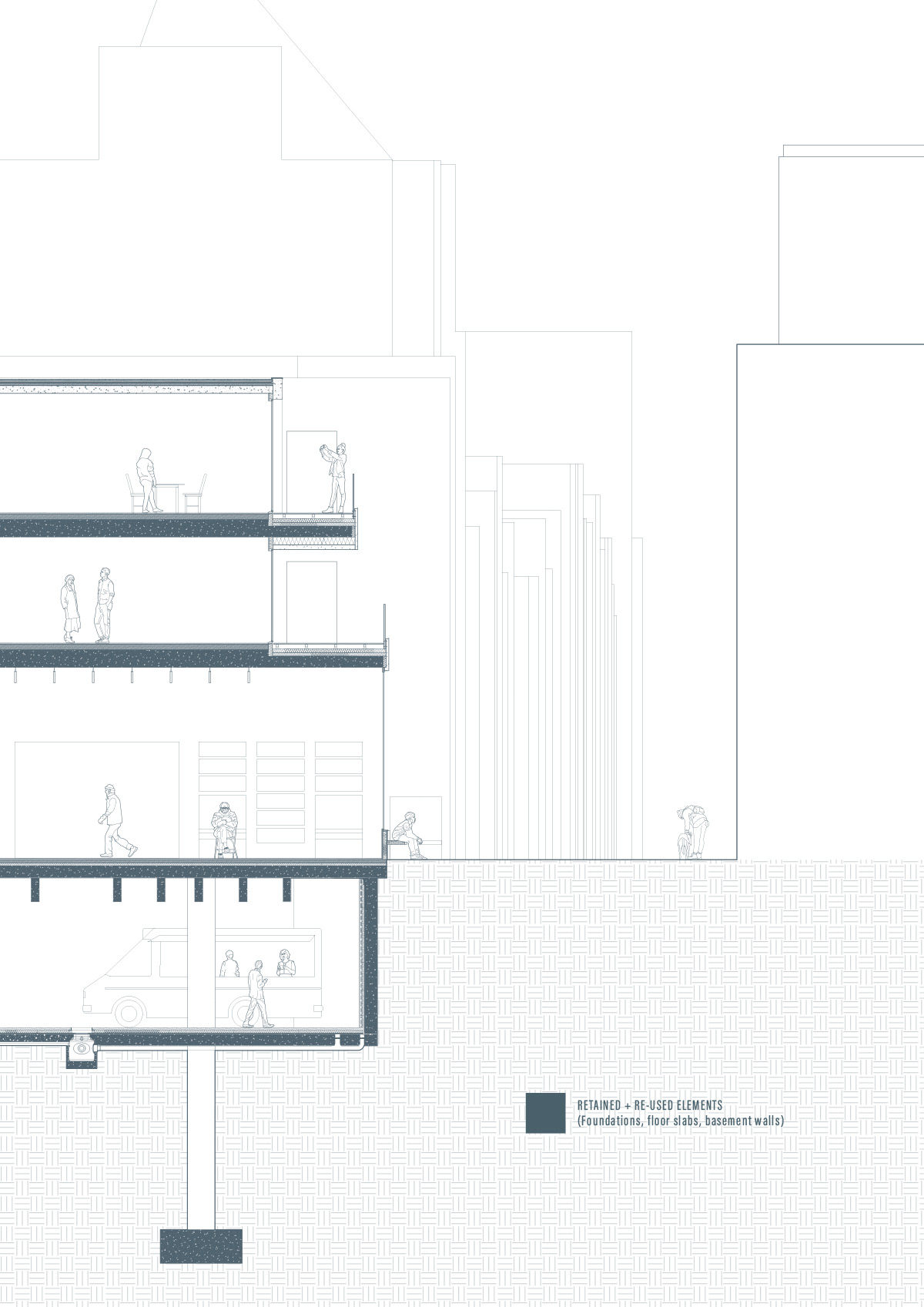
The project is supported by extensive research in the fields of urban planning, and draws upon the knowledge of figures such as Jane Jacobs, Richard Sennett and Professor Tim Rieniets to test sustainable and progressive solutions to the erosion of the New Town’s social and urban fabric, attempting to ‘re-place’ a previously dis-placed population. This led to the formation of a guiding framework for the programmatic configuration for the design, which was to centre on mixed-use development for a diverse demographic of residents and user groups. The resulting proposal for a combined market hall, homeless support hub and residential accommodation occupies the site of a former department store on Princes Street, and utilises its existing structural elements to reduce construction waste as far as possible. In this way the project aims to ‘procure permanence,’ not just for vulnerable individuals seeking long-term solutions to homelessness, but by thinking in terms of the full life-cycle of ‘empty’ buildings, building long-term neighbourhood resilience.
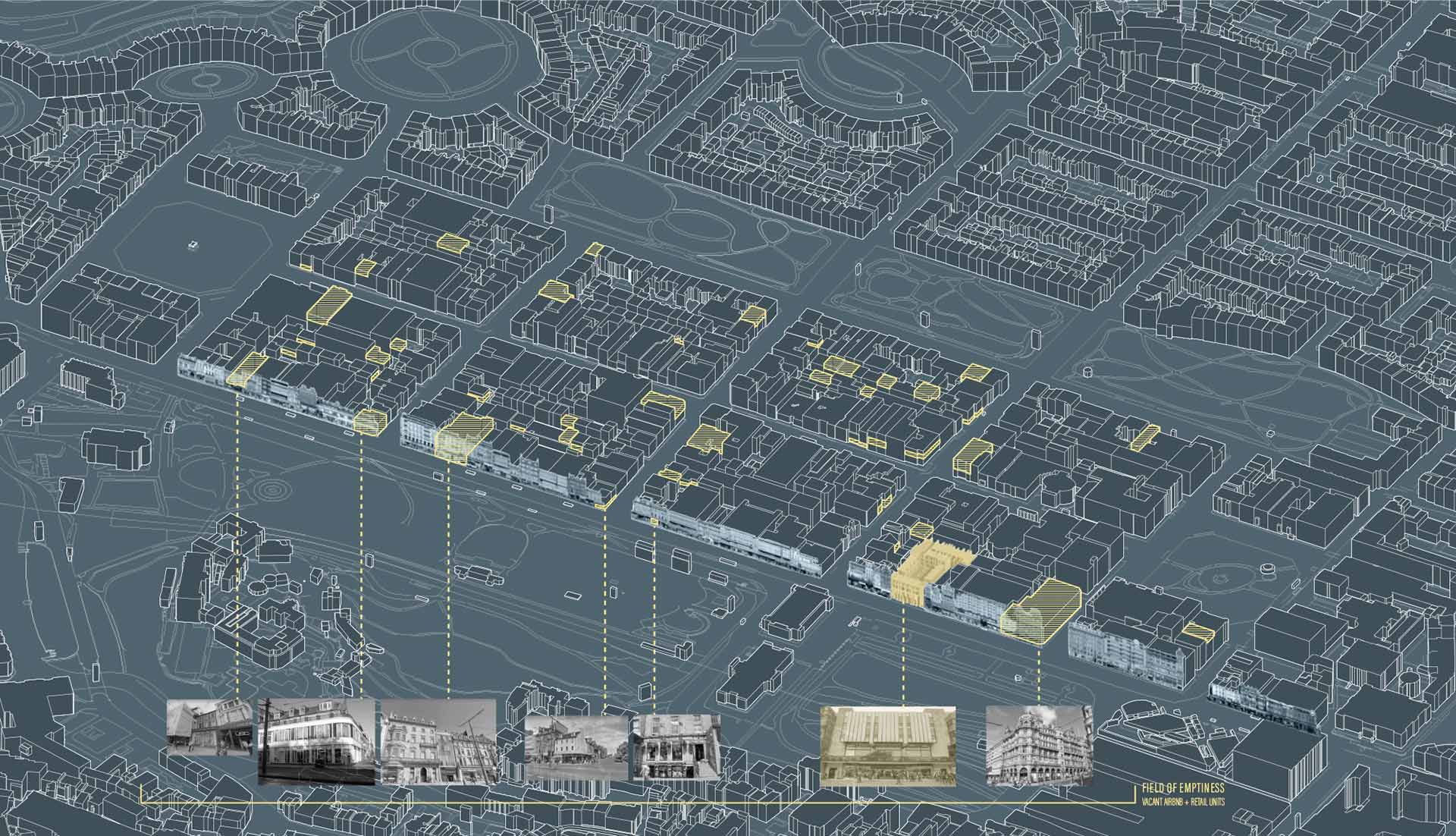
Abandoned department stores and smaller retail units, empty Airbnb flats and at-risk heritage buildings awaiting renovation or demolition: these form the ‘gaps’ referenced throughout the study which the design proposal seeks to utilise and ‘fill’ in the formation of a New Town Neighbourhood. The selection of these specific areas of focus was informed by a desire to investigate phenomena which were already eroding the urban fabric of Edinburgh’s New Town, but which were undoubtedly exacerbated by the onset of the pandemic and a decline in consumerism and tourism.
Early-stage research into this condition of ‘emptiness’ in the New Town involved the study of articles and published pieces on retail closures within the area and the At Risk Buildings Register online, as well as considerable and extensive research into the usage trends of high-use Airbnb apartments via online database Inside Airbnb; the results of this research are shown opposite.