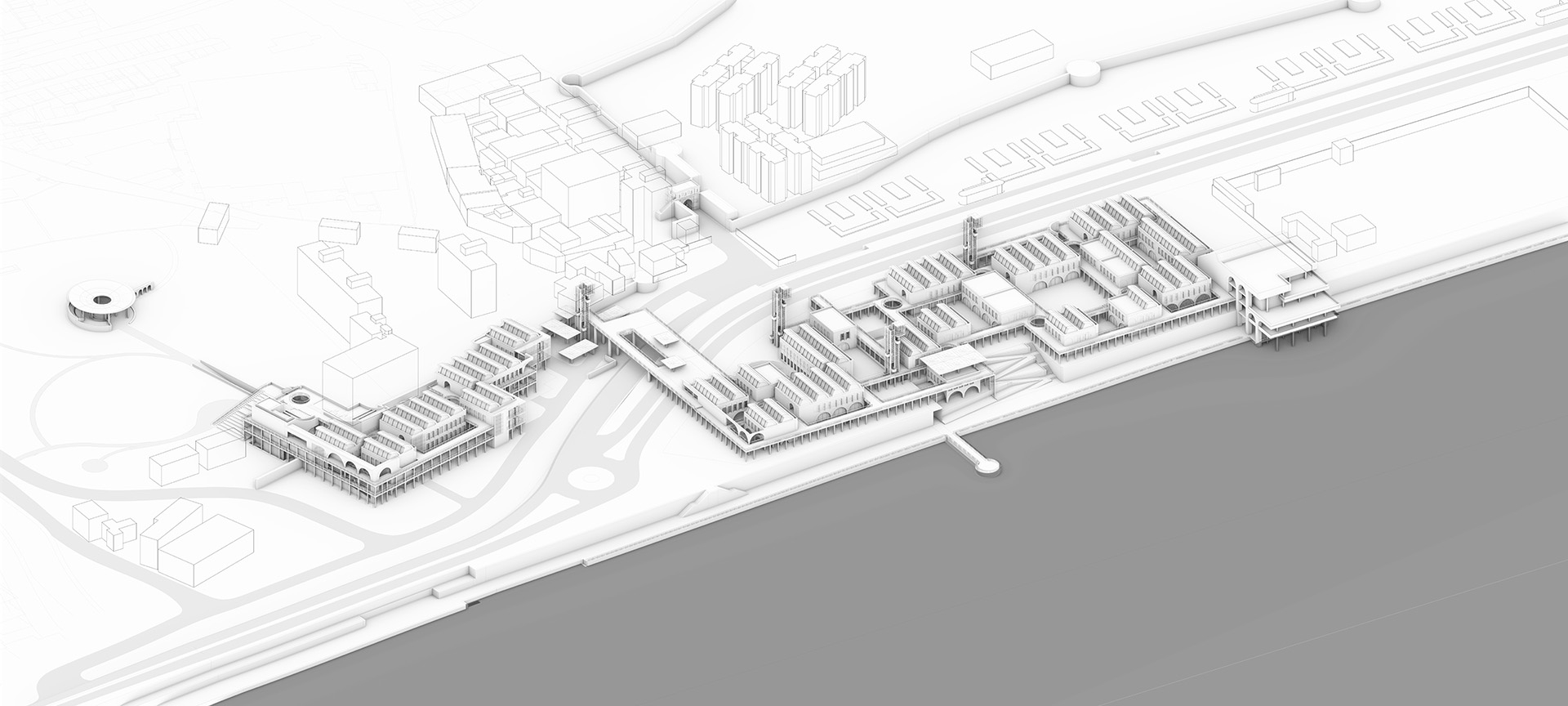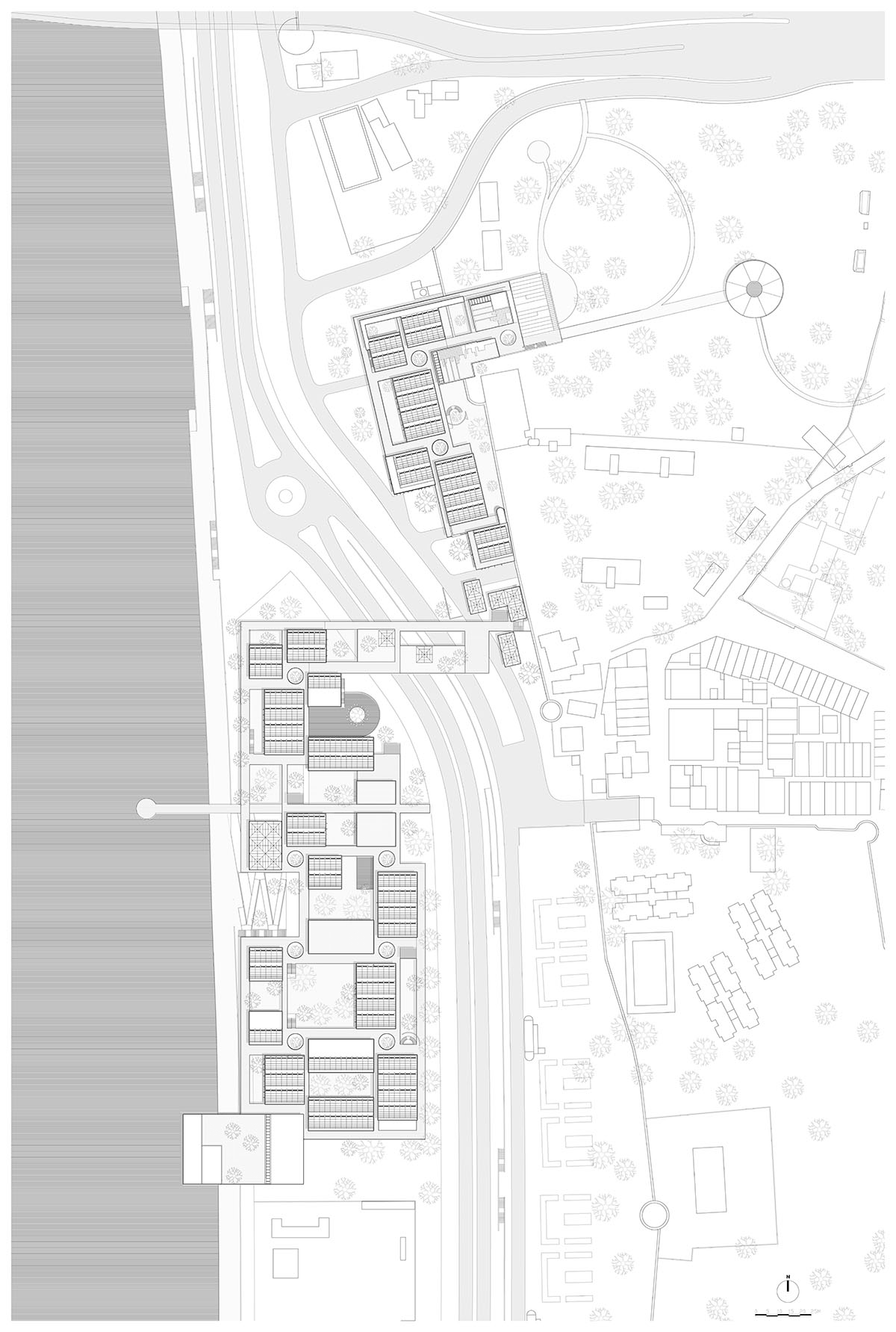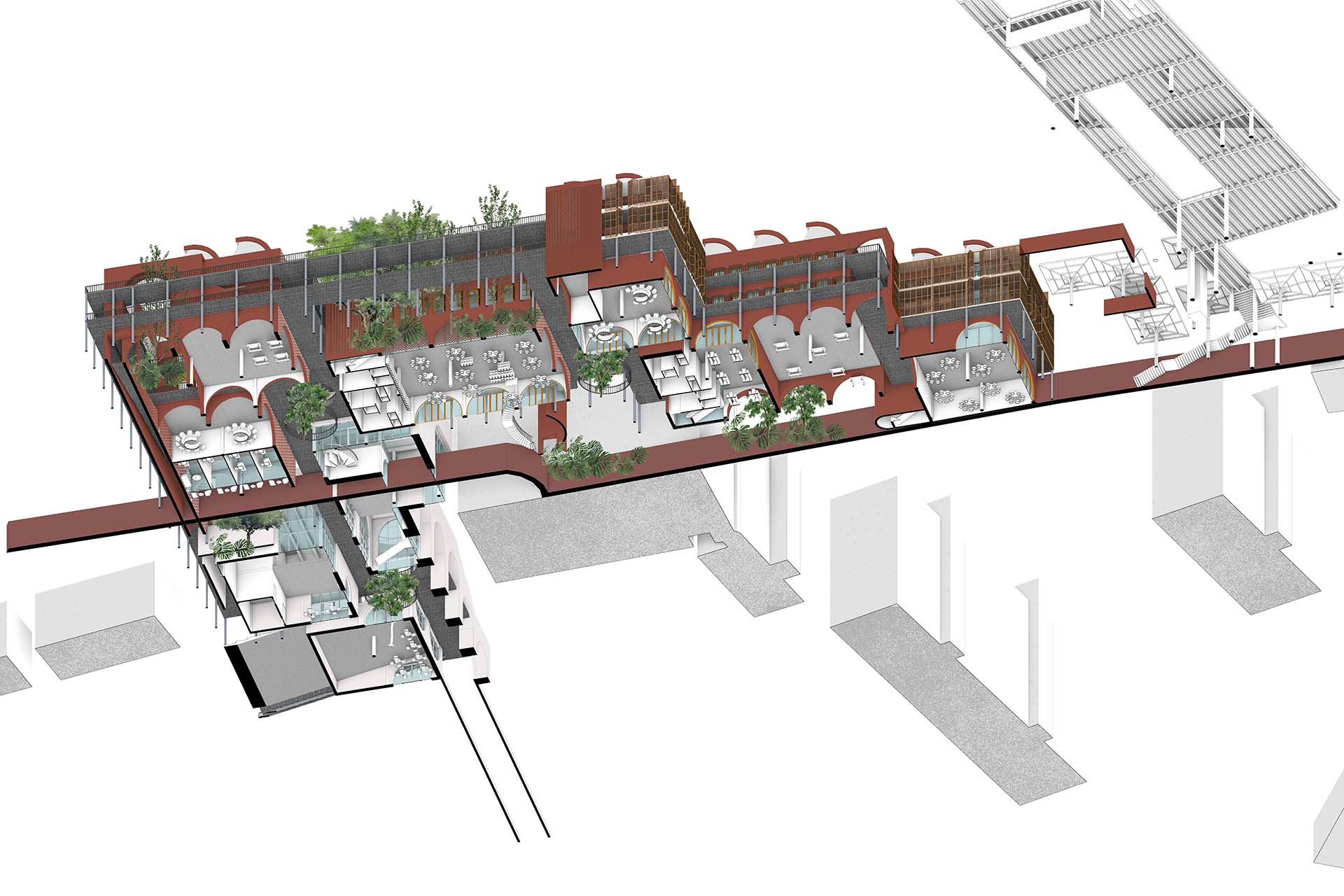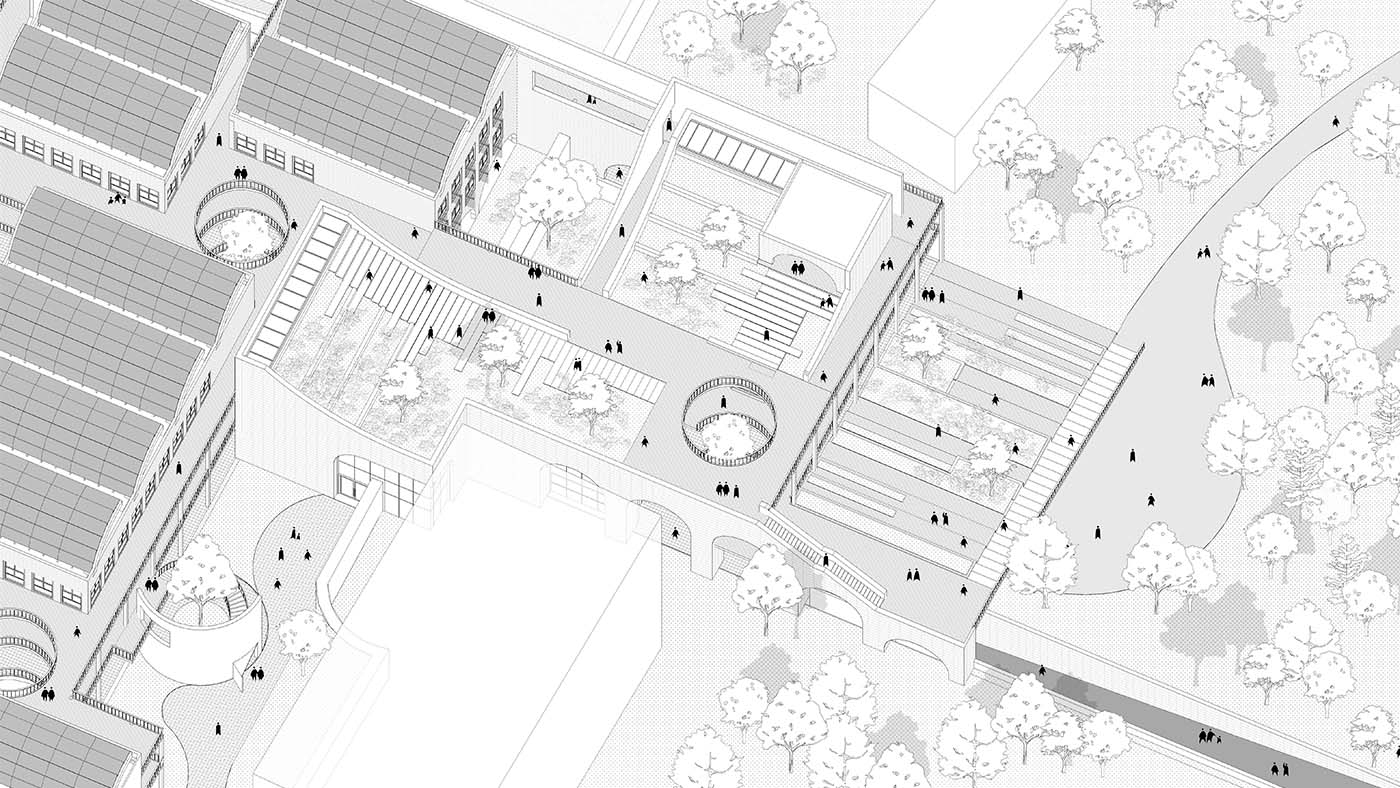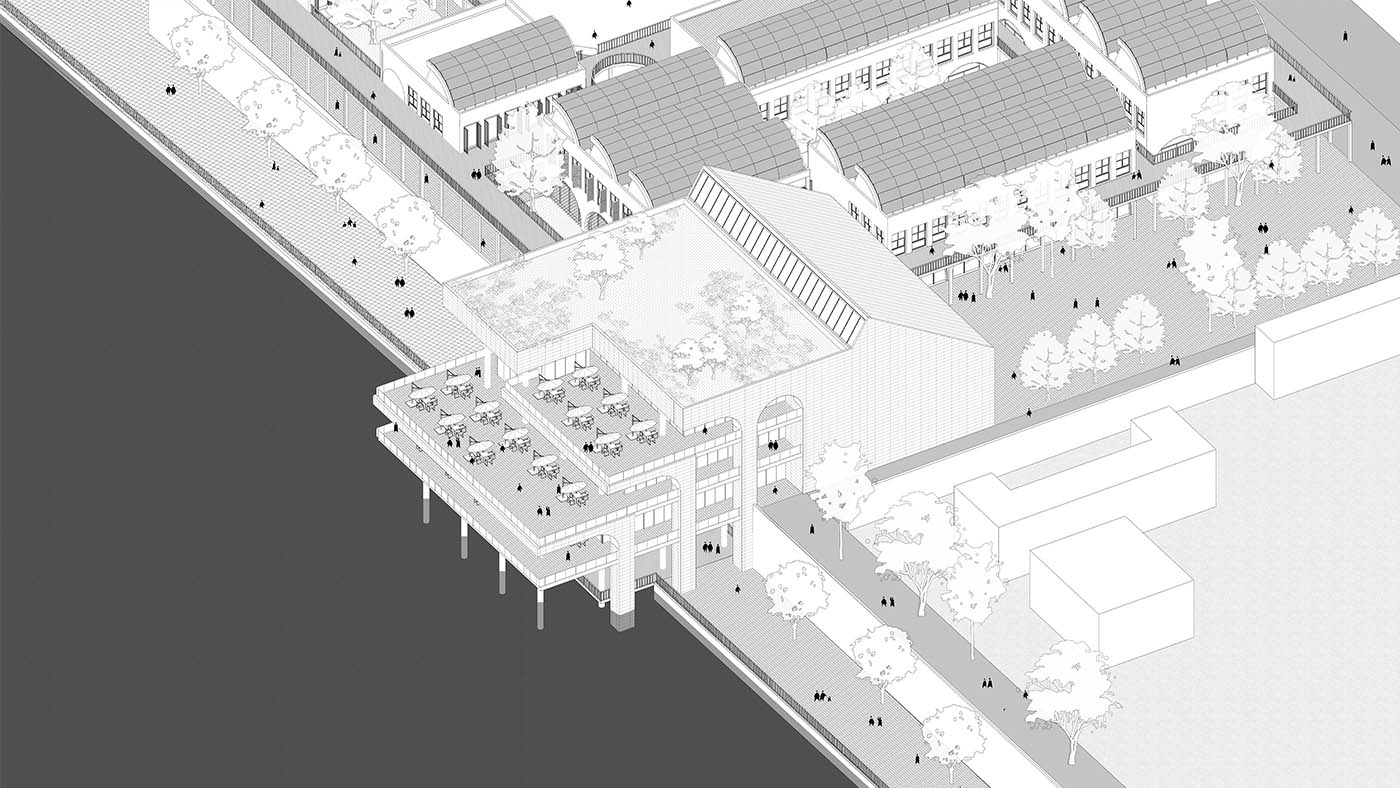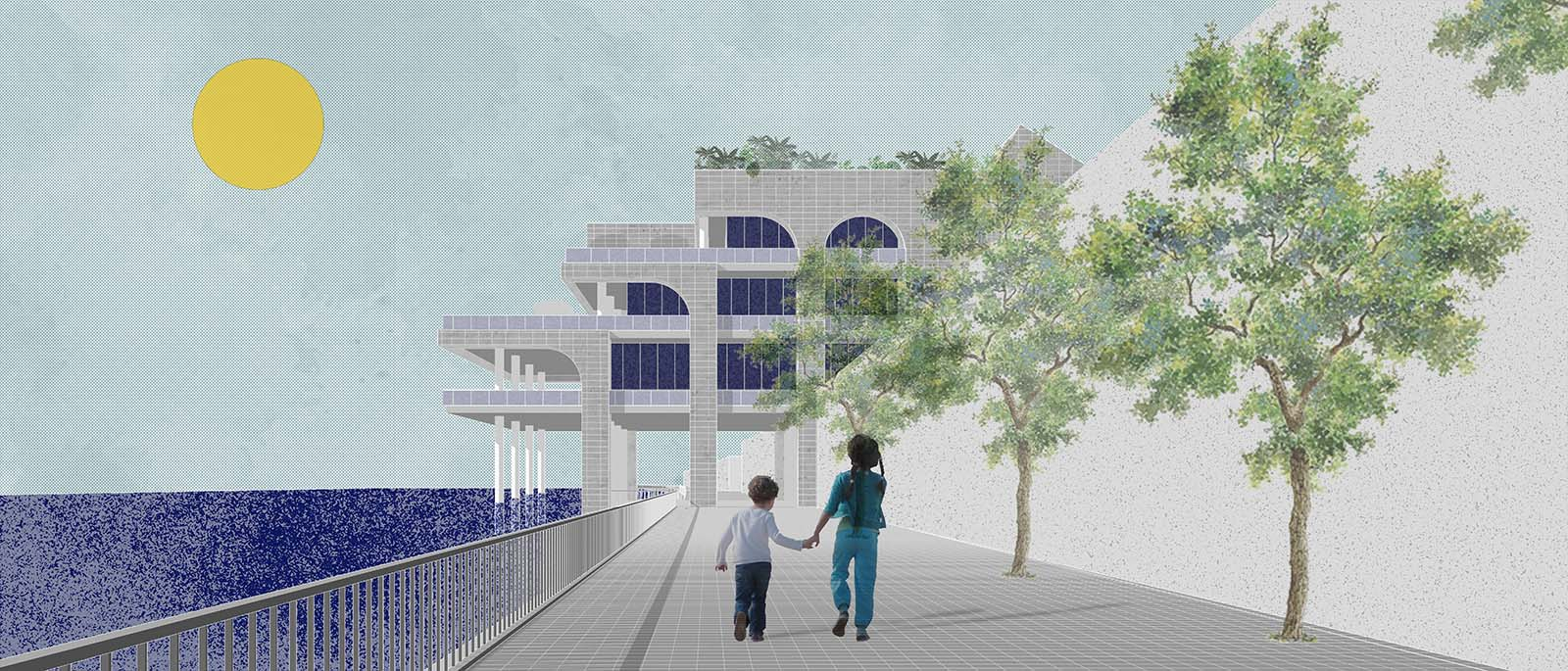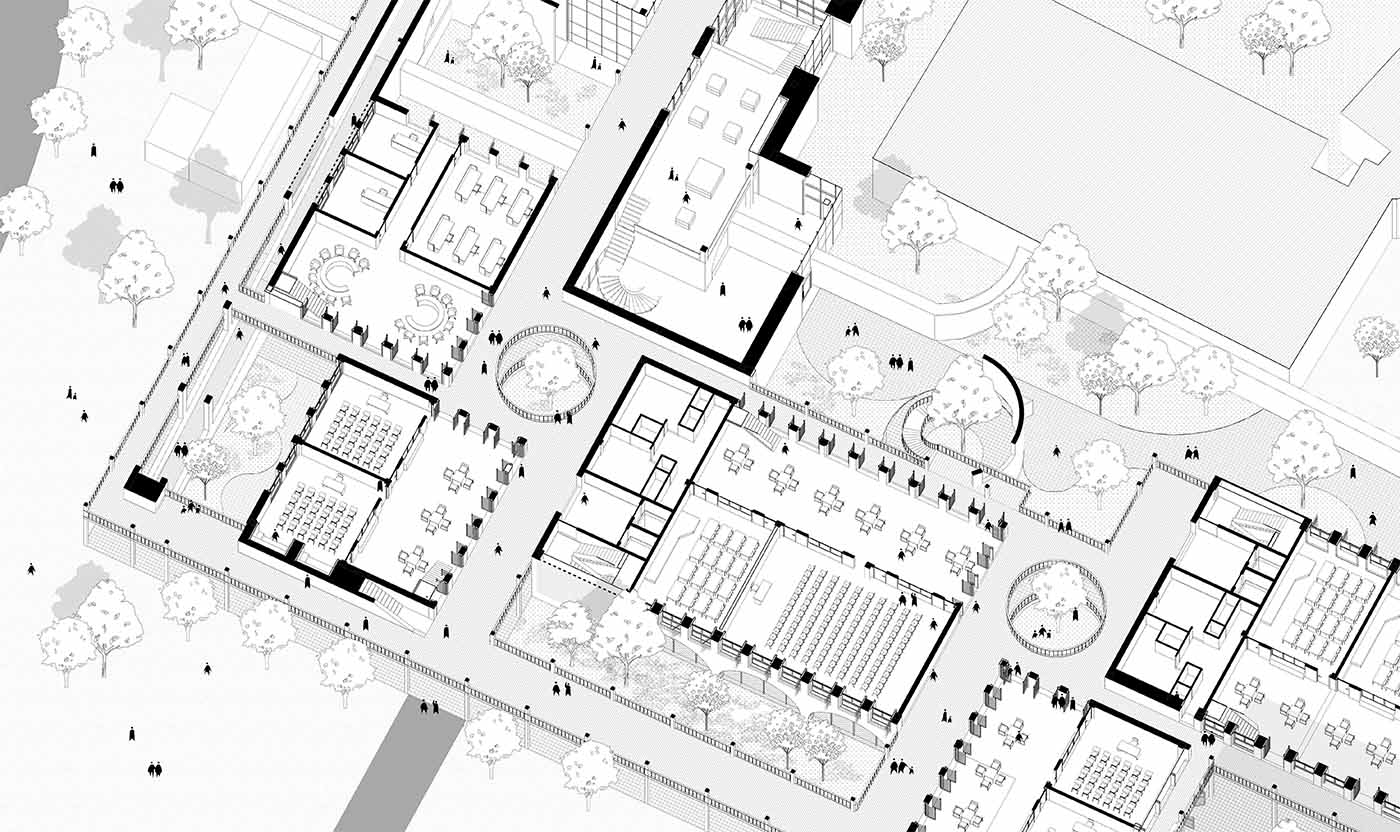

Stretching across the old and new walls, the mat breaks the barrier between inside and outside, the old city and new city, connecting all through the landscape of the park along the river.
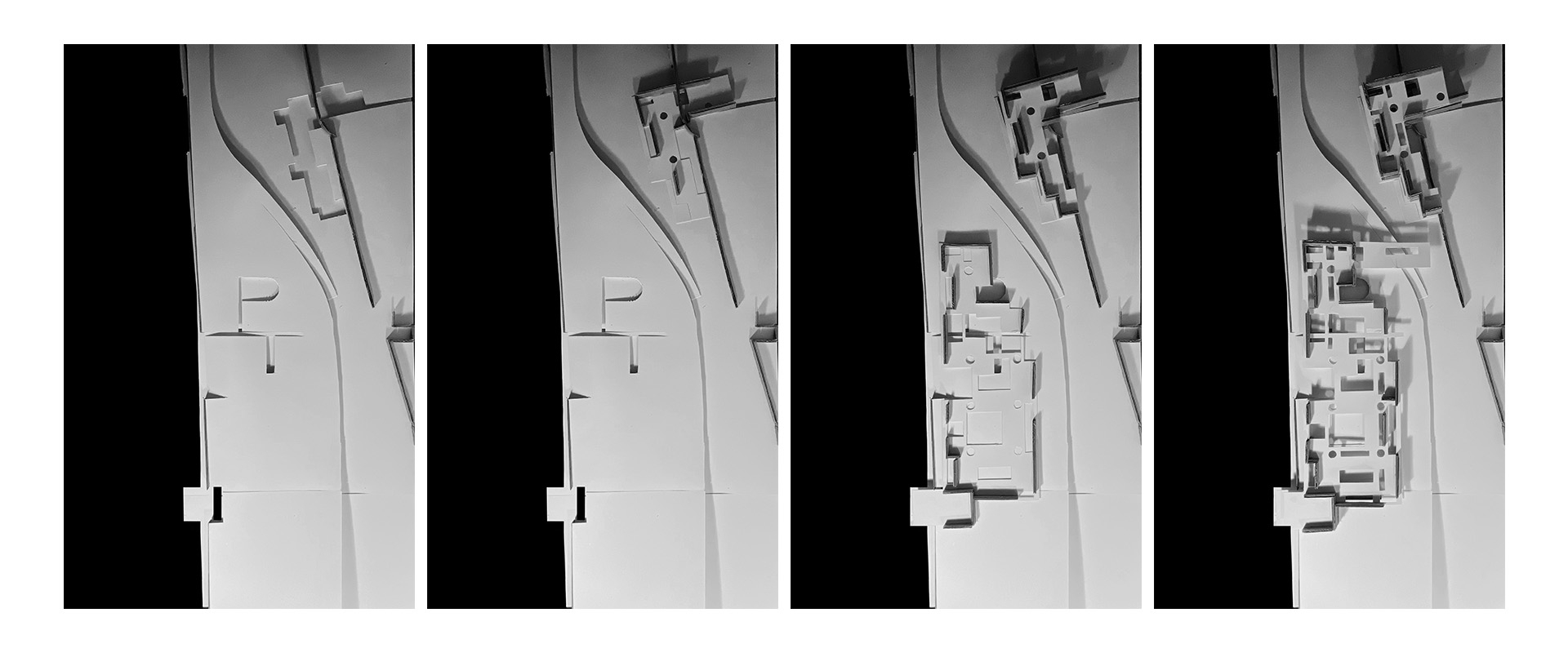
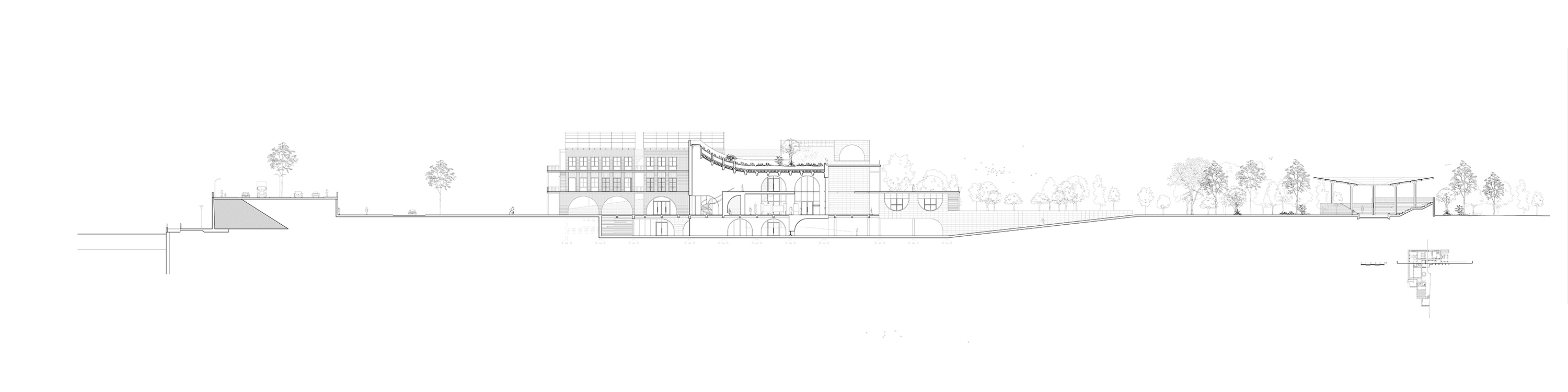
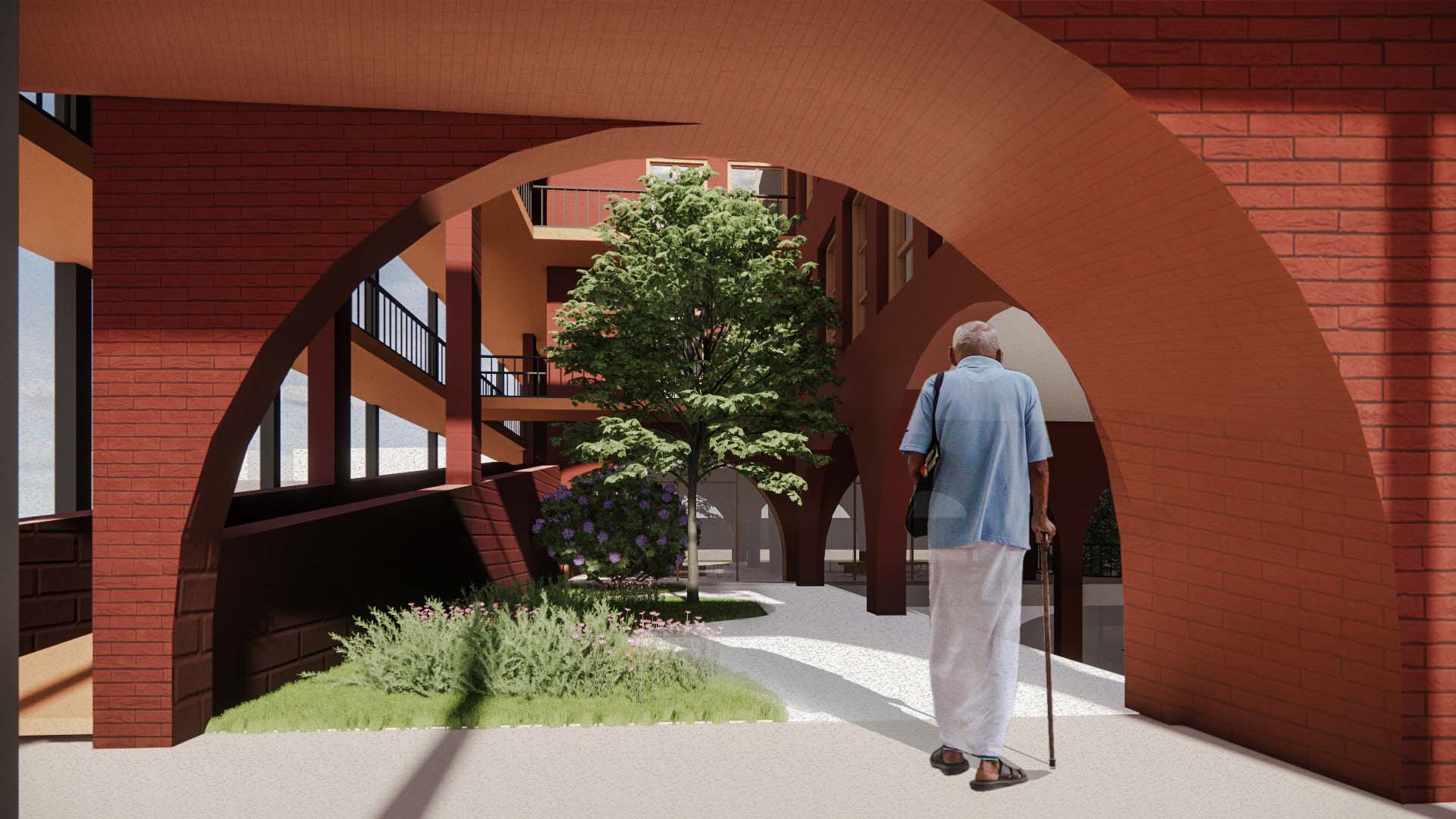
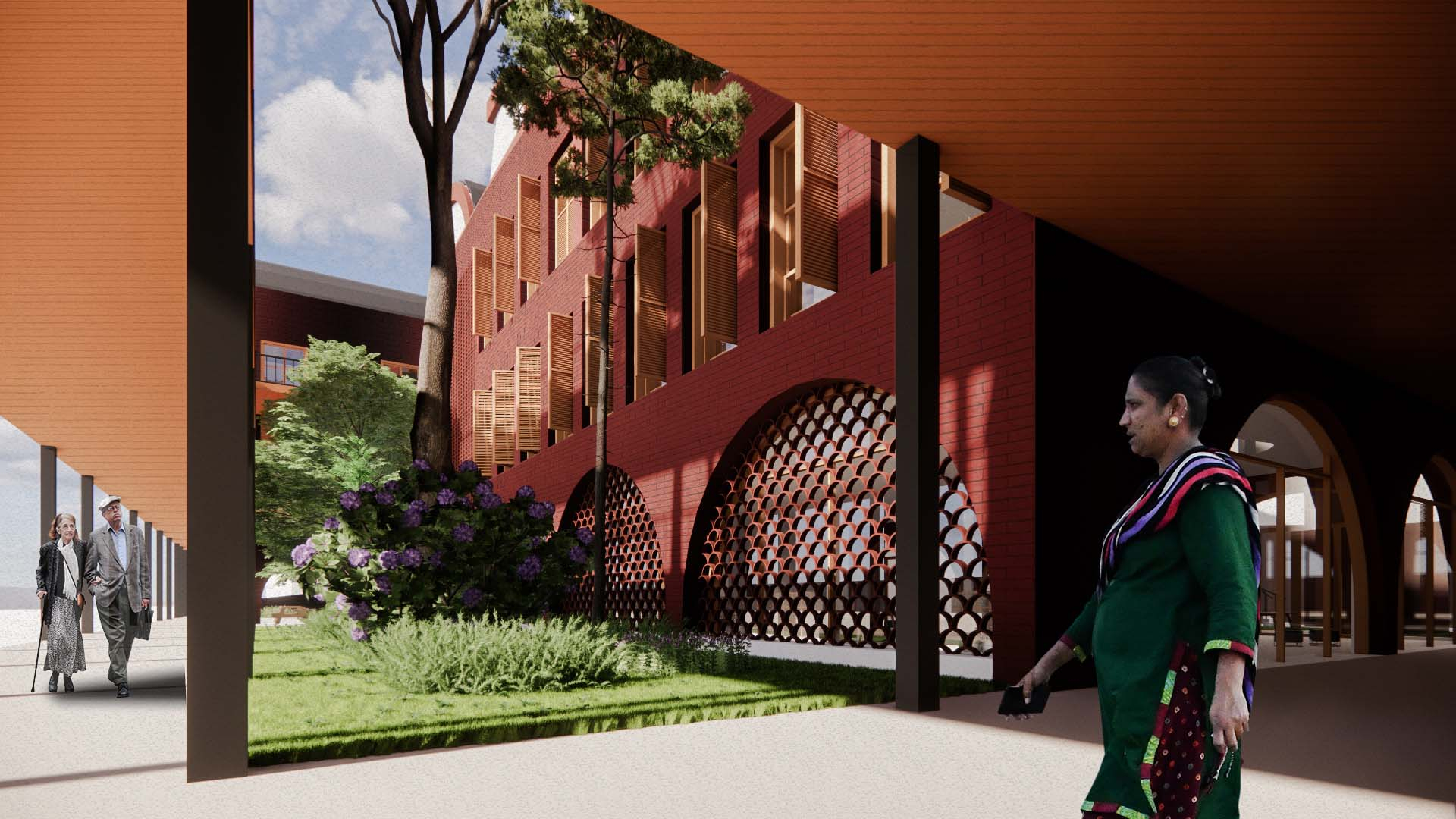
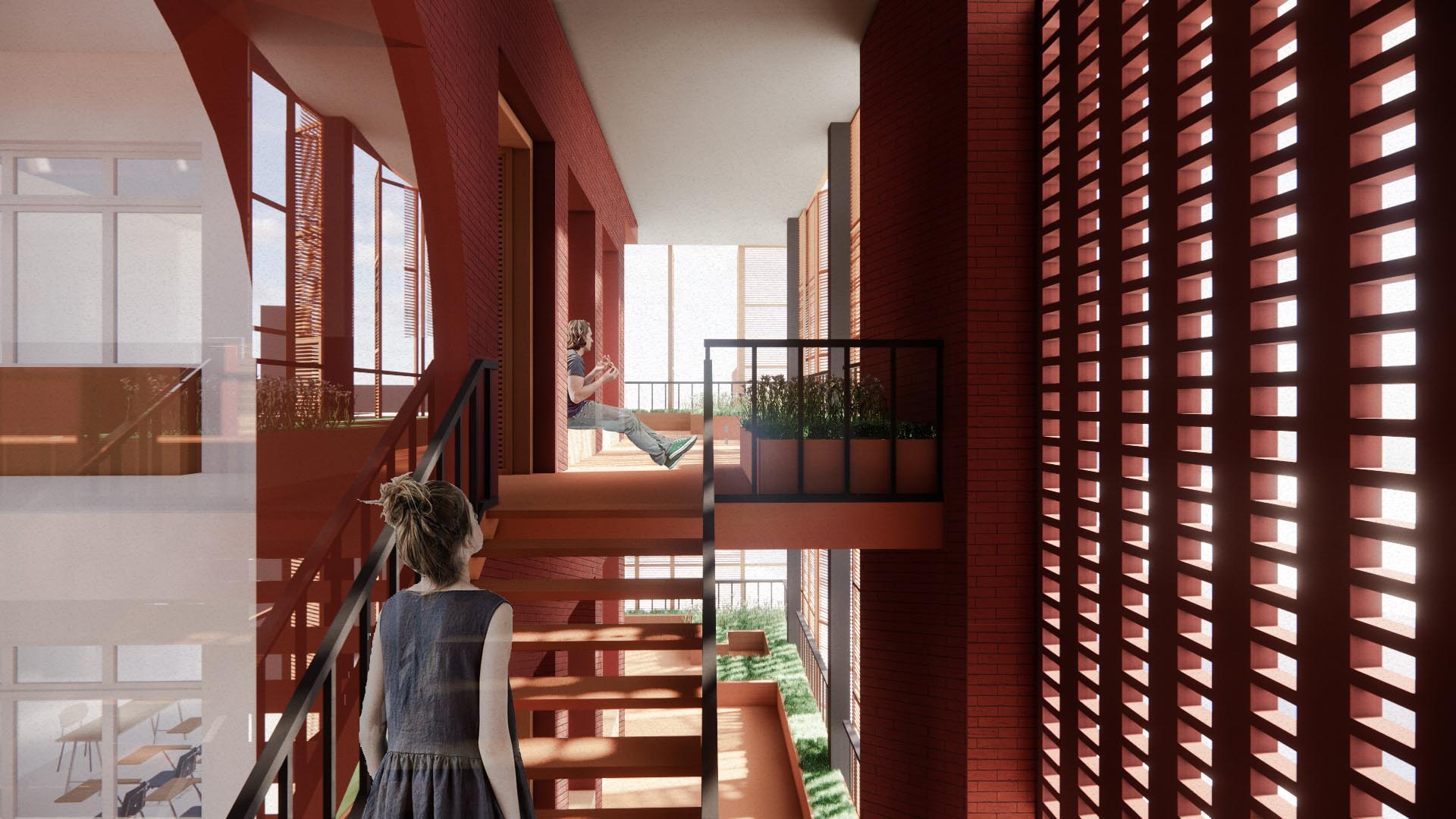
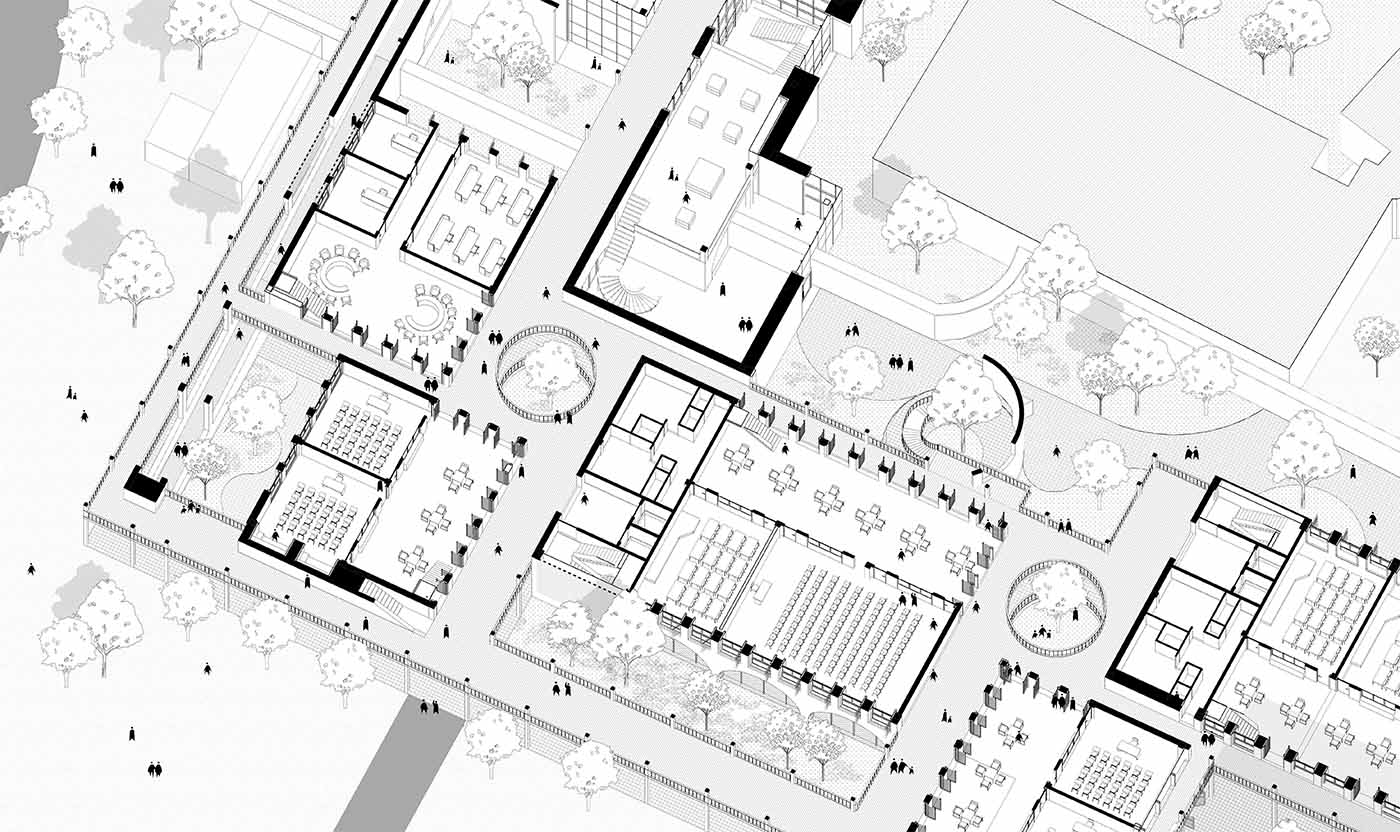
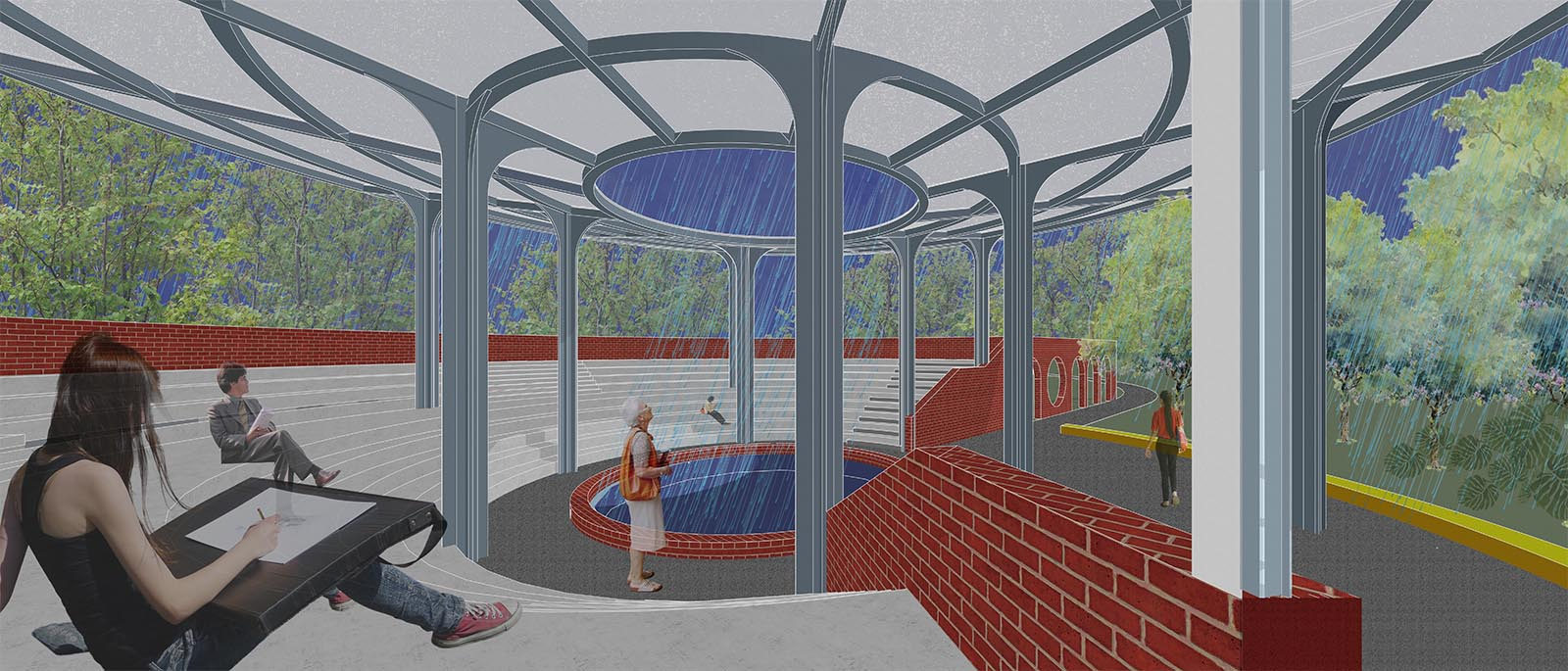
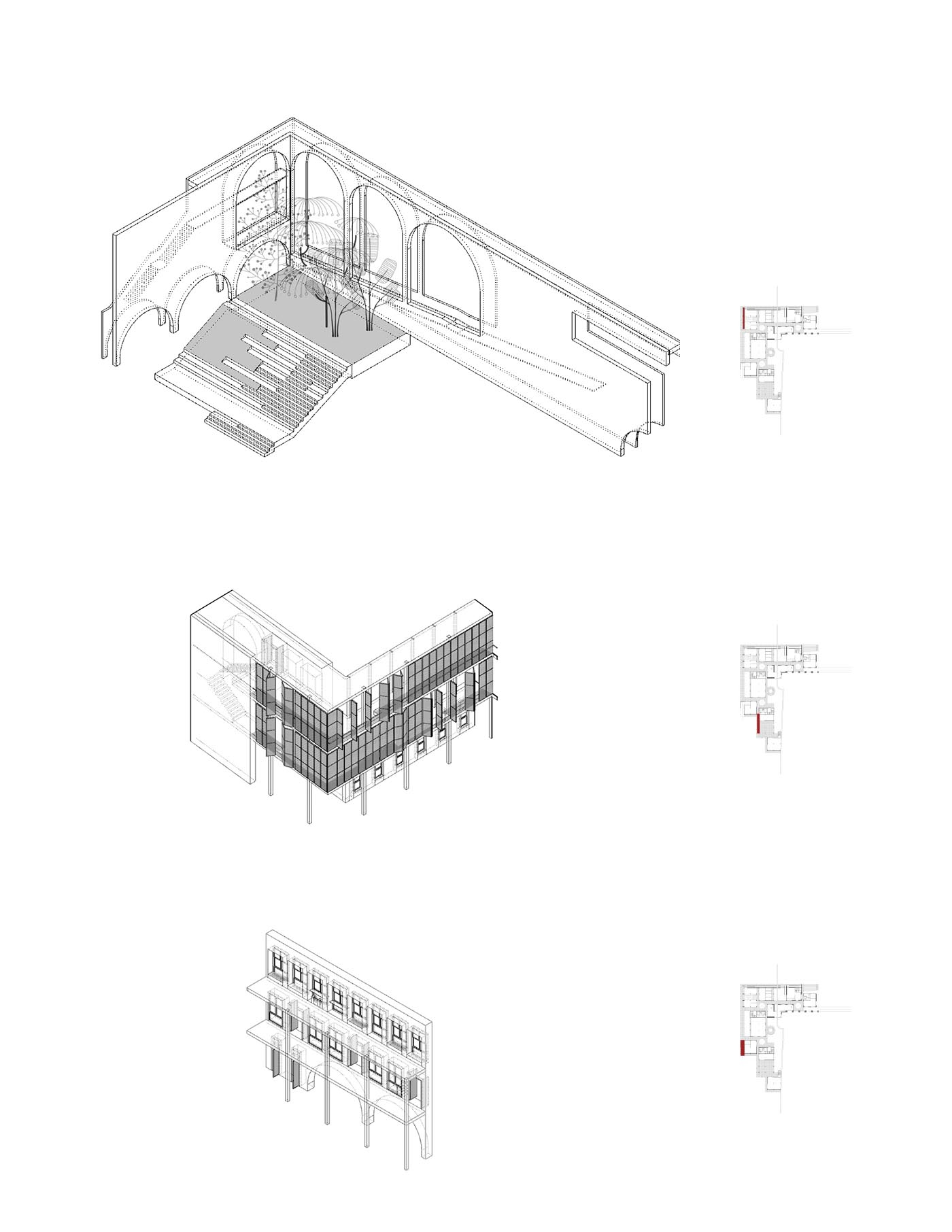
The project reproduces principles of mat-building, which has its own logic of growing—the module. The flexible exchange of internal and external environment, continuous flow line, high density of horizontal courtyard and close relationship between the city are four features of the mat-building. The introduction of mat-building will enhance the communication between the old city and the new city, and increase greening opportunities for the whole city. The plants in the high-density courtyards bring moist ecological climate and the biological filtration technology for water reuse. Thus the 'wetness' of Ahmedabad is realized as an environmental cooling and ecological and biodiversity gain. In addition, inspired by the old walls, thick walls are set as perimeter structures to the new mat-buildings. The thick wall is regarded as an architectural space, which includes the ground, traffic, seats, doors and windows as environmental mediators between inside and outside. This in-between space not only enriches the functions, but also brings coolness to the interior.
It is a campus designed for both city and college residents. Most of the building units are classrooms, while the building that straddles the old and the new walls offer public facilities. The walls blend: not only do the mat-building walls break the relentlessness of the riverfront walls, the new rhythmic structures also carry forward the charm of the old city walls.