


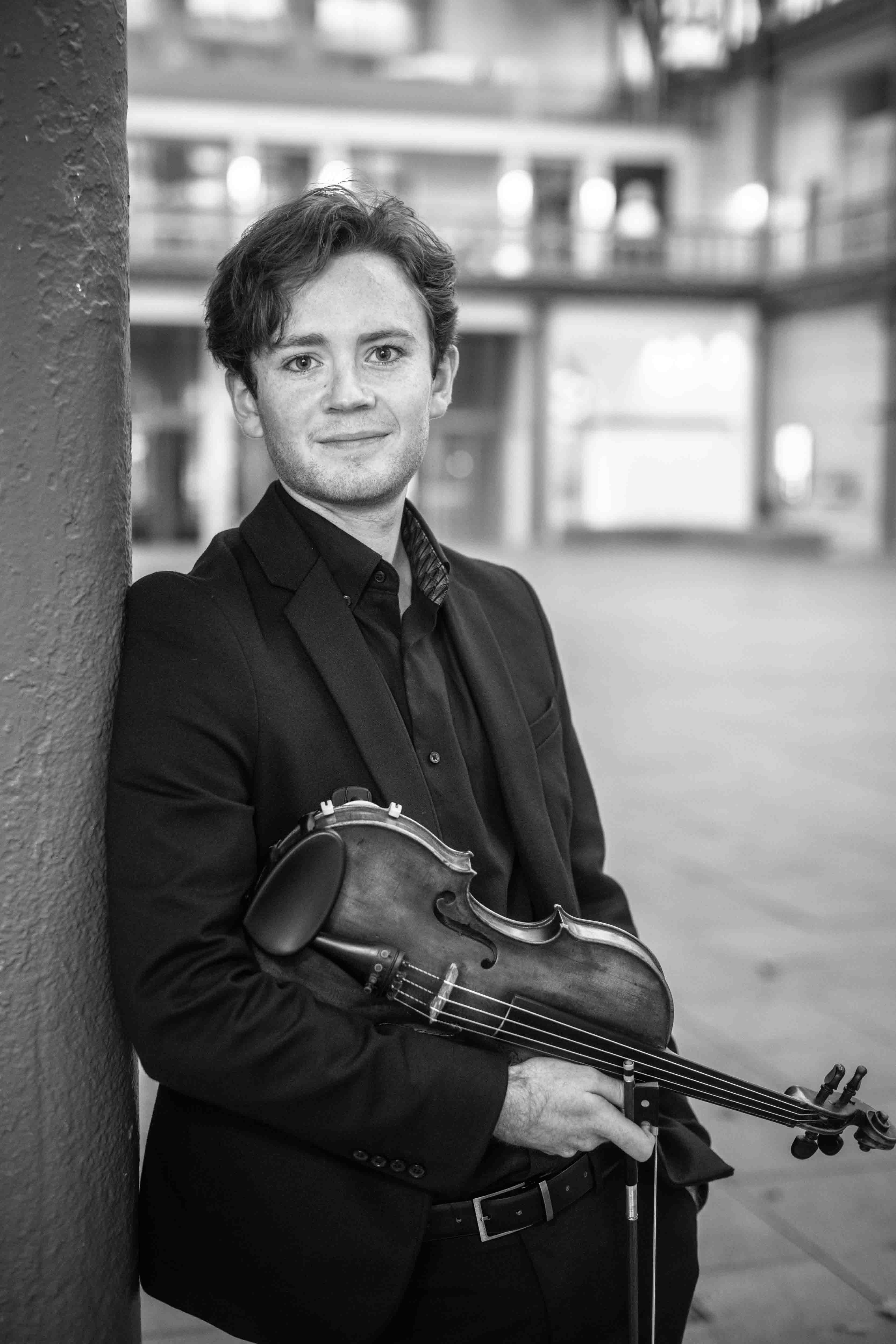
Interview by Eva Coutts
What is your graduation project about?
My final recital explored German and French Romanticism through compositions for violin and piano by two of the nineteenth century’s most celebrated musicians, Robert Schumann and Pauline Viardot. Although we used modern instruments, my duo partner and I took the recital as an opportunity to explore evidence of the unique performance styles popular in Germany and France during the middle of the nineteenth century, when these works were written. All of this was further supported by the research I undertook for my honours dissertation, which was also concerned with nineteenth century performance practices.
How do you best like to work?
I combine analysis of primary and secondary historical sources concerning performance - including treatises, contemporary journalism, and historical recordings where they exist - with practical experimentation in rehearsal. Historical performance practice research is not about ‘re-enactment’ or trying to create something that is historically ‘authentic’, instead it’s a stimulating way to expand our interpretative and expressive vocabularies. In this way, as much work is done in researching technical and stylistic trends from given times and places as they appear in the evidence with trying these things out practically and seeing what works in the context of specific pieces.
Can you tell us about some of the things which inspire you and your work?
I have held a strong interest in historical performance practice research since my first year of university, but have only applied these perspectives specifically to my performances of nineteenth-century music since the end of my third year. It seems much more common for performers of ‘European Art Music’ to approach the performance of pre-nineteenth century repertoire from a historically-minded perspective compared to that written from the nineteenth century onwards, and in fact my dissertation intended to address why this bias appears to exist. I owe my discovery of this particular area of research mainly to the writing of active English scholars such as Clive Brown and David Milsom, but am also very grateful to my violin teacher, Ruth Crouch, and performance lecturer, Dr Anne Desler, who have both always encouraged me in my own work.
What have been the highlights of your time at ECA and Edinburgh?
I have always really loved playing as much as I can in the university’s orchestras and theatre groups, and have been lucky enough to have been part of some really memorable performances. The Edinburgh University String Orchestra (EUSO) has been really special to me as a means to make friends whilst playing some of my favourite music, and I have also got a lot out of being a part of their committee for the past three years.
How have the events over the past year affected your work?
Obviously there have been a lot fewer group rehearsals this year, but lockdown has actually provided something of an opportunity for me to experiment more with some of the aspects of historical style and technique that are suggested by some of the sources I mentioned earlier. I am certainly looking forward to playing together more with people again though!
Have you got plans for after graduating?
In September, I will be joining the MMus Performance programme at the Royal Northern College of Music in Manchester. I have chosen two teachers with whom I am really excited to take my performance studies (including my interests in historical performance practices) to the next level. Ultimately my aim is to become a professional performer and instrumental teacher.