


Interview by Eva Coutts
What is your graduation project about?
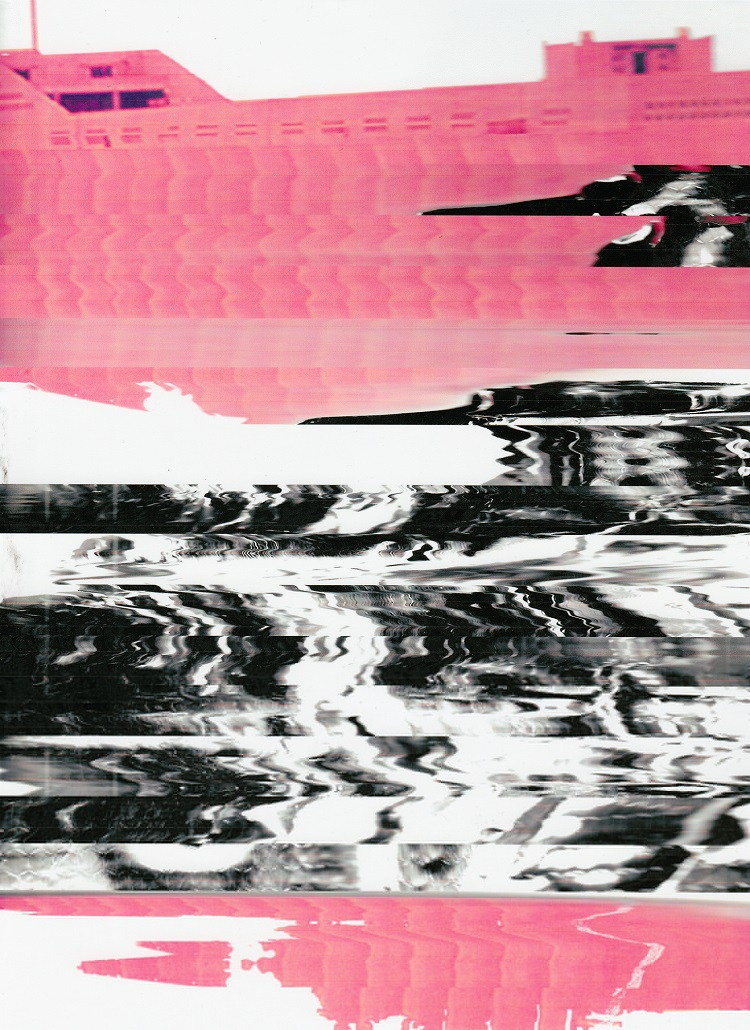
My project is a series of digital work which includes miscellaneous objects from around the house that are processed using an analogue scanner to create glitched images.
In my work I also reflect on themes from my country, Lebanon. I allude to my upbringing with slow internet, accidental distortions, and data loss. I also reference the recent explosion at the port of Beirut which happened on August 4, 2020.
How do you best like to work?
I work in loops. The machine manipulates a photo, I print it, sometimes draw on it, and feed it back to the computer for another rescan so my images exist in infinite variations. I work with both digital and analogue media. I ‘action scan’ my work where I intervene with the scanning and printing process for new outcomes, seeking a play in motion and depths of field as the image is produced and transposed.
I consider the machine - the computer, the scanner and the printer - as accomplices to my practice, pushing it forward.
This form of exploration is something I have been playing with for a while. I used to do the effects digitally by running certain scripts or codes so I’ve always had this communication with the computer. Recently I’ve taken a step back as I wanted to do things in a more analogue way.
Before entering the programme I was a painter and used to take this research as inspiration for my painting work, but right now I think they are stronger as digital pieces.
Can you tell us about some of the things which inspire you and your work?
My work is influenced by our heavy reliance on the internet, especially during the pandemic, unaware of how susceptible the medium is to data loss and distortions. Since we were unable to go to the studios to produce work I took inspiration from what was around me, domestic items, useful tools.
In my distortions there’s a cubist feel to the produced images where you can see different angles and instances in time.
What have been the highlights of your time at ECA and Edinburgh?
The highlight of my time at ECA was meeting my peers and tutors who helped inform my practice despite mostly interacting online. I finally got to meet a good number of my peers on our organised trip to Glasgow international.
I moved from Lebanon to Edinburgh for this program. I would say Edinburgh was an ideal place for me to move to, away from the chaos and instability of my country to a more peaceful, visually beautiful city.
I visited Edinburgh as a child, my mother was doing her PhD in Glasgow so we came on family trips and I really liked the city. I applied to other universities but when I was taking the final decision Edinburgh stood out for many reasons; the programme, the reputation, also I had talked to someone who did their undergraduate here and really recommended it.
How have the events over the past year affected your work?
My entire practice was shaped by Covid-19. Even though image distortion is not new to my practice, the confinement at home led me to experiment with new techniques for processing my work. It also gave way to much introspection about my past and how to reconcile the recent traumas I experienced through my work.
Have you got plans for after graduating?
I got closer to certain art spaces in Edinburgh during the pandemic and I plan on continuing my practice and being more involved in the contemporary art scene in Scotland.
I also plan on finding a job in the UK in order to sustain myself as I forge my path in the art world as moving back home is not a viable option as the country is deep in an economic crisis.